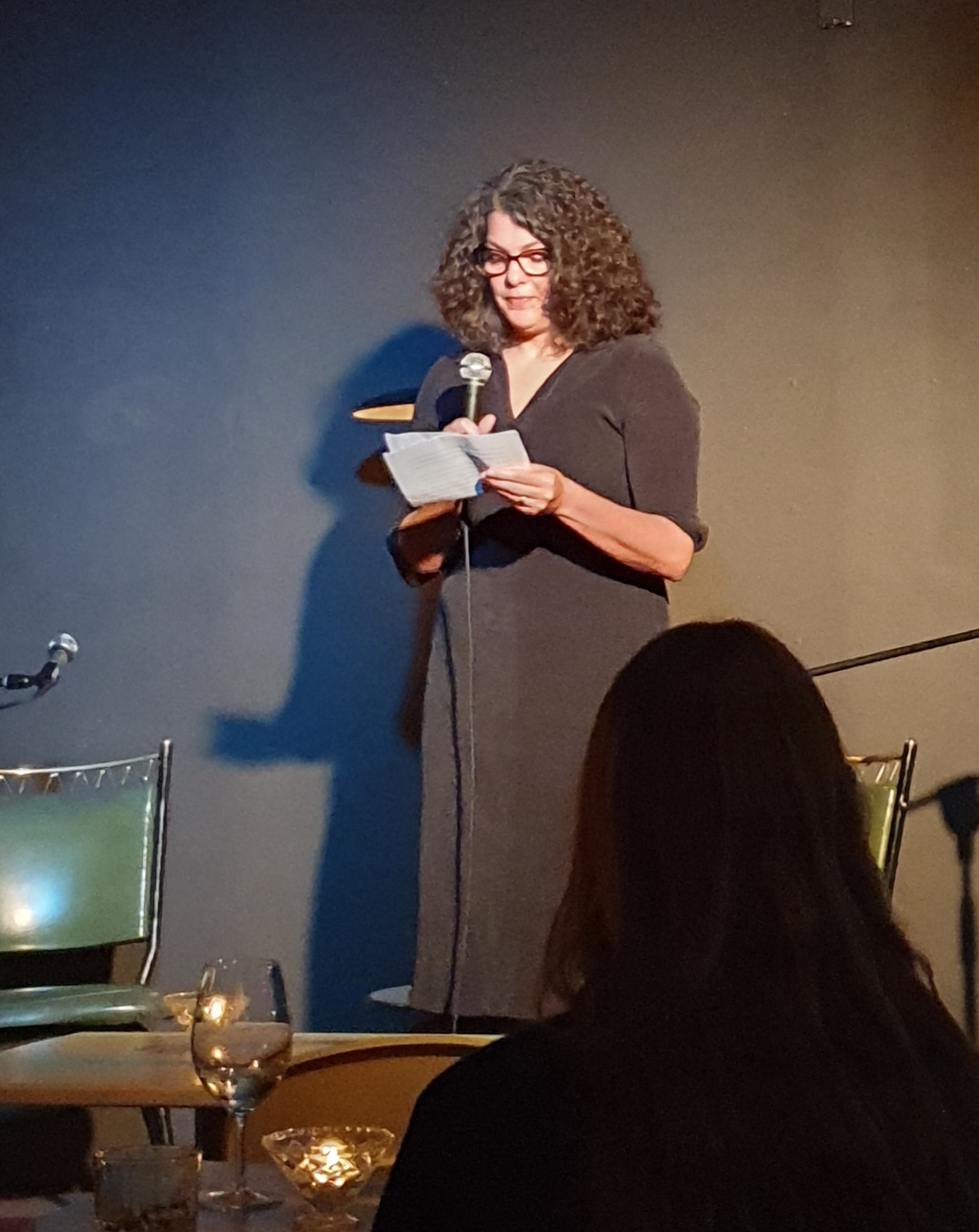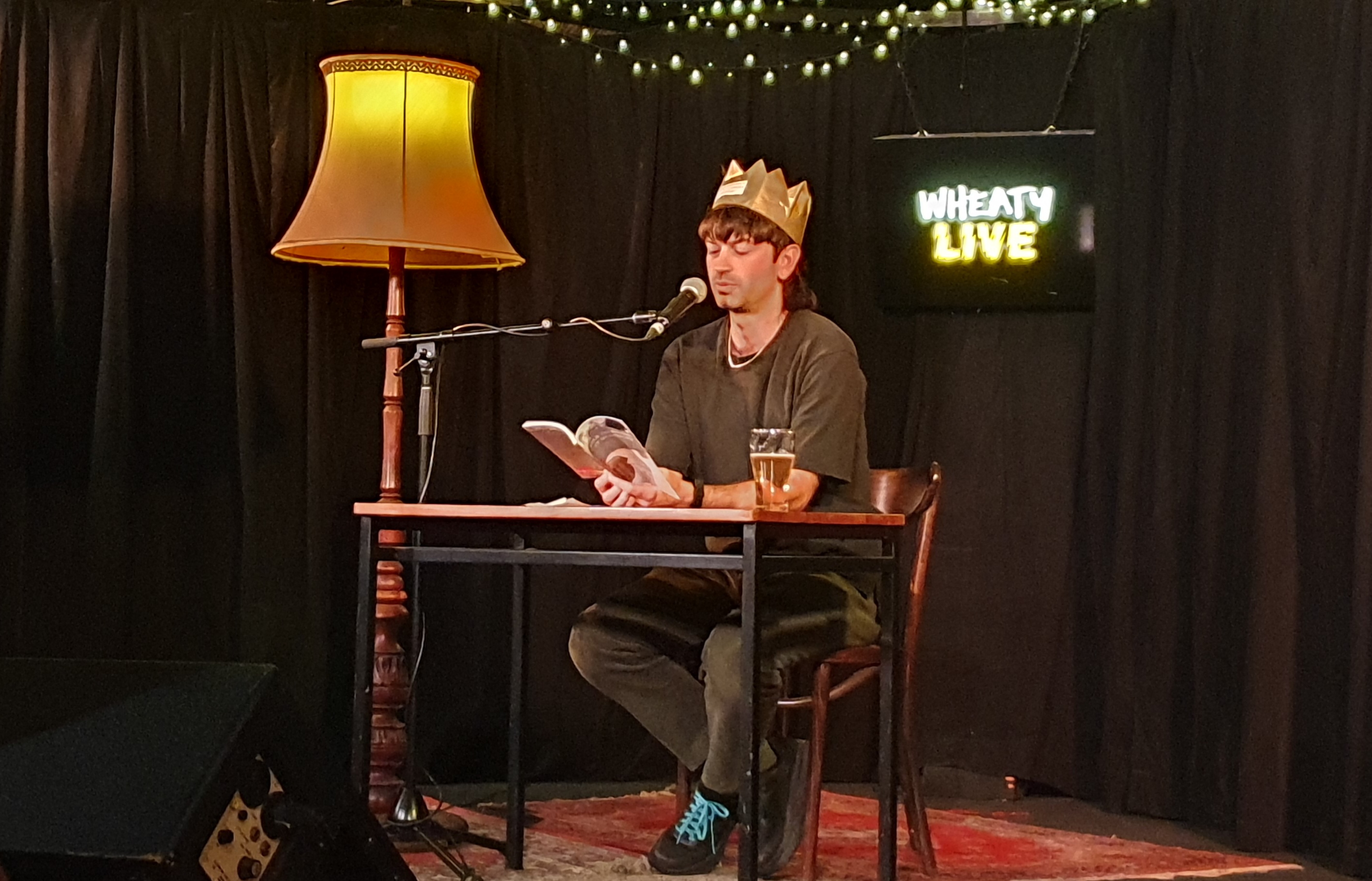
I was part of a fabulous line up Wednesday evening at this month’s No Wave poetry readings at The Wheaty – Jelena Dinić, Caroline Reid and Jennifer Liston – curated by the equally fabulous Jill Jones.

Jill Jones

Jelena was first up who shared some poems from her recent trip to Serbia that were haunting and quiet and devastatingly beautiful, just like the rest of her work. Jelena’s collection In the Room with the She Wolf published by Wakefield Press charts her journey from her former home of Yugoslavia to Australia, from childhood to becoming an adult, and won the Adelaide Festival Awards for Literature Unpublished Manuscript prize in 2020.
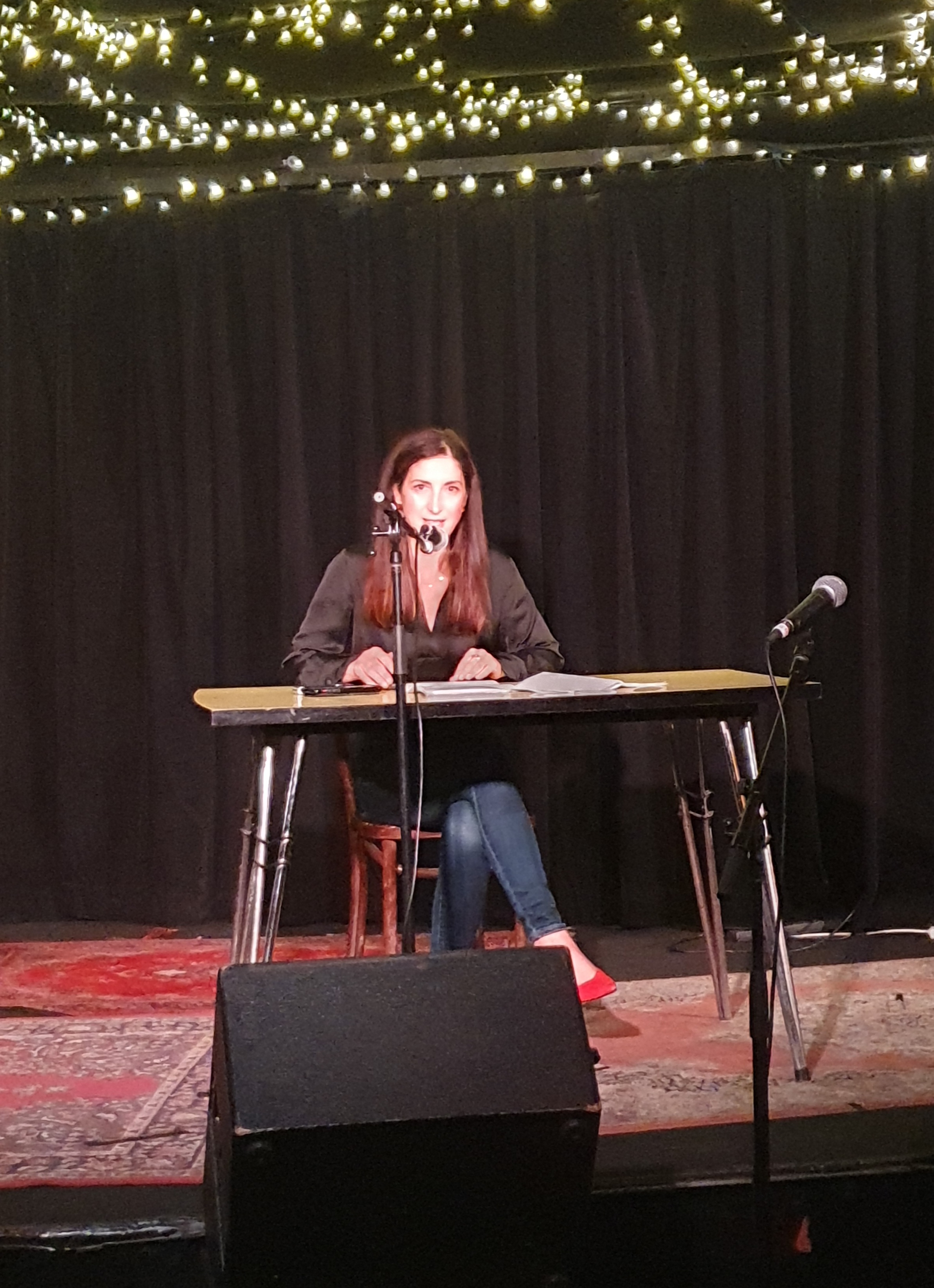
Jelena Dinić

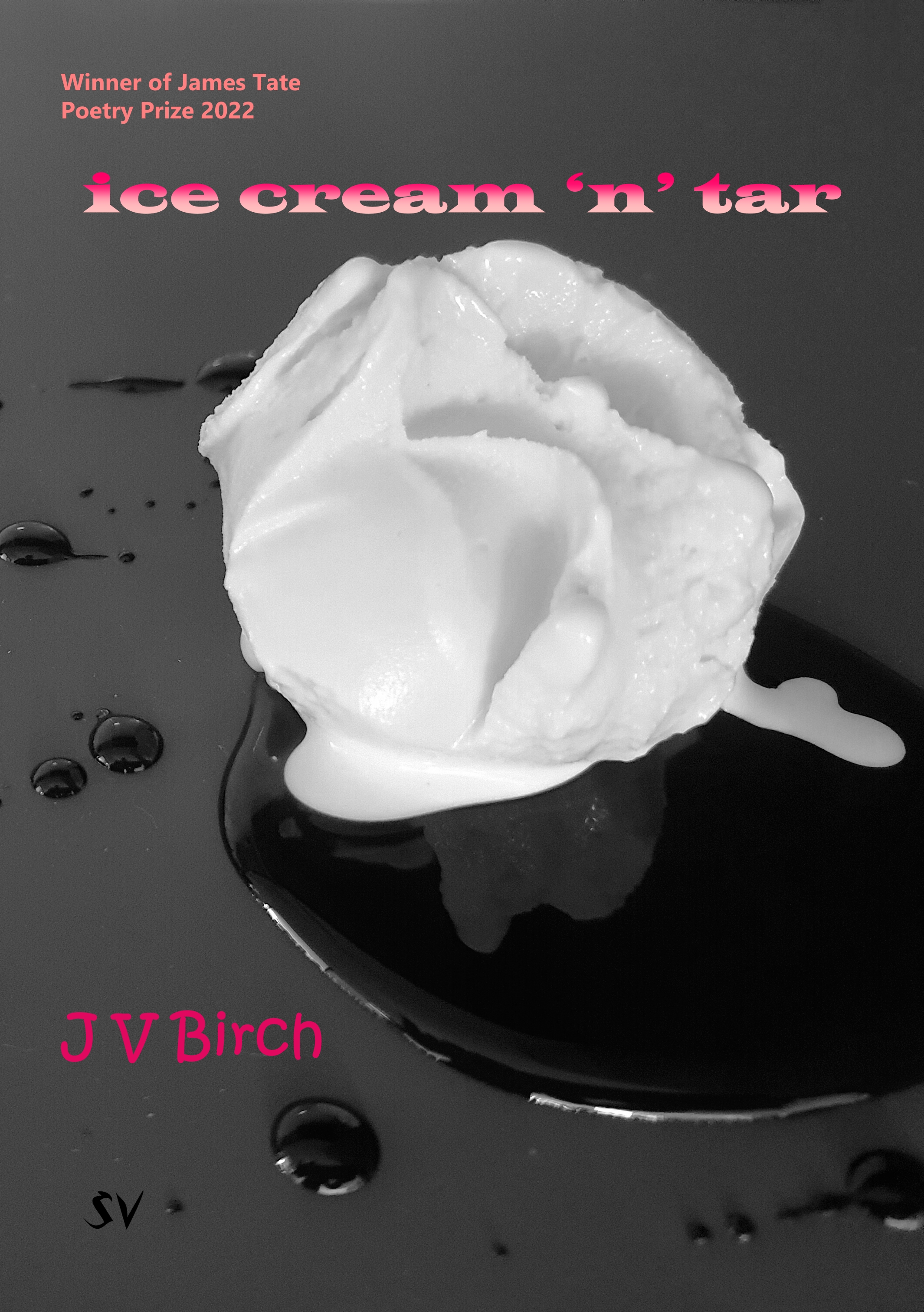
I was next up and shared some poems from my new collection ice cream ‘n’ tar, one of the winners of the James Tate Chapbook Poetry Prize last year published by Survision Books in Dublin. Offering a surrealist take on climate change, my work produced many contemplative responses, which was exactly the reaction I’d hoped for, as the idea behind these poems was to help people focus on the human impact on our wonderful world.
After a short break Caroline took the stage, whose work was highly entertaining in its grittiness and appeal, where poets were compared to dogs with their bite and how the monthly bleed can generate associations in various guises. Caroline won the 2021 Mslexia International Poetry Prize with ‘A Poem to My Mother that She Will Never Read’, which I remember finding in the magazine and being completely wowed by it.
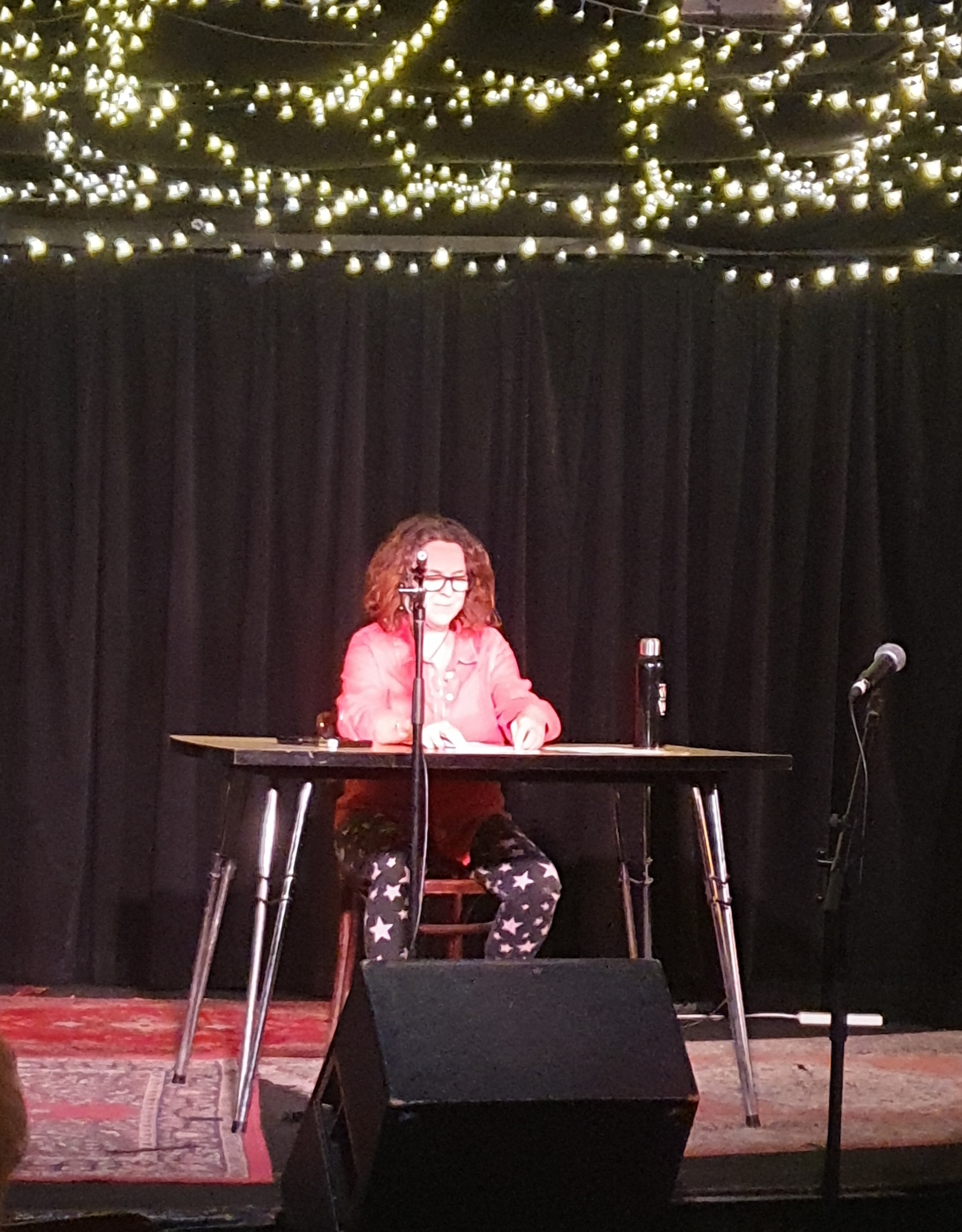
Caroline Reid

Last but by no means least was Jen who read poems from her forthcoming collection Grace Notes due out from Salmon Publishing later this year, about Grace O’Malley the Pirate Queen of 16th century Ireland who, despite commanding over 200 men at sea, was written out of history. Jen’s poetry is mesmerising and this was no exception, as she gave voice to this heroine once again following her sold out shows at the Adelaide Fringe in 2020.

Jennifer Liston

It was a brilliant evening compered by Jill who shared witty alternative bios alongside our real ones (seem to recall I was a famous chef!) and the variety of poetry shared worked incredibly well. The readings were recorded for Vision Australia Radio‘s Emerging Writers program, to be broadcast alongside the interviews we gave to Kate Cooper, one of its volunteers, which was another fabulous opportunity to reach a wider audience. Here’s my reading and interview if you’re interested and be sure to check out the others too.

So, I consider ice cream ‘n’ tar officially launched and what better place for it than at these prestigious readings. I even managed to sell several signed copies, although of course a poet is never in poetry for the money; it’s all about the words.

August is Australia’s poetry month, deemed so by Red Room Poetry, a leader in commissioning, creating, promoting and publishing poetry in meaningful ways. And it was busy.

Image courtesy of Red Room Poetry

Launched in 2021, Poetry Month aims to increase access, awareness and visibility of poetry, with Red Room Poetry hosting a variety of events, such as readings and workshops, and providing prompts to generate those all-important words. There’s also a poetry showcase in each state and one of the many wonderful aspects of this initiative is the ‘pay what you can’ ethos.

The first event I signed up for was an online book club, with Andy Jackson, Ellen van Neerven and James Jinag, facilitated by the effervescent Felicity Plunkett. Each shared passages and reflections on a favourite book of their choice with some wide-ranging and collaborative selections. Andy’s and Ellen’s fantastic work I’m familiar with, Human Looking and Throat being their latest collections respectively, but James I wasn’t, so it was great to hear his thoughts on the texts shared and learn about him.

Image courtesy of Red Room Poetry

Next up was an online workshop with Andy Jackson through Writers SA called Un-alone Poetry, where we delved into self-portrait poems with Andy sharing some from his latest collection that brings together the voice of the disabled. I’ve participated in Andy’s courses before and this was of the same brilliant ilk, perfectly balancing time to read and reflect with the opportunity to write and share. We even indulged in some collaborative poetry by being paired and swapping lines via the chat function in Zoom, that delivered some surprising results.

The Dog-Eared Readings are brainchild of two beloved poets, Heather Taylor-Johnson and Rachael Mead, with the inaugural one taking place mid-week at The Howling Owl. Backed by a grant from Arts SA and with free drinks very kindly provided by Red Room Poetry, these readings aim to fill the gap left by Ken Bolton’s Lee Marvin series and offer the same imitable blend of poetry and prose. First up was Stephen Orr reading from his novel Sincerely, Ethel Malley, followed by the krumping (a new performance style I discovered!) Matcho Intrumz Cassidy and finished with Dominic Guerrera in conversation with Natalie Harkin who shared poems from her latest collection Archival-Poetics, a gift of poems (literally) that reckon with the State’s colonial archive.

Image courtesy of Red Room Poetry

Another online workshop, The Speculative Poet, with Sally Wen Mao completed the month for me, in which we explored blurring the boundaries between fact and magic, research and conjecture, with poetry the perfect form with which to do so. Sally shared slides and some insights from the infamous Toni Morrison on speculation, as well as a few of her own poems, with ‘Nucleation‘ a particular standout for me. Sally’s award-winning collection, Oculus and forthcoming, The Kingdom of Surfaces, both from Graywolf Press, are the latest additions to my ever-growing wish list.

What I love about projects and events like these, apart from showcasing the fine work that’s out there, is their ability to inspire and connect, and for me generated several ideas for the next full-length collection I’m working on, as well as introducing me to new poets and forms. So next year, I must remember to clear my calendar for August again, give the poetry room to breathe.

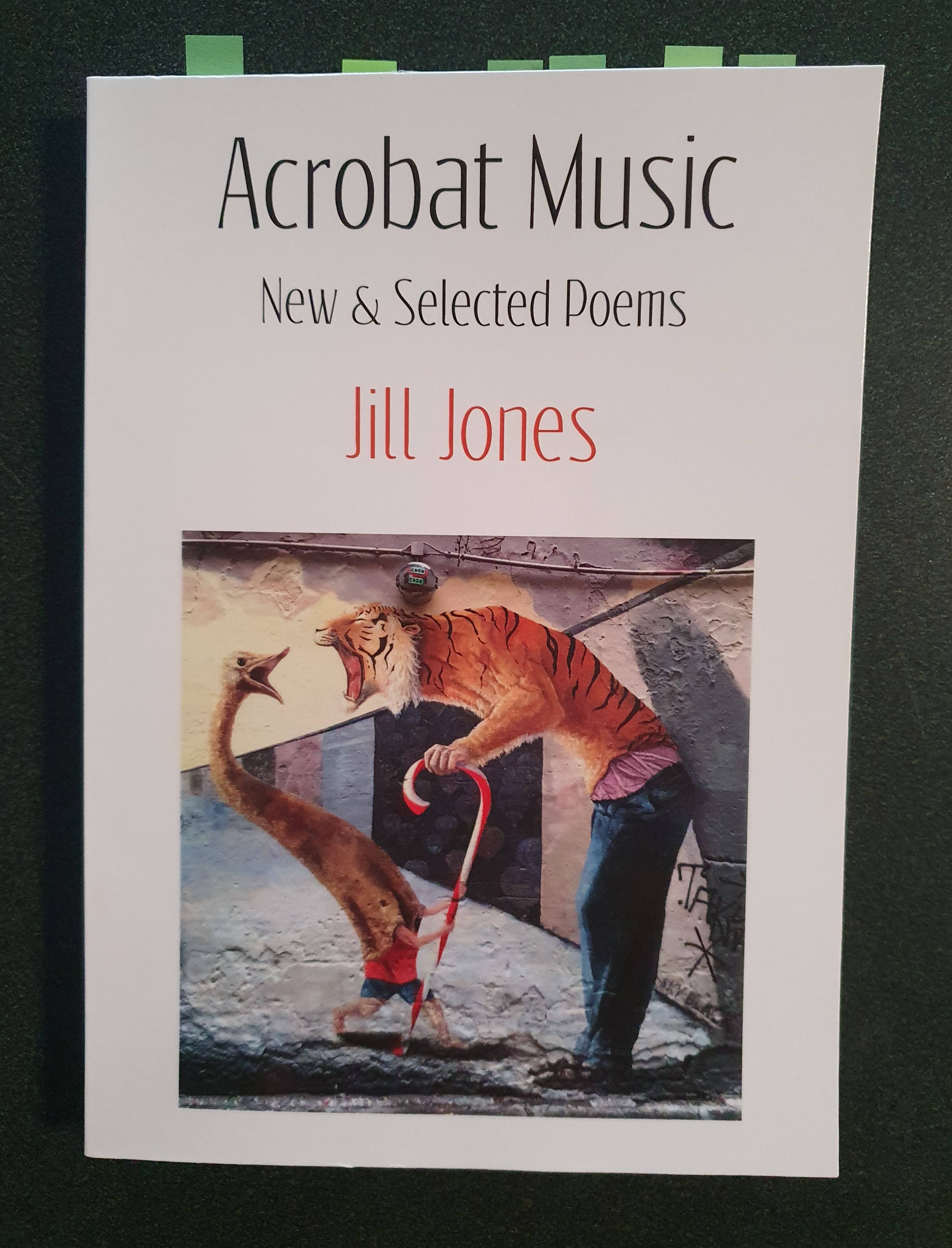
It’s been an eventful week. Wednesday I went to the launch of Jill Jones’s latest collection at Goodwood Books and Saturday to Poets and Pizza at Coriole.

Acrobat Music: New and Selected Poems is Jill’s thirteenth collection who is one of the most prolific poets I know, not to mention amazingly talented and widely read. Published by Puncher and Wattmann and introduced by book curator and arts consultant Sarah Tooth, Jill began with the beautiful poem ‘mother i am waiting now to tell you’ about things unsaid, which she read with her wife Annette, alternating the left with the right justified lines on the page. And then followed a Q&A style session, with Sarah asking how Jill got into poetry who shared her inspirations, which includes Kenneth Slessor and lines from his infamous poem ‘Five Bells’ that left an impression:

Deep and dissolving verticals of light
Ferry the falls of moonshine down.

And it’s this same sense of profound reverie that’s so evocative of Jill’s work, pulling you in and under to a different line of sight. Jill read several poems, including an ekphrastic one literally split into snippets of art and most notably ‘Unbuttoned’, which opens with ‘If I have to earn some skin does it have to be new?’ then proceeds to explore ways to obtain this, culminating in this rather haunting undress:

Or shall I unbutton and fold

what’s left, step out of my nerves

and my veins, leave everything

– corpse, crevice, carcass, shell –

but keep my breath for

the impending and tremendous air

that’s beyond howling when

I touch it to my old pelt?

The bookshop was packed and the line for a signed copy snaked to the door. Originally hailing from Sydney, Jill is now a permanent part of the Adelaide poetry scene, for which I’m immensely glad.

Two of my favourite poets read at Saturday’s event – Rachael Mead and Louise Nicholas – along with Kalicharan Nigel Dey and Bruce Greenhalgh, facilitated by another wonderful local poet, Jude Aqualina. First up was Bruce, whose clever and compact repertoire focused on rhythm and rhyme, both entertaining and far-reaching, in which he explored various aspects of the human condition in a relatable way.

Rachael followed, beginning with ‘The wild grammar of leeches’ from her collection The Flaw in the Pattern by UWA Publishing, with the poem part of a sequence about trekking the Overland Track in Tasmania containing these gorgeous snippets:

I shed my clothes like an awful first draft,

…look down to find my body being edited, its pages

harshly corrected with black punctuation.

…full of stolen content they race end for end

across my skin, challenging my sensitive narrative

with their bold-third person revisions,…

Rachael also shared a poem inspired by the #metoo movement and another comprising a series of broken questions, the kind you hear every day, but in this context, stick.

Louise followed the break with a selection of poems centered around family and memory, sharing the rather poignant ‘Echolalia’ from her collection The List of Last Remaining published by Five Islands Press, about her graceful name-giving and how it changed after her mother’s death:

So when she died

my name for a time

lost its grace

became shape without shadow

question without answer

and even now

if I were to stand on a mountain top

and shout out my name

there’d be no echo

calling back.

Louise also shared entertaining poems about the year she was born, the wife of the man who invented the pap smear and about her children who were in the audience, but presumably forewarned.

Nigel finished the set, urging us to dance and sing, delivering his poems in a unique way, his previous acting career clearly evident in the way he performed and engaged with the crowd.

And now I’m planning my own event to launch ice cream ‘n’ tar, which offers a somewhat surreal perspective on the ever-shifting climate and lack of inaction. Every little helps.

So Adelaide’s Writers’ Week has been and gone but not without plenty of book-buying, meeting poets and attending the odd session here and there. The first was ‘Searching for Sylvia Plath’ facilitated by the fabulous Felicity Plunkett.

With around 10 biographies about Plath already, why do we need another? Well at a 1,000 pages, this appears to be the definitive one. Written by Heather Clarke over 12 years, Red Comet covers every aspect of Plath’s life, from when she began writing her first poems at 5, through repeated medical trauma and self-medication to her somewhat fraught relationship with Ted Hughes, its a culmination of endless hours in the Plath archives trawling through her journals, letters and photographs. It’s only since her untimely death that Plath has been recognised for the trailblazer she was, a professional writer with a strong work ethic who immersed herself in a world of words, including these rather profound ones when feeding back on the work of her mother’s friend:

Let the wind blow in more roughly.

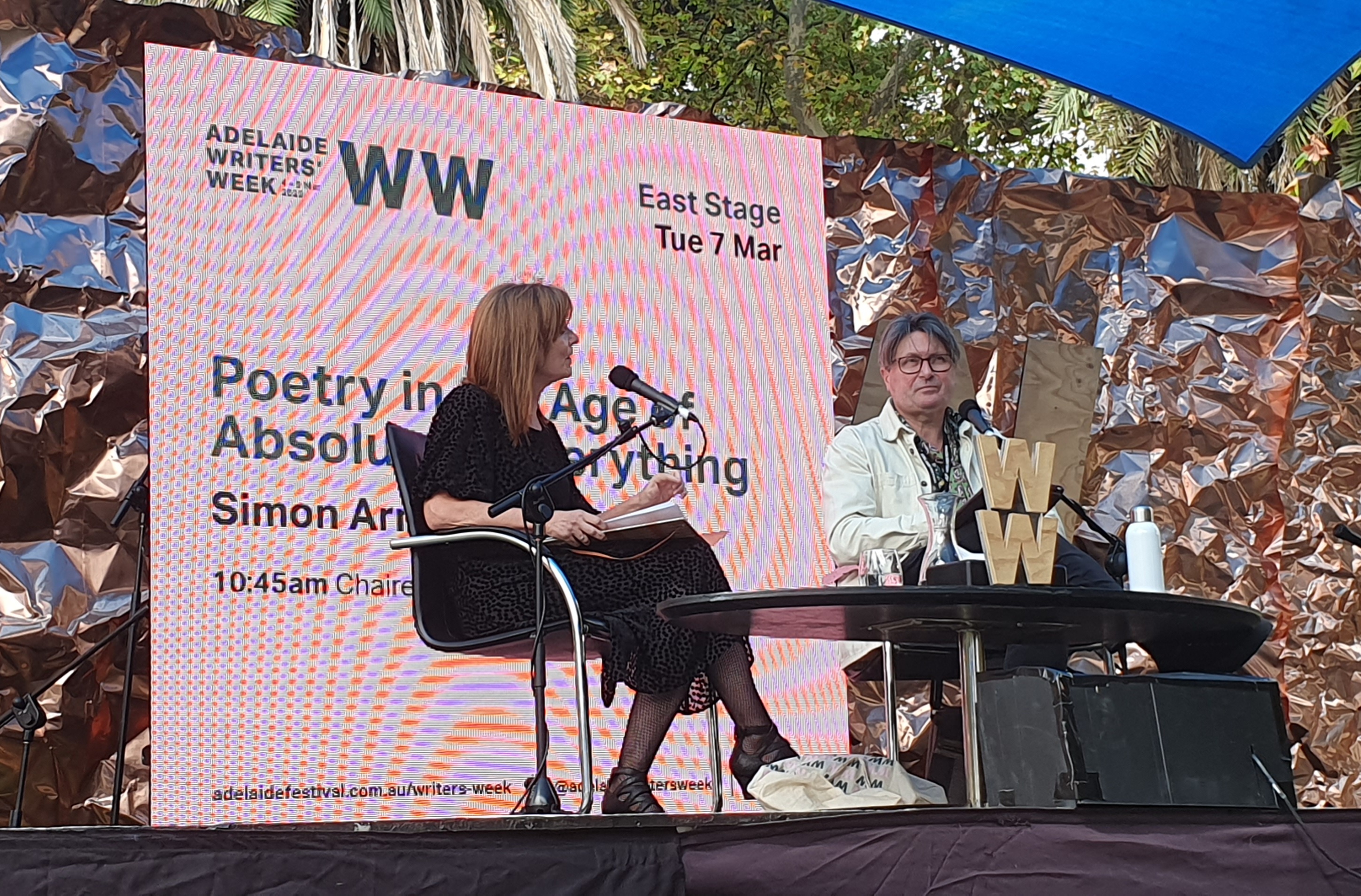
The next session I went to was ‘Poetry in the Age of Absolutely Everything’ with UK Poet Laureate Simon Armitage, again in conversation with Felicity.

Appointed in May 2019, Simon talked about how the role of Poet Laureate changed after the death of Ted Hughes to more of a working role spanning 10 years rather than a lifetime, establishing the Laurel Prize for eco and nature writing during his. Simon shared entertaining stories from his 256 mile Walking Home project in 2010, which involved walking the Pennines the wrong way giving readings and surviving on whatever was given by his audience, as well as some of the poems he wrote, often with rhyme and rhythm synonymous with a purposeful trek. Simon also held the Oxford Professor of Poetry for four years, publishing a collection of essays during his time to explore how this form takes new directions down old roads, with some debating:

poetry’s constant anxiety about its own existence.

In between these sessions, I joined award-winning author Ellen van Neerven‘s ‘Desire in Poetry’ Masterclass, which examined the different ways this can be expressed through example poems, insightful discussion and a series of writing prompts. And of course, Writers’ Week isn’t complete without a visit to the book tent where I bought a few somethings to keep me going.

There have been a couple of Canadian publications I’ve been trying to get into for a while and it just so happens both accepted a poem of mine within a month of each other. Coincidence or luck? Perhaps a bit of both.

Juniper is an online poetry journal based in Toronto, publishing three issues a year since 2017 and edited by Lisa Young. I find much of the work has a haunting quality about it, with a focus on place and connection, and it’s here I discovered the stunning poetry of Ayehsa Chatterjee and Lorna Crozier, both Canadian with several collections between them. My poem, ‘Earth turn‘, is in the current issue alongside many fine others and interestingly required little editing.

Arc Poetry Magazine has been running for a number of years with its 100th issue up next, which will celebrate previous work through the curation of new in the form of ekphrasis. Publishing a diverse variety of poetry and art, it’s an eclectic read and my poem, ‘Weathering’, responds to a piece by Winnie Truong, a Toronto-based artist who renders exquisite work. This will be my first published ekphrastic poem, so I’m excited it’s appearing in such a prestigious magazine.

And then of course there’s Margaret Atwood with her extensive repertoire, whose latest collection Dearly I’ve yet to read, but whose outlook on life and work I find fascinating having listened to many of her interviews and readings. Anne Carson and Rupi Kaur are also Canadian, but whose work I’m currently unfamiliar with.

Visiting Canada is on my to do list. With its spectacular landscape, perhaps it’s easy to see why there’s a plethora of brilliance flowing from there.

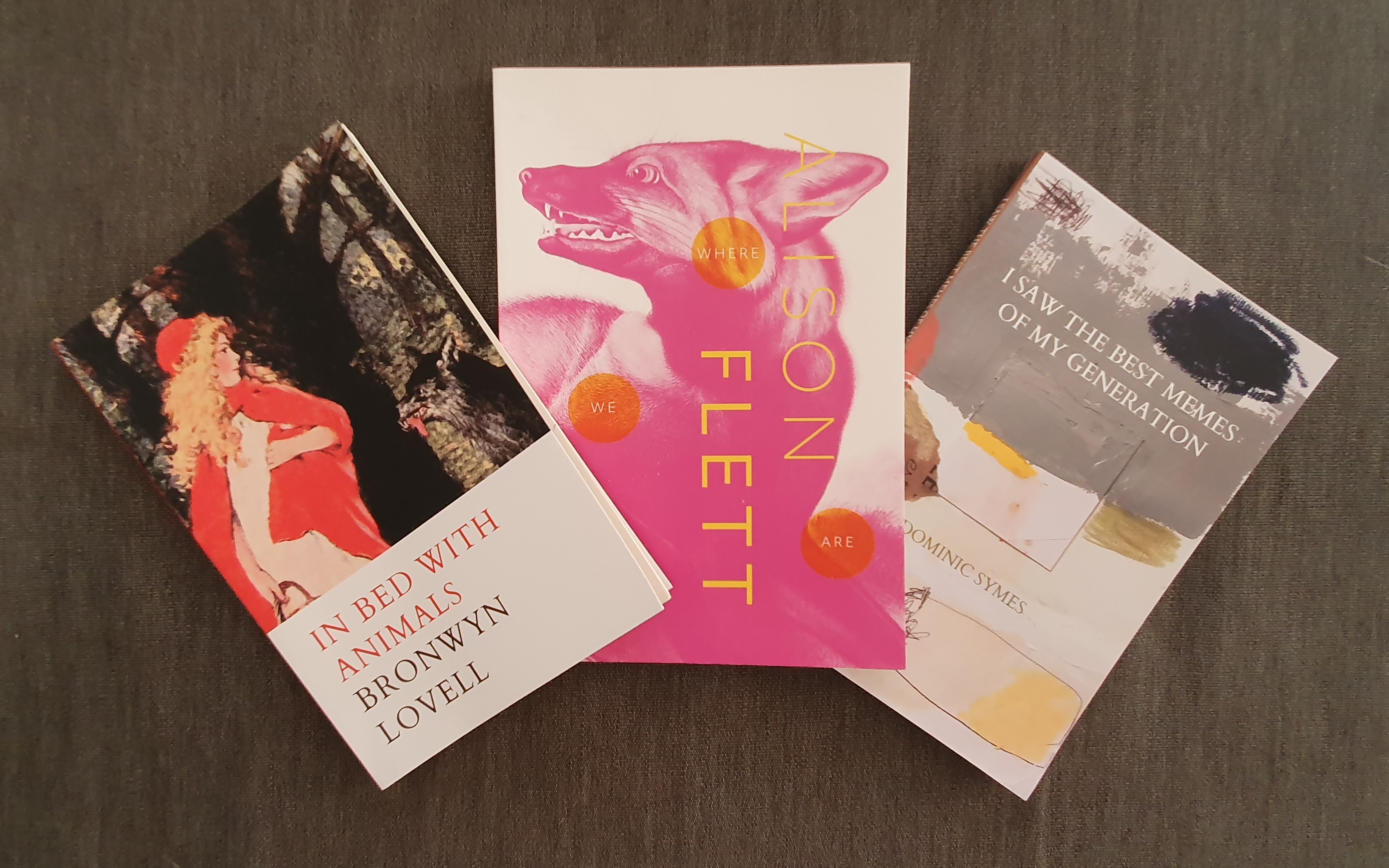
at The Wheaty Wednesday night was epic featuring a stellar line up – Bronwyn Lovell, Alison Flett and Dominic Symes – who helped launch each other’s new collection.

First up was Bronwyn whose work I’ve long admired and her collection, In Bed with Animals from Recent Work Press, is possibly one of the best debuts I’ve ever read.

Bronwyn is a novelist and science fiction scholar as well as a poet, and her work has been shortlisted for some big poetry prizes, including the Dorothy Hewett Award. These poems speak of one woman’s experience of gender discrimination in an ecofeminist voice, calling attention to the exploitation of the environment and animals too. ‘Bitching’ is a fine example, in which Bronwyn draws comparisons between herself and her beloved dog Carmela, both in terms of treatment and temperament:

We domestic animals are still wildly

frightened. If a man mauls me,

they will look for the predator’s DNA

carved in crescents under my claws.

from ‘Bitching’ in In Bed With Animals by Bronwyn Lovell

Alison followed next with her captivating collection Where We Are published by Cordite Books, evocative of home wherever that may be.

Originally hailing from Scotland, Alison travels back to her roots in these raw, visceral poems of longing and belonging, of here and there, conjuring memories along the way interspersed with the delectable Scottish dialect. Alison’s poetry is simply brilliant and I was so pleased to see her infamous fox poems in this collection, (which form a chapbook by themselves published by her own imprint Little Windows Press), a symbol of this fleeting life that shines with her brilliance:

the rain runs in rivers

through its red-black fur

and the pavements are thick

with its foxy scent

and the rain rises

to meet it as it runs

and the pavements run

with rivers of its redness

from ‘Semiosphere’ in Where We Are by Alison Flett

Last but by no means last was Dom reading from I Saw The Best Memes Of My Generation also from Recent Works Press and with a title that sticks.

Dom founded the monthly No Wave poetry readings to try and fill the gap left by the Lee Marvin ones, brain-child of Ken Bolton who is another fine Adelaide-based poet, both of which I’ve had the honour of reading at. Dom’s work is both tender and funny, can make you laugh out loud or nod in rapt agreement, and he had a clever technique; letting the audience choose which poem he shared, that cheered for a Cher poem louder than a Prince one:

I’ve been instructed by The Guardian –

which I pay for now

after being guilted by that widget which kept telling me how

many free articles I’d read & which I’ll admit

feels kind of like paying a bully at school to stop you from

getting beat up (I believe that is called a ‘racket’)

– to feminise the cannon

from ‘Queering the Cannon’ in I Saw The Best Memes Of My Generation by Dominic Symes

Adelaide has a thriving poetry scene, much of which buzzed in the room that night, and with this being the final No Wave coupled with the heartfelt words shared, emotions were high. And it was a festive celebration too, with Alison supplying delicious home-baked treats and party hats, each with a line from a poem and it’s author on the back. Everyone was invited to select one that speaks to them; this was mine:

And the days are not full enough

And the nights are not full enough

And life slips by like a field mouse

Not shaking the grass.

from ‘And the days are not full enough’ by Erza Pound

So if you’re looking for stocking fillers, buy these books. Brimming with confessions, heartbreak and wit, they will not disappoint because their appeal extends beyond poetry. It reaches you.

Poems are like homing pigeons. You send them off and more often than not they come back. But sometimes they don’t because they’ve found a new home.

Image courtesy of ovocontrol.com

As a poet, I know much about perseverance and how one person’s trash can be another one’s treasure. So when I heard my next manuscript had been shortlisted for this year’s James Tate International Poetry Prize, I was absolutely thrilled! When I heard it was one of the winners, beyond thrilled!! I had submitted this collection, albeit in different iterations, nearly a dozen times to publishers and competitions.

SurVision Books is Ireland-based with a focus on surrealist poetry and a biannual online magazine of the same. My poems are about climate change from a fantastical perspective and editors Tony Kitt and Anatoly Kurdryavitsky felt they were a good fit. While I’m deeply indebted to Ginninderra Press for publishing my previous collections, I am excited to see what my new publisher brings.

Never give up I say.

was the title of the workshop I presented yesterday as guest poet at Gawler Poets @ the Pub.

Image courtesy of Gawler Poets @ the Pub

Held at the Prince Albert Hotel, this groups meets on the last Sunday of every month where a poet is invited to give a workshop in the morning then have the first slot at the afternoon readings.

With my recent collection about breast cancer, selecting the topic was easy; finding relevant examples and devising the structure took a little more time. And I thoroughly enjoyed not only preparing the workshop but also presenting it, and the participants did too, taking away with them poems to develop, writing prompts and further reading/listening.

After lunch was the five-word challenge where I chose random words from Venus for poets to draft something using for me to judge. The winner got a bottle of wine. I then read a couple of poems from each of my collections giving context where relevant, followed by members of the group sharing their work. The day flew by.

So given the time I spent researching and developing the workshop, I will explore more opportunities to present it because it’s something we can all relate to, having a body, and whether we like it or not is a whole other workshop…

I’ve just finished another online course hosted by the Poetry SchoolAccidental Love Poems with David Tait.

Image courtesy of The Poetry School

Founded in 1997 by poets Jane Duran, Mimi Khalvati and Pascale Petit, the Poetry School is a plethora of all things poetry and the UK’s largest provider of poetry education. It offers a variety of courses of differing lengths and levels, with a new program published each term. I opt for the international courses using its online platform CAMPUS, as there’s no live chat allowing me to write and feed back on work at a time to suit before each deadline.

David is a British-born poet working as a teacher in China and I’ve completed a previous course by him that focused on cities. The prompts have been wonderful and inspired some incredible work, and I’m rather happy with my own batch of poems produced. Before this I did Writing Emotion with Rebecca Tamás and next term I’ve signed up for Elena Karina Byrne‘s Ekphrasis, Art and Translation.

What I love about these courses is discovering new poets, not just through fellow students, but through the assignments and reading set, plus feedback is invaluable, both honing your skills providing it and applying it to your work. And of course they drive you to write! So if you haven’t already, check out the Poetry School, if only to explore the variety of resources and information available.

Writing about experience is extremely cathartic, removing the noise in the head, expressing what never makes it into conversation, and so being a poet it was only natural for me to write about my breast cancer journey, which thanks to Ginninderra Press, forms a chapbook of poems called Venus.

Starting with diagnosis, it charts the path I took – five months of chemotherapy, a mastectomy, six weeks of radiotherapy every day – and still take with daily anti-hormones and a six-monthly bone drug infusion. The outcome was a new me, an alive me, with a different perspective and sense of purpose. (The image on the front by the way, is the pattern from what became my chemo pants, which I’d planned to ceremoniously burn at the end of active treatment, but they’re extremely comfortable!).

I follow in the footsteps of many fine poets who’ve also written about their own experiences – Jo Shapcott’s Of Mutability and Sharon Black’s To Know Bedrock whose launch I attended in London in 2011, plus a fascinating collaboration between Irish poets in Bosom Pals, to name a few. With one in eight women diagnosed with the disease, it’s a common condition with voice.

I’ve given copies to my doctor, specialist and oncologist as I’m keen for it to reach other women embarking on the same journey as a source of comfort, a source of you can do this.

Anniversary

A year ago today my world was smashed
by a man in a suit and wire-rimmed glasses.
His voice was small and grew smaller.

Over the next nine months I lost my aversion
to needles and swallowing tablets
found I preferred my hair short.

So I take my husband out to dinner
like some macabre anniversary
because I feel the need to mark this path

from a place that howled to one made of bricks
where I savour the simplest things –
the sharpness of orange juice in the morning

how fast I can cycle with the wind behind me
watching the sun slip into the sea.

from Venus, Ginninderra Press 2022

Archives

Blog Stats

  • 25,417 hits
Rust & Moth

Singing in the shallows

Shaw and Moore

Singing in the shallows

The Orange & Bee

Singing in the shallows

The Amphibian Literary and Art Journal

for the culturally amphibious

Poetry in Process

Understanding poetic process from inspiration to final edit

Wakefield Press

Wakefield Press blog

Andy Jackson

Poetry from a body shaped like a question mark.

mistakenforarealpoet

odd posts from an occasional poet (or vice versa)

Cath Drake writing & communications

This site has been archived. Please head over to: https://cathdrake.com/