You are currently browsing the tag archive for the ‘Ken Bolton’ tag.
August is Australia’s poetry month, deemed so by Red Room Poetry, a leader in commissioning, creating, promoting and publishing poetry in meaningful ways. And it was busy.

Launched in 2021, Poetry Month aims to increase access, awareness and visibility of poetry, with Red Room Poetry hosting a variety of events, such as readings and workshops, and providing prompts to generate those all-important words. There’s also a poetry showcase in each state and one of the many wonderful aspects of this initiative is the ‘pay what you can’ ethos.
The first event I signed up for was an online book club, with Andy Jackson, Ellen van Neerven and James Jinag, facilitated by the effervescent Felicity Plunkett. Each shared passages and reflections on a favourite book of their choice with some wide-ranging and collaborative selections. Andy’s and Ellen’s fantastic work I’m familiar with, Human Looking and Throat being their latest collections respectively, but James I wasn’t, so it was great to hear his thoughts on the texts shared and learn about him.

Next up was an online workshop with Andy Jackson through Writers SA called Un-alone Poetry, where we delved into self-portrait poems with Andy sharing some from his latest collection that brings together the voice of the disabled. I’ve participated in Andy’s courses before and this was of the same brilliant ilk, perfectly balancing time to read and reflect with the opportunity to write and share. We even indulged in some collaborative poetry by being paired and swapping lines via the chat function in Zoom, that delivered some surprising results.
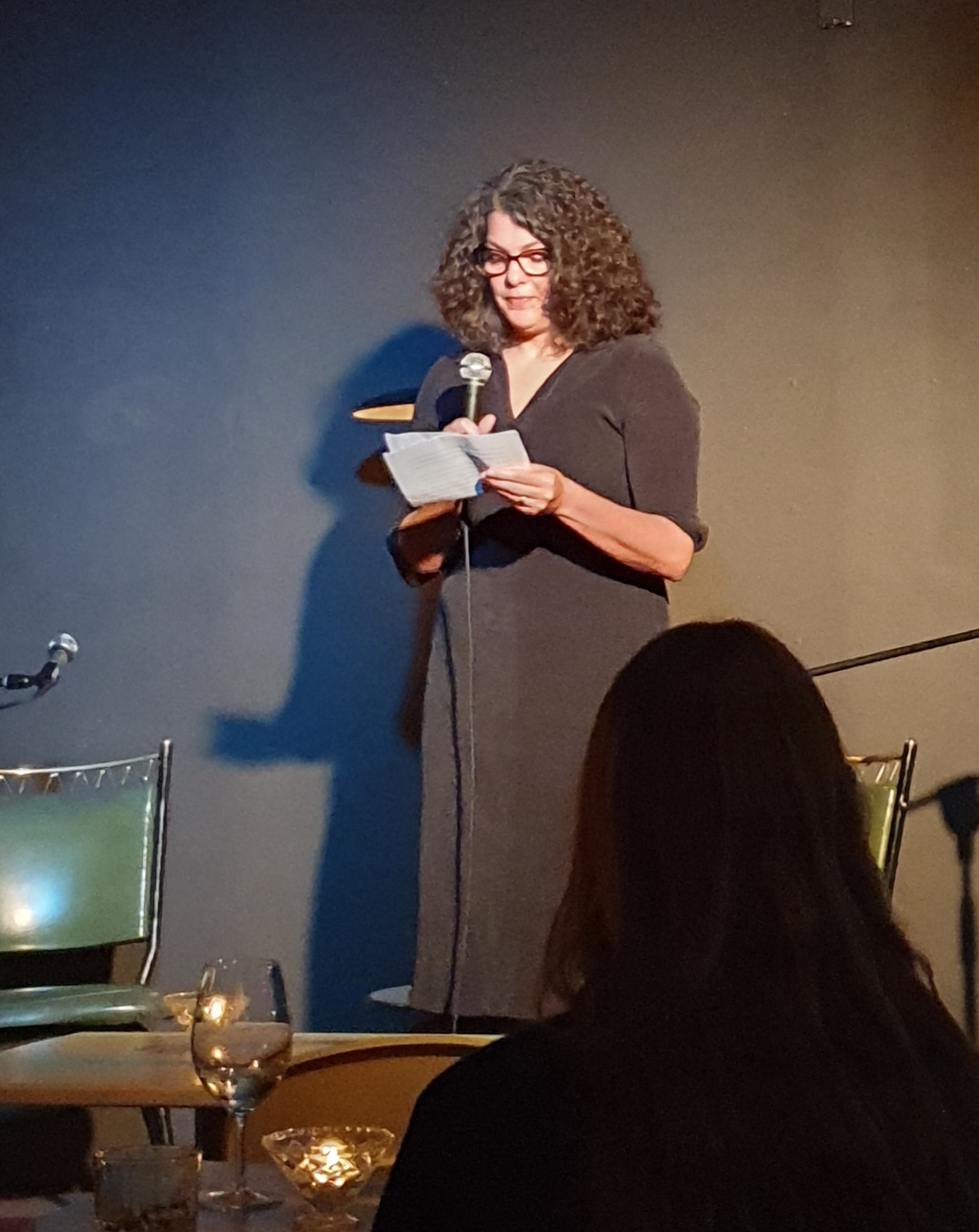


The Dog-Eared Readings are brainchild of two beloved poets, Heather Taylor-Johnson and Rachael Mead, with the inaugural one taking place mid-week at The Howling Owl. Backed by a grant from Arts SA and with free drinks very kindly provided by Red Room Poetry, these readings aim to fill the gap left by Ken Bolton’s Lee Marvin series and offer the same imitable blend of poetry and prose. First up was Stephen Orr reading from his novel Sincerely, Ethel Malley, followed by the krumping (a new performance style I discovered!) Matcho Intrumz Cassidy and finished with Dominic Guerrera in conversation with Natalie Harkin who shared poems from her latest collection Archival-Poetics, a gift of poems (literally) that reckon with the State’s colonial archive.

Another online workshop, The Speculative Poet, with Sally Wen Mao completed the month for me, in which we explored blurring the boundaries between fact and magic, research and conjecture, with poetry the perfect form with which to do so. Sally shared slides and some insights from the infamous Toni Morrison on speculation, as well as a few of her own poems, with ‘Nucleation‘ a particular standout for me. Sally’s award-winning collection, Oculus and forthcoming, The Kingdom of Surfaces, both from Graywolf Press, are the latest additions to my ever-growing wish list.
What I love about projects and events like these, apart from showcasing the fine work that’s out there, is their ability to inspire and connect, and for me generated several ideas for the next full-length collection I’m working on, as well as introducing me to new poets and forms. So next year, I must remember to clear my calendar for August again, give the poetry room to breathe.
Adelaide’s Writers’ Week kicks off this Saturday with an impressive program full of all things literary, so there’ll be something for everyone.

Held in the Pioneer Women’s Memorial Garden, there’ll be a plethora of poets, novelists, playwrights, historians, biographers and memoirists, all genres to captivate and challenge the crowd. Notable events are; Mike Ladd chatting about his recent collection of poetry, Invisible Mending, published by Wakefield Press; an interview with Ken Bolton, ‘a laconic and discursive poet’, aswell as art critic, editor and publisher; and the coveted poetry readings presented by Peter Goldsworthy, with a stunning line-up.
Jan Owen and Cath Kenneally, stalwarts of the South Australian poetry scene, are joined by Steve Brock, Jules Leigh Koch, Louise Nicholas and Dominic Symes. Jules and Louise I know well and are incredibly talented poets; Jan I’m learning an invaluable amount from through her monthly workshops; Cath and Steve I’m still relatively new to their work; and Dominic I believe is an up and coming poet, one to watch.
Unfortunately, however, I’ll be en route to New Zealand to explore the South Island so will miss the entire week! Note to self for next time – avoid holidays in March.
is a must have collection. Published by Puncher and Wattmann and edited by Martin Langford, Judith Beveridge, Judy Johnson and David Musgrave, this 658-page book anthologises Australian poetry for the last 25 years.
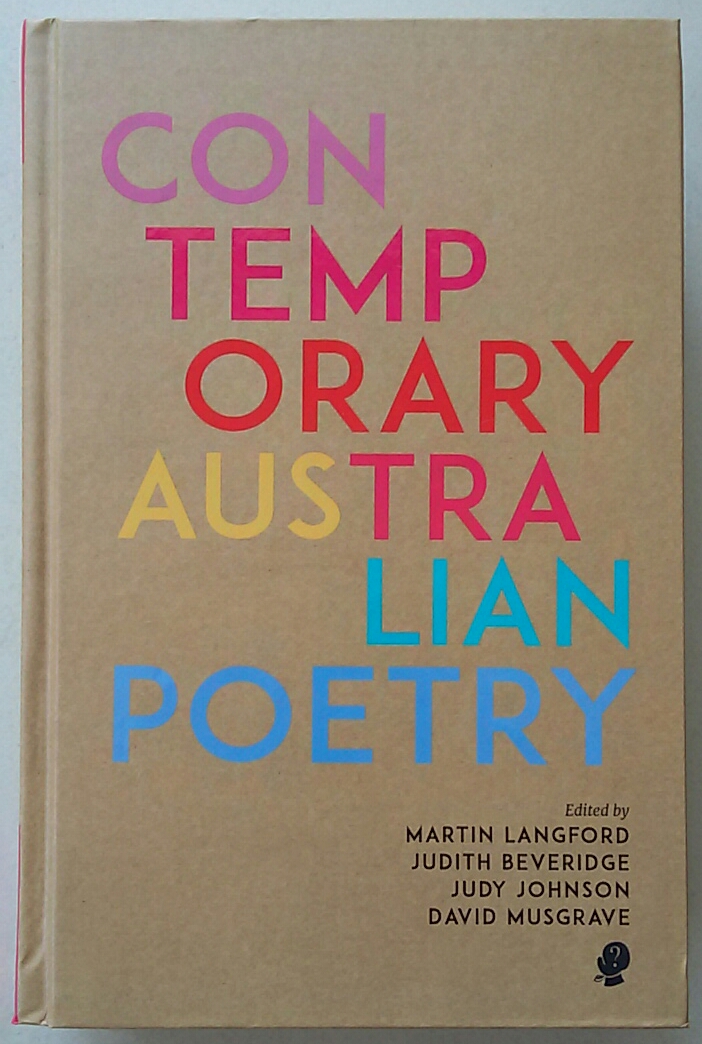
Taking 10 years to compile over 200 poets and 500 poems, it really is a landmark publication, a credit to the Australian poetry scene, and includes some incredible poets – Ken Bolton, Jennifer Compton, Peter Goldsworthy, Jill Jones, John Kinsella, Mike Ladd, David Malouf, David Mortimer, Les Murray, Jan Owen, Dorothy Porter, Mark Tredinnick, Fiona Wright, not to mention the editors themselves.
It’s being launched in Adelaide at the SA Writers Centre next Friday, which unfortunately I can’t make (off exploring Noosa), so I promptly ordered a copy. Flicking through for the first time, because this will need endless reads, two poems caught my eye – ‘Grief’ by Elizabeth Allen and ‘Snowflake’ by Anthony Lawrence.
Elizabeth is a Sydney-based poet and her chapbook Forgetful Hands is on my wish list. Hers is a powerfully poignant piece about her sister, who having lost her ‘Botticelli curls’
‘…has been looking into people like mirrors
but does not know how to make a face
that resembles the pain inside her.’
Anthony I saw at Mildura’s Writers’ Festival the year Sharon Olds headlined, who I was lucky enough to meet. His poem centres around his mother who cultivates a snowflake in the freezer ‘between the peas and the ice cream’, setting sapphires into her teeth:
‘At dinner I would pretend
to be a good son, and her smile
enameled the table
with points of dark blue light.’
This is a remarkable anthology, to be read, smiled, laughed, cried and absorbed between breaths, bit by brilliant bit.
So Tuesday night’s Lee Marvin line up was Alison Flett, Aidan Coleman, Banjo Weatherald and Jennifer Liston, another one not to be missed.

Ken Bolton’s introductions get funnier and funnier as each writer becomes a character in a film with often hilarious consequences. And again, the Dark Horsey Bookshop was full to the brim with the poets drawing a big crowd.
Alison was up first to read five poems, three from a ‘Five ways to…’ series with the first on ‘Five ways to understand the outback’, urging us to ‘drive hard into the dark’, ‘learn the word house and how it can mean no more than your body’…or ‘how it can mean the world’, and where there’s a ‘rhythm of spent dreams mumbling through the soil’, gorgeous last line. Alison then read ‘Five ways to hear the ocean’ where we are asked to ‘remember the 95% below…the bathypelagic zone’ and to ‘forget shells, they’re empty echoes’ as ‘sky presses a face to the ocean’s window’. Next it was ‘Five ways to breathe in the CBD’ where ‘high above the high rises the sun jellyfishes past’, and there is music and shoes as you add your own steps. Alison finished with two new poems about Antarctica – ‘Idea of North’ and ‘Polynyas’, which are areas of open water in a sea covered mostly by ice. Both were very atmospheric, where the dark and ‘space opening in brackets’ prevailed, and where there is ‘curtained water lifting, revealing us as we are.’ Alison’s poetry is simply stunning.
Aidan was up next who shared all new poems, albeit with some ‘dodgy rhythms’ he warned us (but then these readings are experimental!). These were all short pieces, almost like elongated statements, so I have to confess I did struggle to keep up with my notes, but captured some wonderful lines – ‘a song, no louder than the room, lands with damaged wings’, ‘like toddlers hovering at the margins where dragons used to be’ and ‘I cried on so many levels’. And there were some interesting titles – ‘Oracle’, ‘Draw’, ‘Milk Teeth’, ‘Chain’, ‘Memorial’, ‘Band Aid’ – all finite snapshots in expertly fashioned frames. Aidan then read a four part series called ‘Adventures in Reading’ after John Forbes, where ‘meanings flash past like jet skis’ swiftly followed by a very surreal poem called ‘Nth’, where ‘you crowd into the taxi and the plates fall off’ (I felt like I’d stumbled into a Salvador Dali scene!). Then there was ‘Parent Rock’, a short piece based on the Corona advert of a place you’d rather be and the final poem Aidan shared had the audience in stitches, about when he gets a single encyclopaedia for his twelfth birthday but ‘can’t remember if it was F or U!’
Banjo took to the desk after the short break, an enigmatic writer I’d never heard read before. Banjo began with a poem called ‘Man and Galah’, which had some lovely images, culminating in ‘the driver is wearing a pink polo. We are all Galahs. I’m going home.’ The second poem focused on a scene by a river and a kiss, where the one rebuffed ‘picked up my little body that couldn’t breathe’ as ‘the earth rotates a million moons’. In Banjo’s next one, ‘Garden Island Boat Club’, there are ‘three dolphins by the mooring, lunching’ as ‘waves caress the hull’, and when Banjo’s two year old sister Ivy pokes the eyes out of a catch, it’s noted ‘life is short.’ In ‘A Mile on my Shoulders’ there is ‘dirt for roses’ and a clever repetition of the line ‘I walk in the rain’ throughout. Banjo also read ‘Genocide in the Kitchen’, essentially a poem about not going anywhere, about neurosis and anxieties, which was then juxtaposed with a final short humorous piece called ‘IPhone Orphan’ inspired by the Garden of Unearthly Delights, one of the many annual festival venues here in Adelaide and was literally this – ‘Dad. Dad. Dad. What? This would be a really good place to fly a helicopter.’
Jen finished the evening with a collection of narrative poems from her PhD based on the life of Grace O’Malley, also known as Gráinne, who was a chieftain of the Ó Máille clan in the west of Ireland. Jen gave us a bit of context of Grace’s life, how she married at 15 and had three children, and then met a certain Hugh de Lacy, the subject of the first poem. Jen warned us before starting it was quite steamy, where after Grace finds Hugh washed up on the shore, she initially thinks ‘you haven’t the look of a male man’ but then later, as she nurses him back to health, he becomes ‘a feast to my starved eyes’ and his voice is ‘as deep as 20 fathoms in a swell’. Jen then shared a poem called ‘The Birth of Tibbot’, Grace’s son, where Grace feels ‘the weight of the last nine months drop from between my legs’ as she ‘roars like a banshee’, listening to the rest of her clan ‘muttering their trollopy turkey tongues’, love this line. The final poem Jen read was ‘Birth and Communion 1600AD’ based on Grace’s death as she imagines it, where the swan is a vehicle for the soul and so there are ‘seven beauties…out of moon wet water’ from which a kind of apparition rises, with ‘timeless eyes (that) read my restless mind’. Grace appears to be erased from history and as Ken said after, ‘Jen is reanimating lost history’, in a beautifully haunting way.
with a bang! And having missed last week’s readings, I was determined to make this week’s, the line-up simply too good to miss – Matt Hooton, Rebekah Clarkson, Heather Taylor Johnson and Andy Jackson.
Hosted as ever by the highly entertaining Ken Bolton at the Dark Horsey Bookshop, Matt was first up with a series of questions for the audience – did Anne of Green Gables make it over here? Is Evel Knievel considered an icon here? And were we familiar with the concept of party lines? Setting the scene for an interesting read of his latest short story ‘Is this our inheritance our Lord and is that your voice we hear on the party line?’ We were presented with a scene in which two young boys are watching Evel Knievel perform his stunts on TV during his Korean tour, where ‘there is too much rocket, not enough bike’. What I particularly loved about this was the repetition of a raven image throughout the description of a seemingly ordinary suburban scene – ‘a prescription of ravens’ when the single mother knocks back a few painkillers in the bathroom; ‘an abandonment of ravens’ when Evel Knievel lands in North Korean airspace; culminating in the line ‘the inheritance of ravens goes quiet’. A thought-provoking piece.
Next to take the stage was Rebekah and it was her first time reading here. I knew of Rebekah, but was not familiar with her work. She read a piece of personal non-fiction called ‘Learning to swim’, which had been commissioned by an American journal. It pulled you in from the start, opening with ‘I don’t want to talk about the storm’ where after we learn her daughter was out at sea during it with the story also alluding to a meta-physical storm. And so we hear how Rebekah ‘fake swims’, which is considered an art form, a ‘careful construction of circumstance’, breathing out on the right side only. A memory is shared of her father trying to teach her to swim by literally throwing her in the deep, a somewhat traumatic experience, which ends in an apology from her father, the only time she ever hears one. To progress her ‘fake swimming’ Rebekah joins a swim class ‘full of pissed off women having done everything for everyone’ where she learns bilateral breathing and soon starts to ‘crave the silent underwater world’. Rebekah read well, thoroughly engaging her audience.
And then it was Heather, to whom I could listen for hours! Heather read a chapter from her forthcoming book from University of Queensland Press now in its final stages of editing. Here we find Orion, son of Jean who is in a coma in hospital having been diagnosed with cancer. In his bedroom ‘sunlight splashed the walls’ as he plays with a toy plane, which ‘has to follow the bottom racing stripe otherwise the world will blow up’. Death pervades this chapter, as we learn that Orion’s Nan also had cancer and often talks of dying, so he seeks out ‘Very Viv’, the ‘most fun of all the grown-ups’. When visiting his Mum in hospital, his friend, Juniper, tells Orion that his Mum is going to die (Juniper then gets scolded by her own for saying this). So Orion seeks release in the hospital playground, playing monsters with Juniper and a boy they befriend with an eye patch. Later, driving home with his Dad, Orion imagines they are ‘the only car in Adelaide on a conveyor belt’, pictures the danger and feels he has ‘died many times in his mind’. Big concepts for a little boy, can’t wait to get my hands on a copy.
Andy closed the set reading the only poetry of the night. He shared a few from his collection the thin bridge, back in print again from Whitmore Press, and began with ‘Double helix’, which I remember from Heather’s poetry night, a poem about passing on genes with cleverly repetitive lines – ‘genetic screening is not an anagram for suicide’, ‘a disorder of connective tissue sewn into my own’, ‘you can be so lonely you don’t want to be touched’. Next came the poem ‘The platform’ about a young bird being placed out of harm’s way followed by ‘On being sculpted’ by his partner, in which he asks ‘will I ever be finished?’ and ‘who threw that yellow square across the floor; the moon, the streetlight or us?’ Andy then read from his next collection Immune systems, available from Transit Lounge, based on his visit to India, the first a string of statements connected by their strangeness. A ‘schoolgirl yawns’ with ‘henna snaking around her hands’ and ‘In the courtyard’ there is medical tourism as Andy is diagnosed by a man who ‘holds my wrist like a flute’. The last poem shared was about returning to Australia, to ‘wilting leaves and cobwebbed pegs’ and ‘a neighbour hammering a nail into a mortgage’, such vivid images.
It was a wonderful evening rich in literary ‘wowness’, which I know is not a word but I don’t care, it was fab.
The last Lee Marvin of September at the Dark Horsey Bookshop saw Brian Castro, Jill Jones and Ken Bolton himself read, with Brian up first.
Having never heard Brian read but having heard about him, I was looking forward to his set. Brian read a piece of prose from his verse novel ‘Blindness and Rage’ written in 33 cantos, which examined the question of authorship – the desire to live anonymously or claim authorship – by a protagonist with little time left. It begins with a letter to Catherine, the protagonist’s neighbor with whom he is contemplating starting an affair, describing that ‘love is ghostly in the first instance’. The piece explored how ‘the heart beats faster when you’re writing a letter, compared to sitting down to a meal or a good Bordeaux’ and a concept called ‘laptop love’ juxtaposed to the ‘agony of delay’ with postal letters. I particularly liked the part when the protagonist spoke about his mother who ‘expressed through the diving bell of her depression’ and another poignant line was ‘the weight of time is sand and the measure of time is writing’. It was entertaining stuff, fluid and delicate, and Brian reads really well, is both warm and engaging, so I hope to touch base with him again sometime soon.
Jill I’ve heard before, and is an amazing poet with many collections under her belt. Jill shared all new work, some quite recent poems, starting with ‘Early thoughts while turning onto Anzac Highway on 14 September 2015’, i.e. the day one prime minister was ousted and another took over. Jill described Adelaide as ‘the city of birds’, which it definitely is, and there was a wonderful line of ‘for a bomb I thought about in a job you can’t manage’, I loved the rhythm in this. The next poem ‘Rack’ was one Jill said she doesn’t normally write, in which ‘the rust has no consciousness but attacks’ and ‘feral boobs that do the dance to attract cash’, conjuring an interesting picture! Next was from what Jill referred to as the impossible manuscript of hers, where ‘even dead leaves aren’t free’ and ‘skin isn’t dancing away’ finishing with ‘you know you lose even if no one is following you’. Jill’s work has enormous depth, provokes introspection, creates intimacy and a certain moodiness, particularly in her pieces ‘River’ and the final one read comprising a series of song titles.
Ken read three poems, the first about Chapman hitting a ball giving a feeling of speed and deflection in a scene to get lost in. Ken’s next poem, ‘Hard pressed’ was what he called a lunch hour poem, which, he explained, actually helped to begin the Australian Experimental Art Foundation, memorable lines being ‘with lights in the sun’ and a ‘skinny ineffectual poem’. Ken finished with an elegy of sorts called ‘Historical dog, goodbye Paolo’ (at least this is the dog’s name I heard!), which lamented the loss of man’s best friend, ‘a handsome blue-eyed husky’. Ken engages when he reads, is entertaining displayed in his line ‘serial killers are inherently repetitive’ raising laughter from the audience. Ken said the piece seemed long and disjointed, but I think this is part of his appeal, as he invites you along on a journey of the inside of his head, resulting in what I think I’ve said before, a stream of consciousness that lullabies.
My chapbook. On a bookshelf. In a real live bookshop. Must get out more I know. But thanks Ken Bolton at the Dark Horsey Bookshop!

And a reminder about the Picaro Poets series launch at 2pm this Sunday at East Avenue Books, Clarence Park – would love to see you there if you can make it!
Lee Marvin readers last night were Andrew Peek, Sergio Holas, Kelli Rowe and Linda Marie Walker at the Dark Horsey Bookshop introduced by Ken Bolton.
Andrew kicked off the bill and was a tough act to follow. Having never heard him read before, Andrew described his work as bipolar poetry, starting with a poem called ‘On sitting down to that floored version’ in which he compared creating a poem to working in an abattoir, an interesting juxtaposition! Andrew then shared a poem about NSW rain with vivid images of ‘hail like angry fists’ and ‘cars jet-ski around corners’. His next poem was quite poignant given the current refugee crisis in Europe called ‘Everything will heal’ with the haunting line of ‘hearing his story quietly breaking its bones’. Andrew performed like an actor and is incredibly engaging and humorous, demonstrated in his poem for insomniacs in which he listed every aspect of night – spears of stars, partner’s snoring, dump truck noise – then ended with ‘shit, it’s 9am!’ Andrew finished with three short poems about love in his ‘Nature of the victim’ series and a poem in French dedicated to his granddaughter Scarlett on the front row. I was so taken with Andrew’s work I purchased a copy of his collection The Calabar Transcript published by Five Islands Press, which I’m looking forward to diving into.
Sergio was another first time reader for me, but again like Andrew, not to Lee Marvin. Sergio’s work was a series of short poems, statements almost, opening with ‘Spirit one’ about plastic bags floating in the skies of Adelaide and then ‘Spirit two’ in its oceans, simple yet thought-provoking stuff. In ‘It’s irrelevant’ Sergio advises us to get a computer ‘let it do your sums, correct your fails’ and in his next ‘Cave work’ there was a beautiful line of ‘trying to fix, with wasted tools, my reptilian brain’. Like Andrew, Sergio shared a poem alluding to refugees called ‘Dictation test’ and then a cute little poem about a parrot in the park, which ended with the line ‘as a 747 pollutes the canvas, the little parrot blesses enamored people looking out onto the giver of life’. Sergio’s work provides snapshots of life, feeling and thought, little tidbits to make you stop and think, something we quite often don’t do.
Kelli I’ve heard before and apparently started reading at Lee Marvin when she was very young (and is still a youngster!) Kelli read ‘The language of flowers’, a piece of prose based on an academic essay filled with striking images of ornamental cherry trees, almond blossoms and where flowers are humanised to become ‘bone flowers, fragile and suspended’. When Kelli reads she appears small and demure but her writing is far from this – it has impact, pulling you in and keeping you there. I remember the last time she read a piece about a dollhouse and it’s these intricate worlds she creates that are so appealing. The story took a somewhat comical turn when Kelli talked of racing worms and cutting up slugs, with a rather abrupt ending, just when we were getting comfortable, where her friend suggests salting as a better means of slug riddance and then ‘looks at me, looks down at his beer and does not look back’.
Linda’s work I fell in love with when I brought a copy of her little book The Woman, Mistaken published by Little Esther Books (which I should have taken along to get signed!) and so it was wonderful to actually meet her, more so when Ken explained that it was because of Linda these readings began. Linda read prose called ‘I can’t see a thing’ full of naked visceral images where ‘hills vanish like dreams’ and there’s ‘talk of trees’. It was reminiscent of her previous work, a patchwork of hauntings, conjuring up a line for me from one of Helen Ivory’s Waiting for Bluebeard poems in which ‘heartbeats are pressed into walls’, instilling life into inanimate things while balancing references to death ‘when someone goes away, days are eternal.’ And there’s ‘a little book of nothing’, ‘plans drawn wrong’, ‘terrifying visits of early mornings’ and opals mistaken for pearls giving the piece a fairy tale feel, along with a gorgeous line of ‘tender lost days of horror put among soft things’. As with Kelli’s piece, just as we were getting settled in, it ended with ‘and could be a tip, press into my thumb’.
I particularly enjoyed Tuesday’s readings, the breadth and depth of work shared yet at the same time with something held back, a certain restraint, an undertone, a sadness or longing, echoes of my own.
Tuesday’s Lee Marvin had a line-up of Ian Gibbins, Aidan Coleman, Cath Kenneally and Anna Goldsworthy, introduced in full Lee Marvin style by Ken Bolton.
I’ve never heard Ian read before. A neuroscientist and poet, Ian captivated the audience with his performance (and it was just that, due to years of teaching he told me after). The first poem Ian read was from a collaboration with Judy Morris called Floribunda, in which his scientifically expressed poems are paired with her beautiful pictures of flowers. Ian pauses at just the right moments with the last line delivered dramatically – ‘always lost at sea, find anchorage’. With his second poem Ian selected random words from The Advertiser and ordered them alphabetically, producing a thought-provoking summary of the news. Ian then read a short story, ‘Last shave’, which opened with ‘The ants have returned’ and continued to draw us into a world of infiltration and conspiracy. Ian finished with ‘After thoughts’, a poem that was shortlisted for the Ron Pretty Prize with striking images of ‘fairies running on schedule’ and ‘favourite islands displaced.’ Ian really was a delight to listen to.
Aidan I’ve heard before and read a series of sonnet length poems beginning with ‘Crossing the bar’, followed by six poems about colour, which he felt slightly daunted about sharing with Peter Goldsworthy on the front row (who has, I’m told and have yet to read, written exquisite poems about colour). The series alternated between ‘Primary’ and ‘Secondary’, opening with a description of a red car compared to a ‘half-sucked Jaffa’, with the next primary installment likening yellow to ‘easy pour of olive oil’ and ‘a tiny Easter’. Interestingly the primary pieces struck me more than the secondary, hence no reference to the latter! Aidan then read a poem called ‘The end of weather’ with a delicious line of ‘summer stops short of nudity’, conjuring beach scenes and heat, and then finished with another two poems, only one of which I caught the title, ‘Jolt’ (trying to listen, appreciate and make notes takes some doing, all while balancing a glass of wine!).
Cath has a variety of guises – art critic and journalist, novelist and poet – and shared a couple of poems from her ongoing Australia – London compilation, the first being ‘Creatures of the forest’, with some beautiful lines like a woman of ‘all nerves and steely perm’ and ‘my legs fizzing with the urge to run’. Cath’s second poem cited parts of inner city London – Marylebone, Baker Street, Highgate, Brick Lane – making us ex-Londoners feel slightly nostalgic! Cath finished her set with a three part piece each told from a character’s viewpoint, beginning in the first person, the second from that person’s sister and the last from their mother. This is the first time I’ve heard Cath read and found her almost breathy style alluring.
Anna, I found out, is Peter’s daughter and read an excerpt from a book she originally shared at the Festival of Ideas a while ago, in which she describes the first holiday her and her partner take following the birth of their first child. The piece is beautifully written and conveys her hysterical (in terms of humour) obsession with their holiday home’s long drop toilet! Lines like ‘clumsiness ticks over into disaster’, ‘the baby must never go in there’ and the repetitive mantra of it would never be her to drop the baby into the composting toilet therefore it must be Nicholas to drop the baby into the composting toilet – fuel her irrational fear of the baby ending up in the composting toilet! Anna takes some extreme measures, barricading her partner into bed with suitcases so she would hear if he stirred and trying to stay awake to prevent her from accidentally sleepwalking the baby into the composting toilet! I do not do it justice, but it was highly entertaining and unfortunately not in stock in the Dark Horsey Bookshop, so I have it on order to enjoy its entirety.
And then I just wanted to end this blog with, you know, something about me. I was told I read very well by Peter Goldsworthy, learned that David Mortimer enjoyed my debut collection so much he has recommended it to his poetry group and sold a signed copy to Shannon Burns to get his thoughts! Enough now. Long post. Exhausted. But happy.
Now, I apologise in advance. This should be a review of the Lee Marvin readings on Tuesday. It is not. It’s mainly about me.

Keeping me company on the bill was Ken Bolton, host of the evening, Matt Hooton and Heather Taylor Johnson. Ken was up first to read two poems. I should say what they were about and had planned to make my usual notes but alas, found it difficult to concentrate (sorry Ken!). Next up was Matt who read a piece of prose after setting the scene of being invited to look at a patch of ancient dirt (that much I remember and it really doesn’t do Matt’s work any justice, useless I am!). And then there was me.
There were some big names in the crowd – my usual gang of Rachael Mead, Mike Hopkins, Alison Flett and Heather, and then Peter Goldsworthy, Shannon Burns, Mike Ladd and David Mortimer, one of whom told me beforehand they had come especially to hear me read so you know, no pressure. And just like my launch, initially a bit nervous in the lead up but once up there, calm. Strange. I read 7 poems, two of which I had read at the launch, managed to get a few laughs in the right places and left the audience with thoughtful faces. Result. All after finding out that two of my poems had been published in the new Friendly Street Poets Anthology launched earlier in the evening at another venue, which was a real surprise and something I knew nothing about, one of which had been shortlisted by Mike Ladd for the Satura Prize (the best poem in the anthology) and then also discovered I’ve been shortlisted in the mindshare poetry awards, the winners of which will read at the Festival of Now in October. So you could say my head was pretty spaced out, helped/hindered by the two glasses of wine I had had. But again, apparently, I did good. And again, really enjoyed it. This may become a habit. Why I’m writing in short sentences I don’t know. Maybe I’m still slightly stunned.

Now Heather’s set I remember (yay!) because I could relax. Heather read two pieces of prose with a focus on her mother so emotive stuff, followed by a poem in three parts about coping with Meniere’s disease, a condition Heather herself suffers with which she projected onto Graham, the protagonist in her brilliant debut novel Pursuing Love and Death published by Harper Collins. The poem was beautifully poignant brimming with sea imagery, with lines like ‘and with a body craving salt you are full of ocean’ to convey the debilitating giddiness associated with the disease. I have no doubt this will feature in The Fractured Self Anthology Heather is currently pulling together.
So you know, back to me. I managed to sell some more copies of my chapbook, with requests to sign from above famous poets(!) and left the Dark Horsey Bookshop stocked with a few aswell. Definitely another night to remember – what a blast!
 J V Birch