You are currently browsing the tag archive for the ‘Jill Jones’ tag.
Another national Poetry Month is nearing its end that has brought a variety of events to get involved in, from online readings to in-person workshops, many of which were facilitated by Red Room Poetry. Here’s a few that I attended.


First up was a poetry workshop based on the Dangerously Modern art exhibition with Jill Jones. Taking images from the gallery by pioneering Australian women such as those depicted above, we explored objects, interiors and thresholds in response to them through a series of writing exercises, some of which I plan to develop further to see where they take me.

I went along to a panel discussion next, Poetry as Medicine, with the poets above sharing what this means to them and excerpts from their work, that varied from the impact of chronic conditions on the self through to big picture impacts on the world around us. The questions were thought-provoking and produced some interesting answers, with the session culminating in a reading from Anna-Mei Szetu.

The last event was the online workshop Finger Exercises for Poets with American poet Dorianne Laux, who read extracts and exercises from her book by the same name, explaining how its concept was inspired by the finger exercises her mother did on the piano before playing a piece of music. It’s a book that definitely warrants spending time with.


In-between these events I’ve continued with my regular commitments – a monthly online feedback workshop with Cath Drake, meeting with a local poetry group and an online writing session that delved into using the senses with The Orange & Bee. I’ve also been pairing photos taken on my various walks with poetic quotes and sharing them on Facebook and Instagram to help keep the poetry conversation going, but also as a little relief from the daily onslaught of horror that’s called news. Give me a snowdrop thriving through a crack in cement any day.
I managed to get to a few sessions at this year’s Writers’ Week in between work and the heat to hear Charlotte Wood, Madison Godfrey, Pip Williams and a stellar poetry line-up.

I’ve read a few of Charlotte’s books and heard good things about her latest, Stone Yard Devotional, that she describes as one of her deepest and most personal ones she’s written to date. Diagnosed with breast cancer in 2022, along with two of her sisters in a bizarre twist of fate, Charlotte explores the psychological collapse of the protagonist that was somewhat synonymous with her own and without giving too much away, introduced the mouse plague after hearing about a friend who heard their piano playing one night during an infestation. Charlotte stressed the importance of readers to writers like her and explained how she learnt to write by looking at other writers.
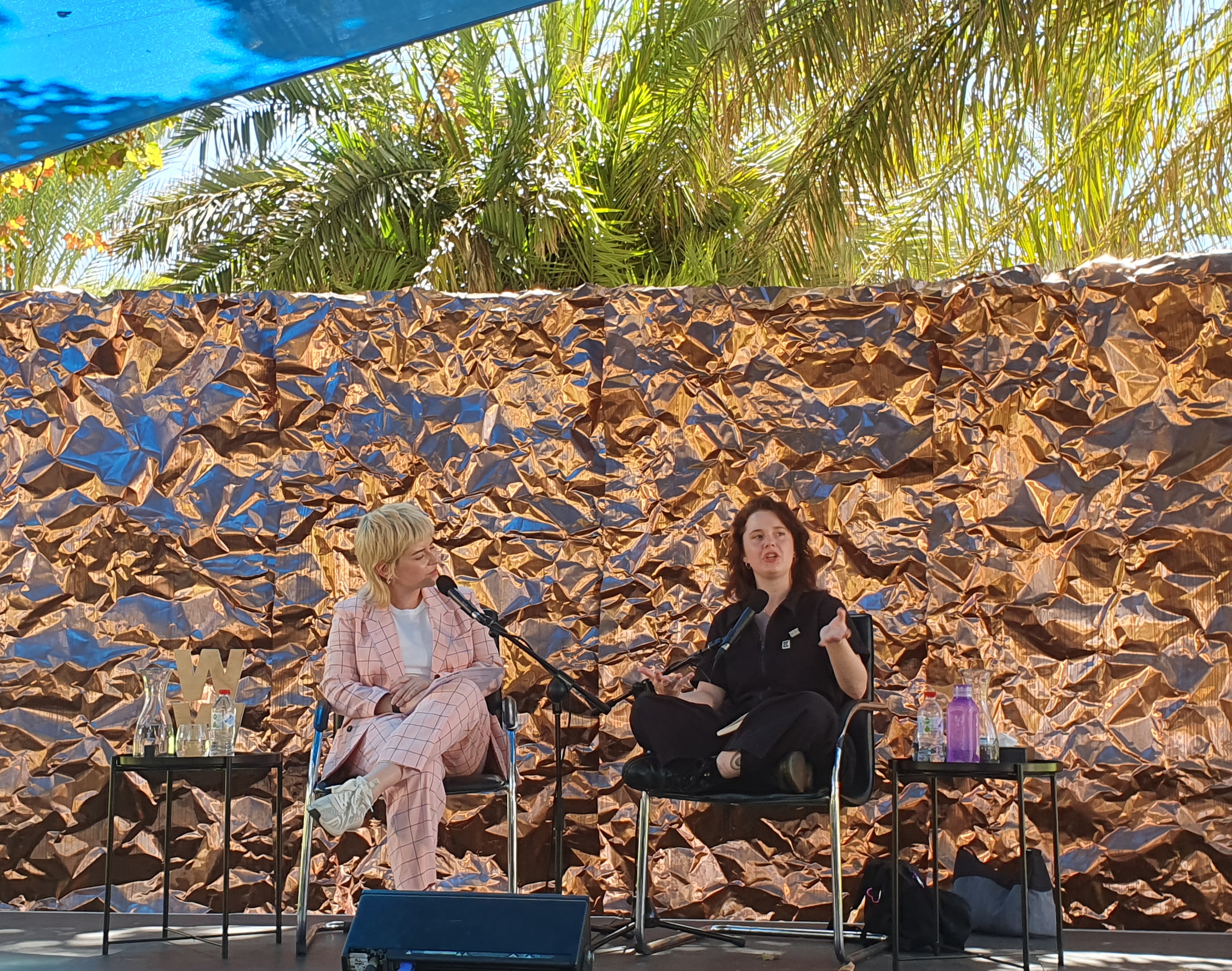
I brought Madison’s latest collection, Dress Rehearsals, from the book tent before I went along to hear her speak about it as I recalled reading some of her poems in an issue of Jacaranda Journal and loving their vividness. This stunning collection is split into three parts that explore love, desire and gender, with Madison explaining how her poetry was born in the mosh pit, the merch girl a prominent figure throughout, and how she grew into queerness through a constant negotiation of self. Madison teaches at Curtain University in Perth and likes to disrupt classical poetry for her students, always having a poem of her own on the stove in the back of her head.

After falling in love with her first book, The Dictionary of Lost Words, I felt compelled to hear Pip talk about her second, The Bookbinder of Jericho, and was not disappointed. These companion books explore the women’s perspective of the publishing industry when it was dominated by men, with the second evolving while she researched the first after seeing a 20-minute film of which ten seconds showed a woman gathering papers that made Pip imagine her boss saying, ‘your job is to bind the books, not read them.’ Pip spoke of books being artefacts, but that she’d never considered how they’re made and actually learnt this skill at the State Library to bind seven of her own.

A Revolution in Poetic Language was the final session I went to, a panel discussion with amazing poets Evelyn Araluen, Madison (again), Ellen Van Neerven and Jill Jones, facilitated by Jessica Alice, former head of Writers SA. Challenging the role that words can play in a climate of change and conflict, each poet shared a reading, some new work, others from existing, but all with a sense of place, belonging and the continuous struggle to.

I also managed to squeeze in a workshop, Writing Place in Poetry, with another fantastic poet Sara M Saleh that explored where we come from, losing, finding, beginning again, combined with some great prompts and time to free-write that I really must do more of because it produces some interesting results. Unfortunately, Sara’s collection, The Flirtation of Girls, was sold out at the book tent so naturally I consoled myself with others.
I was part of a fabulous line up Wednesday evening at this month’s No Wave poetry readings at The Wheaty – Jelena Dinić, Caroline Reid and Jennifer Liston – curated by the equally fabulous Jill Jones.

Jelena was first up who shared some poems from her recent trip to Serbia that were haunting and quiet and devastatingly beautiful, just like the rest of her work. Jelena’s collection In the Room with the She Wolf published by Wakefield Press charts her journey from her former home of Yugoslavia to Australia, from childhood to becoming an adult, and won the Adelaide Festival Awards for Literature Unpublished Manuscript prize in 2020.
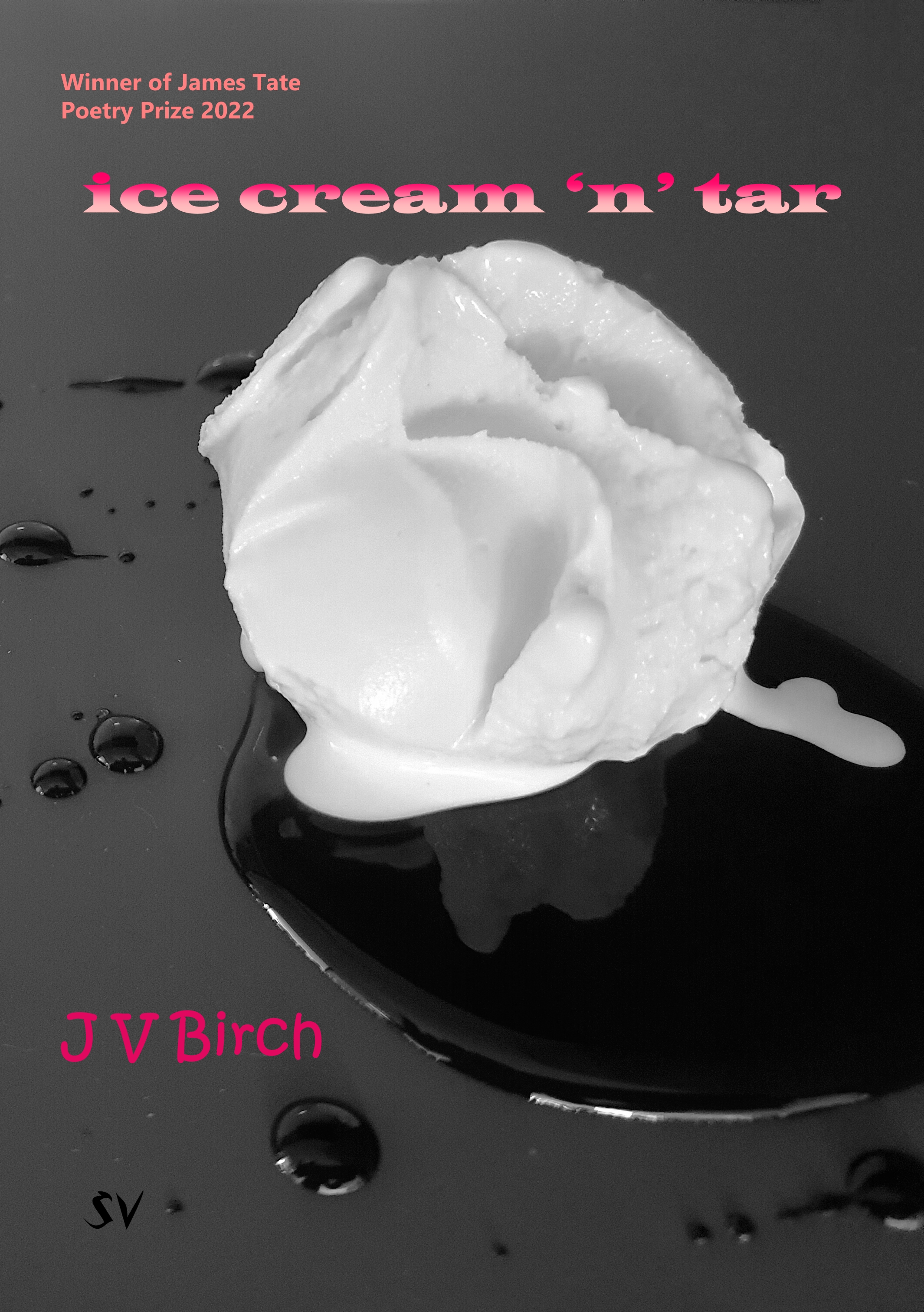
I was next up and shared some poems from my new collection ice cream ‘n’ tar, one of the winners of the James Tate Chapbook Poetry Prize last year published by Survision Books in Dublin. Offering a surrealist take on climate change, my work produced many contemplative responses, which was exactly the reaction I’d hoped for, as the idea behind these poems was to help people focus on the human impact on our wonderful world.
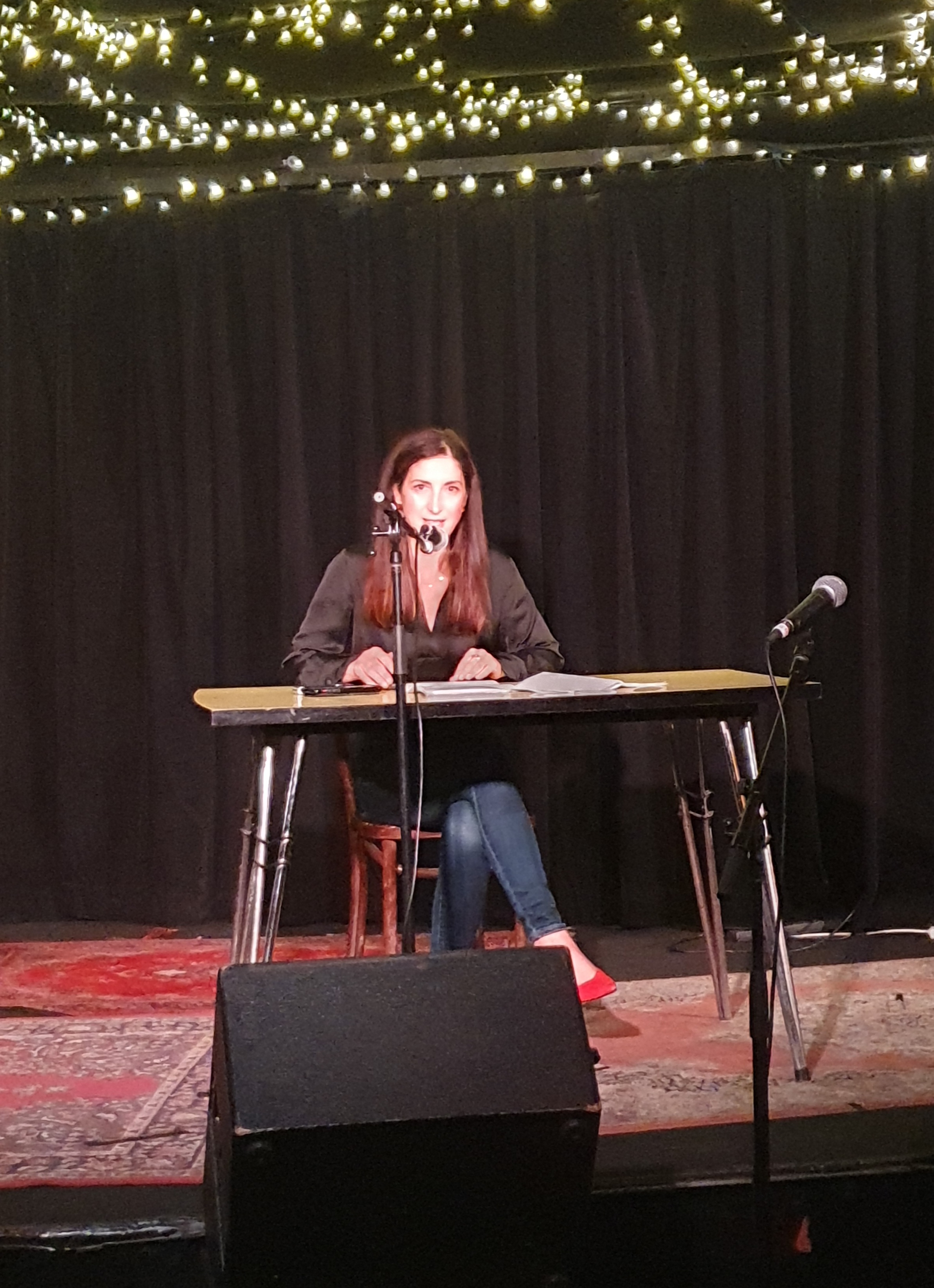
After a short break Caroline took the stage, whose work was highly entertaining in its grittiness and appeal, where poets were compared to dogs with their bite and how the monthly bleed can generate associations in various guises. Caroline won the 2021 Mslexia International Poetry Prize with ‘A Poem to My Mother that She Will Never Read’, which I remember finding in the magazine and being completely wowed by it.
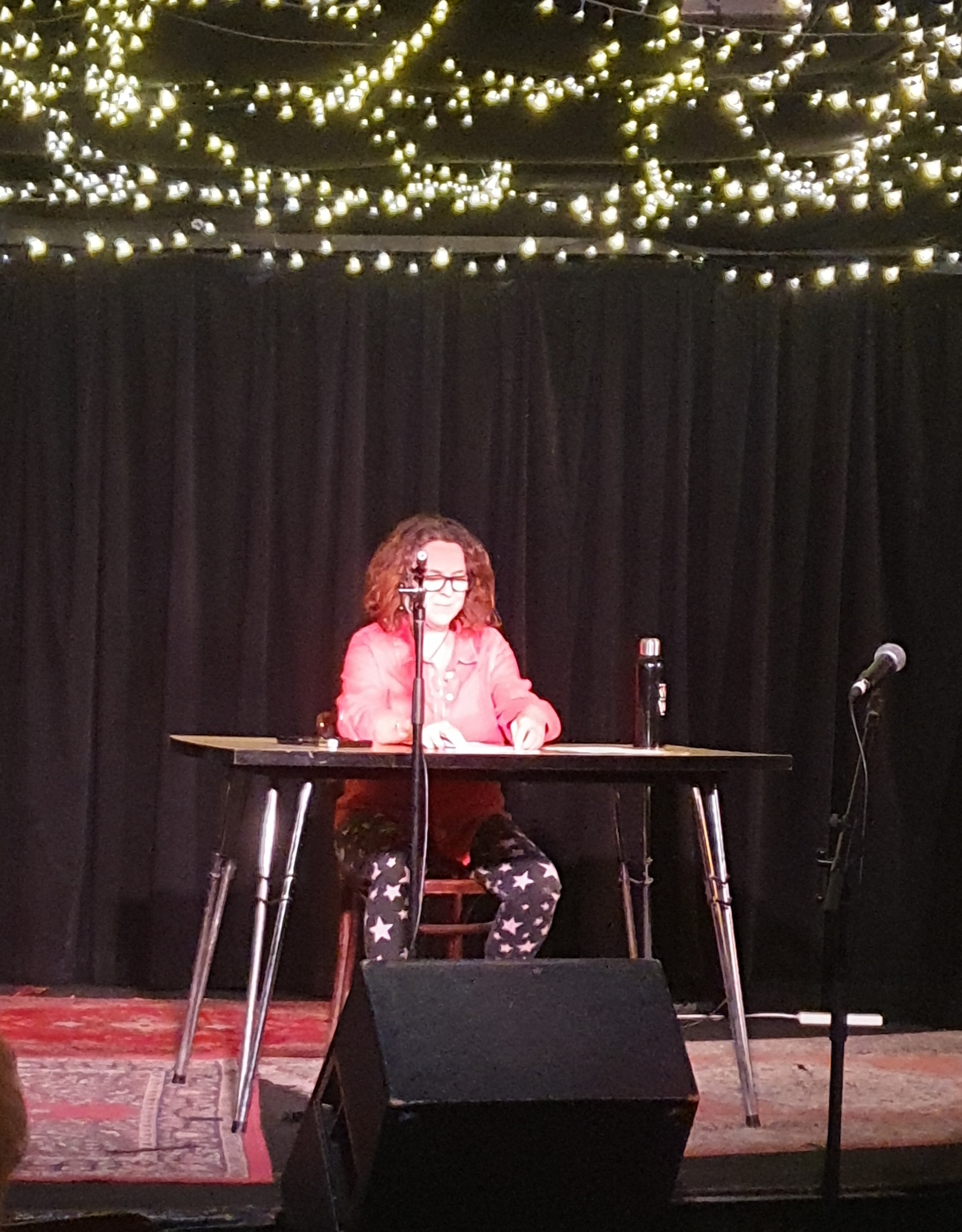
Last but by no means least was Jen who read poems from her forthcoming collection Grace Notes due out from Salmon Publishing later this year, about Grace O’Malley the Pirate Queen of 16th century Ireland who, despite commanding over 200 men at sea, was written out of history. Jen’s poetry is mesmerising and this was no exception, as she gave voice to this heroine once again following her sold out shows at the Adelaide Fringe in 2020.

It was a brilliant evening compered by Jill who shared witty alternative bios alongside our real ones (seem to recall I was a famous chef!) and the variety of poetry shared worked incredibly well. The readings were recorded for Vision Australia Radio‘s Emerging Writers program, to be broadcast alongside the interviews we gave to Kate Cooper, one of its volunteers, which was another fabulous opportunity to reach a wider audience. Here’s my reading and interview if you’re interested and be sure to check out the others too.
So, I consider ice cream ‘n’ tar officially launched and what better place for it than at these prestigious readings. I even managed to sell several signed copies, although of course a poet is never in poetry for the money; it’s all about the words.
It’s been an eventful week. Wednesday I went to the launch of Jill Jones’s latest collection at Goodwood Books and Saturday to Poets and Pizza at Coriole.
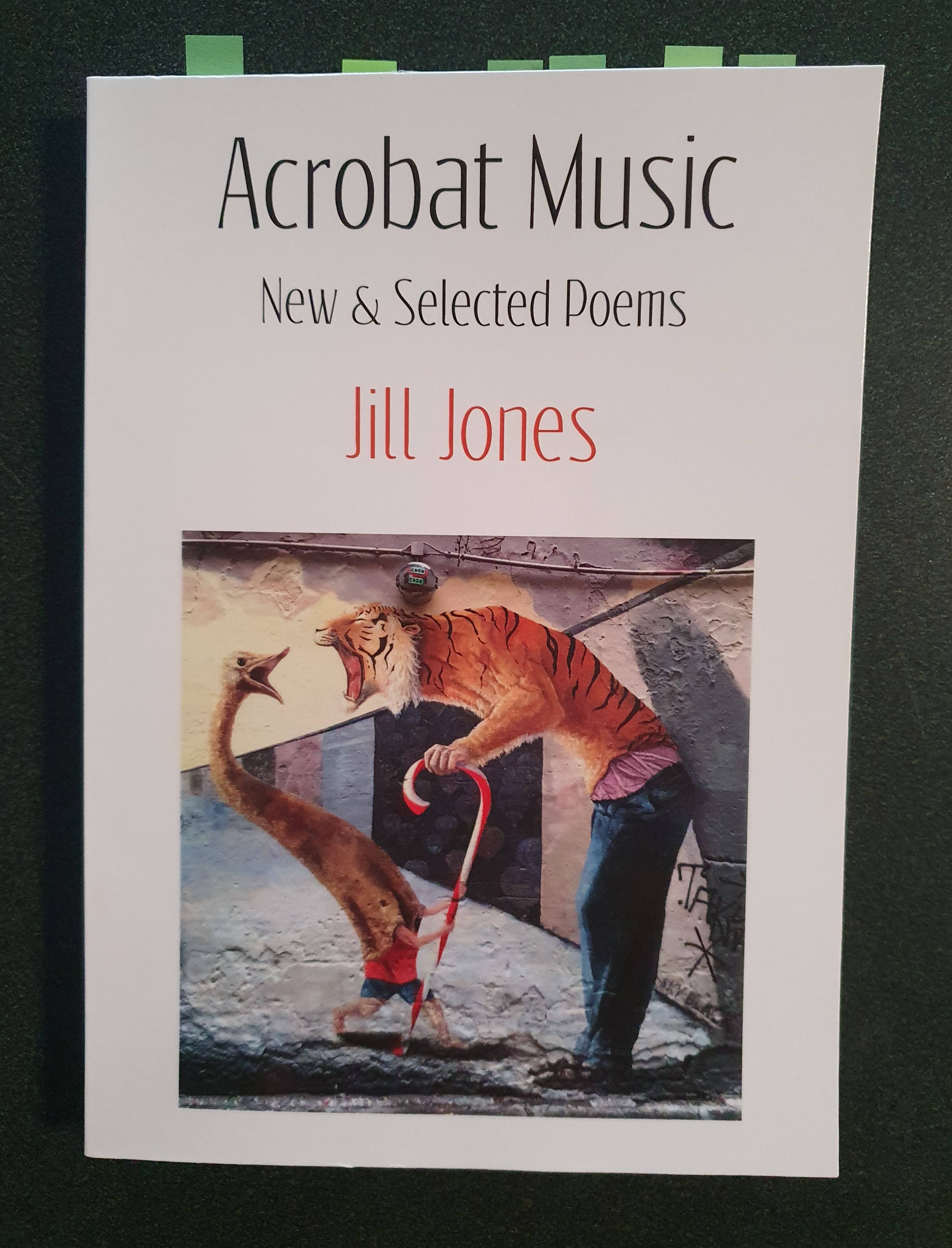
Acrobat Music: New and Selected Poems is Jill’s thirteenth collection who is one of the most prolific poets I know, not to mention amazingly talented and widely read. Published by Puncher and Wattmann and introduced by book curator and arts consultant Sarah Tooth, Jill began with the beautiful poem ‘mother i am waiting now to tell you’ about things unsaid, which she read with her wife Annette, alternating the left with the right justified lines on the page. And then followed a Q&A style session, with Sarah asking how Jill got into poetry who shared her inspirations, which includes Kenneth Slessor and lines from his infamous poem ‘Five Bells’ that left an impression:
Deep and dissolving verticals of light
Ferry the falls of moonshine down.

And it’s this same sense of profound reverie that’s so evocative of Jill’s work, pulling you in and under to a different line of sight. Jill read several poems, including an ekphrastic one literally split into snippets of art and most notably ‘Unbuttoned’, which opens with ‘If I have to earn some skin does it have to be new?’ then proceeds to explore ways to obtain this, culminating in this rather haunting undress:
Or shall I unbutton and fold
what’s left, step out of my nerves
and my veins, leave everything
– corpse, crevice, carcass, shell –
but keep my breath for
the impending and tremendous air
that’s beyond howling when
I touch it to my old pelt?
The bookshop was packed and the line for a signed copy snaked to the door. Originally hailing from Sydney, Jill is now a permanent part of the Adelaide poetry scene, for which I’m immensely glad.
Two of my favourite poets read at Saturday’s event – Rachael Mead and Louise Nicholas – along with Kalicharan Nigel Dey and Bruce Greenhalgh, facilitated by another wonderful local poet, Jude Aqualina. First up was Bruce, whose clever and compact repertoire focused on rhythm and rhyme, both entertaining and far-reaching, in which he explored various aspects of the human condition in a relatable way.

Rachael followed, beginning with ‘The wild grammar of leeches’ from her collection The Flaw in the Pattern by UWA Publishing, with the poem part of a sequence about trekking the Overland Track in Tasmania containing these gorgeous snippets:
I shed my clothes like an awful first draft,
…look down to find my body being edited, its pages
harshly corrected with black punctuation.
…full of stolen content they race end for end
across my skin, challenging my sensitive narrative
with their bold-third person revisions,…
Rachael also shared a poem inspired by the #metoo movement and another comprising a series of broken questions, the kind you hear every day, but in this context, stick.

Louise followed the break with a selection of poems centered around family and memory, sharing the rather poignant ‘Echolalia’ from her collection The List of Last Remaining published by Five Islands Press, about her graceful name-giving and how it changed after her mother’s death:
So when she died
my name for a time
lost its grace
became shape without shadow
question without answer
and even now
if I were to stand on a mountain top
and shout out my name
there’d be no echo
calling back.
Louise also shared entertaining poems about the year she was born, the wife of the man who invented the pap smear and about her children who were in the audience, but presumably forewarned.
Nigel finished the set, urging us to dance and sing, delivering his poems in a unique way, his previous acting career clearly evident in the way he performed and engaged with the crowd.
And now I’m planning my own event to launch ice cream ‘n’ tar, which offers a somewhat surreal perspective on the ever-shifting climate and lack of inaction. Every little helps.
Port Adelaide hosted its inaugural writers’ festival this weekend themed ‘Living Landscapes‘ in the historic Hart Mill Precinct, with an impressive line up and books courtesy of Matilda Bookshop.
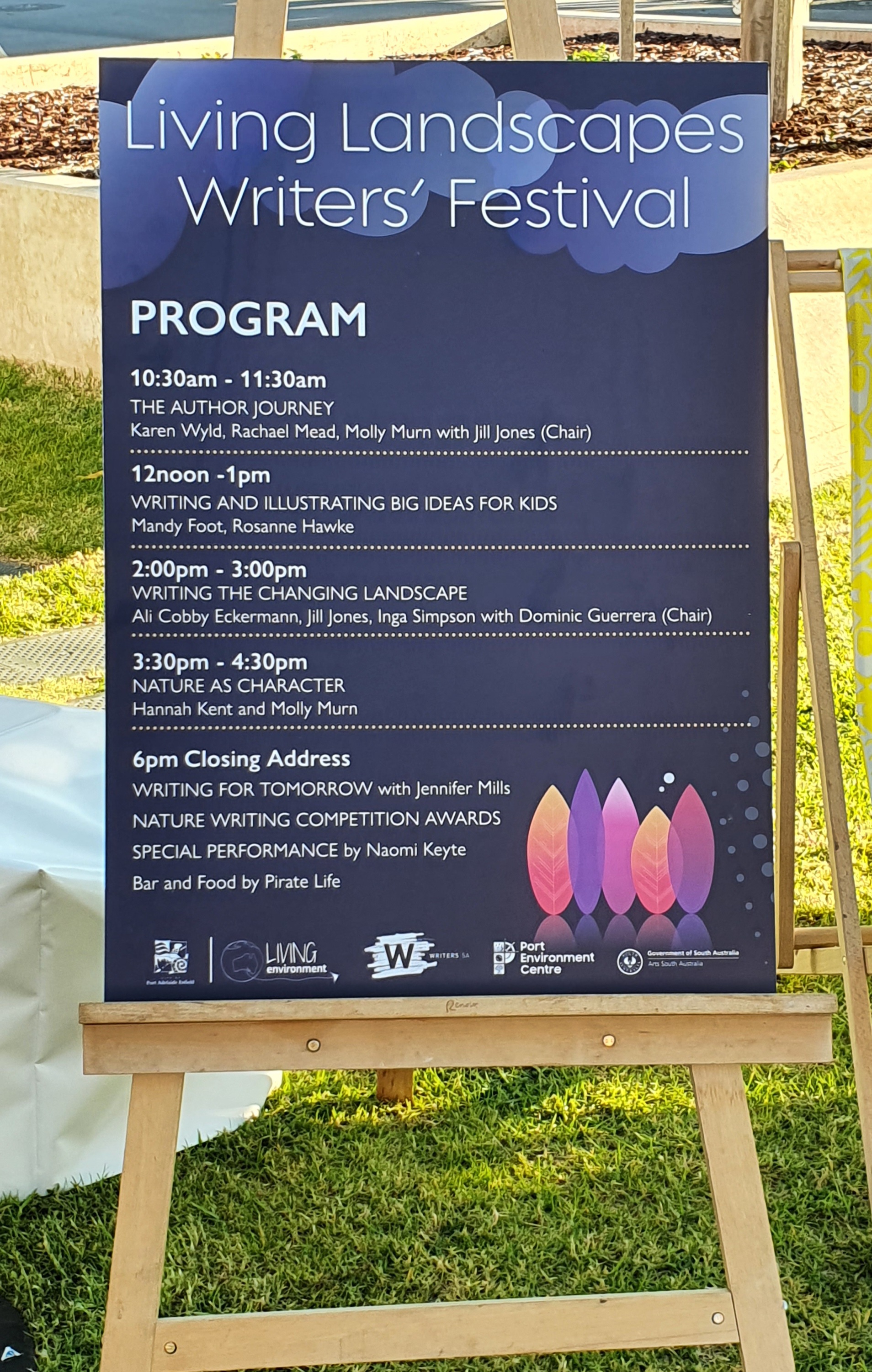
Hosted in conjunction with Writers SA, the program comprised talks and readings examining our relationship with the environment and the role it plays in art, followed by a series of workshops to learn the craft of nature writing. The venue was perfect, set beside the beautiful Port River, home to a variety of life, including dolphins.
I attended the afternoon sessions, the first a panel discussion on ‘Writing the Changing Landscape’ with Ali Cobby Eckermann, Inga Simpson and Jill Jones, facilitated by Writers SA Director, Jessica Alice. It was fascinating to learn about their connection with country, the living world around them and how they capture and express this in their work, often giving voice to the damage we’re doing. Ali spoke about healthy moments and how childhood homes become unrecognisable. Inga grew up on a farm and sought solitude to develop her work. Jill shared examples of mindful suburban walking without distraction. There was talk of the creature’s we’re responsible for, how nature is giving us the solutions and a request for us to be curious again. But the most profound words for me were these when discussing those in power:
Just because you have the money, doesn’t mean you hold the riches.
Ali Cobby Eckermann

The next session was a conversation between Molly Munro and Hannah Kent exploring ‘Nature as Character’. Molly echoed attendance to country and explained how Kangaroo Island, the setting for her latest work, is the last spiritual stopping place for indigenous cultures in South Australia. Hannah referred to the ‘livingness of things’ and shared her intimate connection with the landscape of Iceland where her first novel was set. Both stressed the importance of place in their work, how it must be more than a backdrop to a story to engage not just their readers, but themselves too. They also shared writers who have influenced their writing and that’s one of many things I love about these events, the reading recommendations you leave with, where you discover new writers and work, thought and theory.
I had booked Rachael Mead’s workshop – ‘Writing the Landscape anew through Poetry’ – today, but a deadline snuck up on me so unfortunately I had to cancel. Yesterday was a memorable afternoon, which left me deeply thoughtful, reminding me again how glad I am that I grew up when I did, with a childhood outside exploring nature, back when seasons were sure of themselves.
First Fridays at South Australia’s Art Gallery (AGSA) provide an opportunity to experience art after-hours without the daily crowds. Last night saw brilliant local poets Jill Jones and Alison Flett read poetry inspired by the current exhibition Clarice Beckett: The present moment.
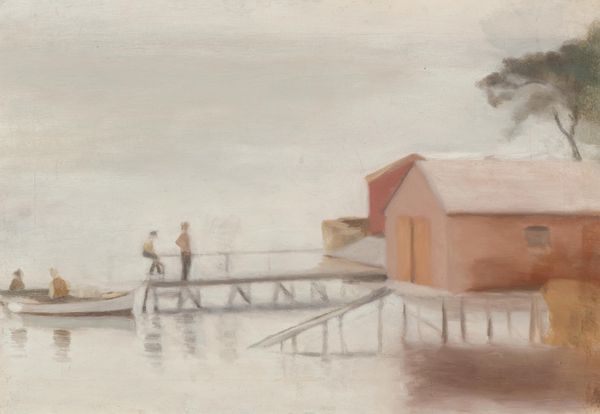
‘The boatshed’, 1929, Clarice Beckett, image courtesy of AGSA
This stunning collection is split into the times of day Clarice enjoyed painting – sunrise, daylight, sunset and moonlight – with each room lit accordingly. Her work is exquisite. Using a limited palette, she captures shimmering scenes that although everyday, have an ethereal quality, best viewed from a distance to heighten the depth of each piece.
And the poetry was just as stunning. Introduced by the gallery’s director, Jill and Alison identified the work or works their words sought to frame, then alternated between themselves, as well as haiku and longer poems. Both captured the delicate movement and light streaming through Clarice’s art superbly, insightful gifts beautifully rendered.
I plan to revisit the exhibition before it closes, compelled in fact. It moved me, swept me elsewhere and yet now, left me with Alison’s lines on life and our place in it and Jill’s question – how much do we need to love the world?
Having decided to treat myself to a poetry festival a year, this time took me to Canberra for Poetry on the Move hosted by the International Poetry Studies Institute, University of Canberra.

With a focus on Inhabiting Language, it offered an eclectic mix of poets and perspectives, a fantastic few days of being immersed in pure unadulterated poetry. Heaven. Due to the amount of sessions, I’ll summarise those I attended and in the absence of some photos, illustrations are curated from my travel snaps over the years in an ekphrastic attempt!
Lines and shapes
My first session looked at form, the panel comprising Cassandra Atherton, Lisa Brockwell, Owen Bullock and Lisa Gorton, convened by Paul Munden. Each poet shared their thoughts before questions from the audience were invited.

Lisa Gorton spoke of an inward principle of growth, a place where line breaks come up against silence, unformed time and vacancy, structures of hesitation. Owen shared a quote by Lyn Heinjin – form is not a fixture but an activity – there’s link and shift, internal line breaks, a song in the narrative. Lisa Brockwell has a strong preference for the sonnet, finding its metre and form liberating rather than confining, allowing her to access a wilder part of her imagination. Cassandra is a prose poet and passionate about it, sharing the concept of the free-line from Sally Ashton, where stand-alone sentences run from margin to margin separated by a skipped line, using Ocean Vuong’s poem ‘Trevor’ as an example of this.
Jill Jones initiated an interesting debate by saying a poem never really ends. Shane Strange asked if it’s better for a poet to just read their work rather than introducing its form, e.g. ghazal, pantoum, sestina, etc., and Cassandra asserted she can identify a prose poem by how it’s delivered.
To conclude, form is organic and follows content, which it most certainly does for me, unless I’ve been set the task of writing in a particular form.
In between sessions, my neighbour asked if I was studying poetry to which I replied no, I’m a poet! In hindsight I thought what an arrogant response. Of course I’m here to learn and will never stop.
Poet to Poet
The next session was a dialogue about the art of translation between Iranian writer Sholeh Wolpé and Keijiro Suga a Japanese literary scholar, facilitated by Melinda Smith.
Sholeh has translated Attar’s work, The Conference of Birds, a piece comprising over 5,000 couplets, one of which is ‘a morsel of lover’s pain is better than the lovers’. Sholeh wants to be known as a writer, not a translator, as she recreates pieces in which nothing is lost, comparing it to using a scalpel; it must cut to the bone. With poetry building bridges, Sholeh is very keen to share the pearls of Iranian work, otherwise it will continue to be regarded as just a terrorist state.
Keijiro didn’t start writing poetry until his fifties and shared a Japanese translation of the poem ‘In a Country where December is Mid-summer’. Japanese society is monolithic and encourages self-declaration, and so for Keijiro, the word identity is bothersome as he feels country doesn’t define who you are, juxtaposing this with his interest in indigenous work. Keijiro explained how, by having to meet deadlines, he doesn’t have the luxury of thinking.
What I took away is that translation can be flexible. You can bring in elements of yourself and your own interpretation, provided the reader ends up feeling the same way.
Tuesday evening saw the launch at The Howling Owl of the second series of chapbooks from Little Windows Press; a small local publisher with ‘little books, big horizons’.

Launched by Jill Jones, an extremely talented and acclaimed poet herself, these chapbooks are exquisite – pieces of art in their own right – and in this limited-edition print run present work by Ali Cobby Eckermann, Kathryn Hummel, Jen Hadfield and Adam Aitken.

Ali read first from The Aura of Loss, a collection of poems exploring the stolen generation and its impact on those survivors who carry its grief. Ali is a Yankunytjatjara Aboriginal poet and author of seven books, including the verse novel Ruby Moonlight. Her poem ‘My mother’s love’ is a painful insight to maternal absence – ‘her touch is devoid and I am frantic’ – followed by a peeling of the self until ‘my fingers now bones dipped in blood I etch the lines of my first poem’, a haunting final image.
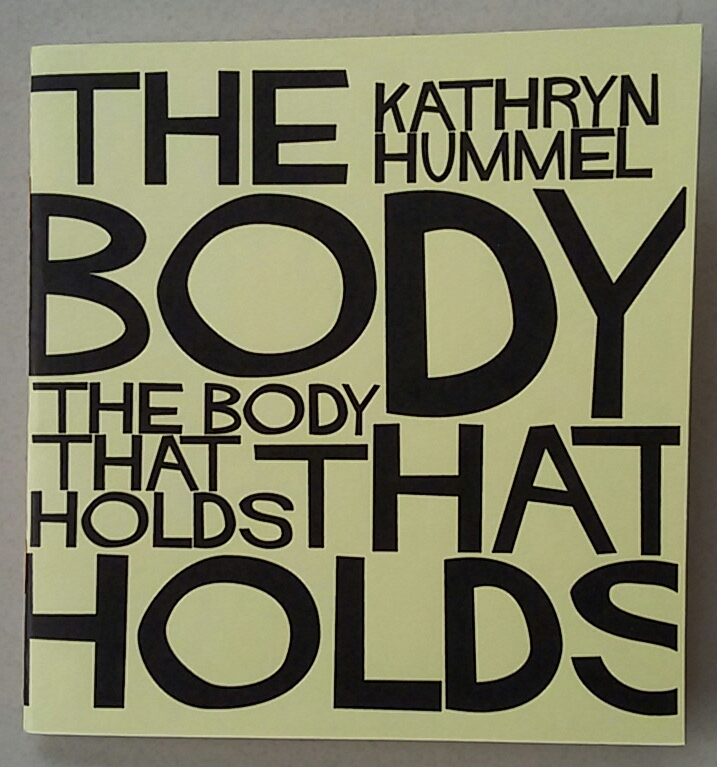
Kathryn’s diverse award-winning work spans poetry, non-fiction, fiction and photography, published and performed both here and overseas. Her last collection, The Bangalore Set, delves into her time in India. Among others, Kat shared ‘Wharf’ from her chapbook The Body that Holds, a poem about Port Adelaide where ‘time is a sinew to be thinned between thumb and forefinger’ and ‘rumination has its own magnifying silence.’ With nothing to do, two men wait while ‘between a jacket and its lining a flat light comes’.
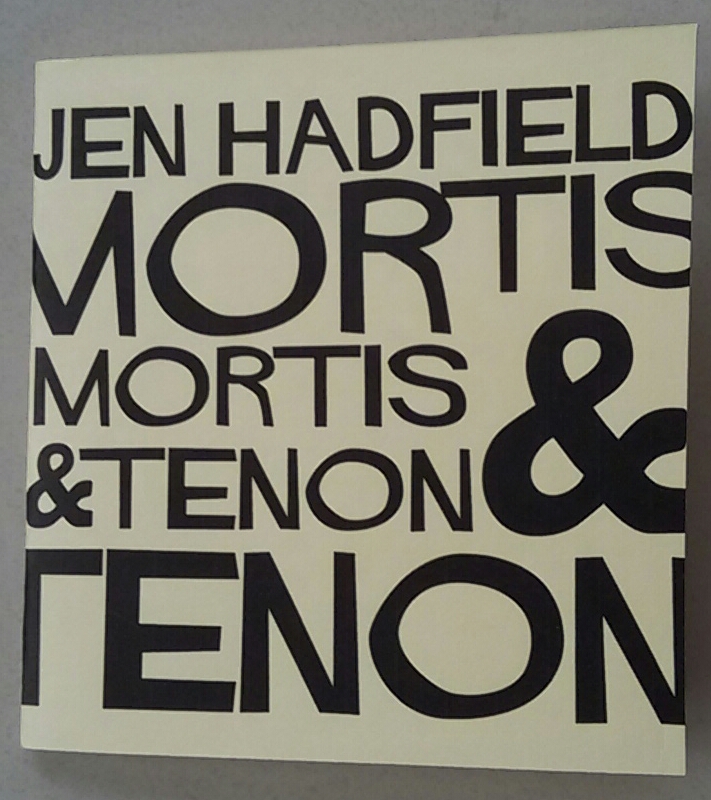
Alison read poems from Jen’s chapbook Mortis and Tenon, a fellow Scottish poet whose own work is simply brilliant, while Jen lives in the Shetland Islands. As well as poet, Jen is a visual artist and bookmaker, winning the T.S. Eliot prize with her second collection Nigh-No-Place. Jen has language in landscape, beautifully evident in ‘Two Limpet Poems’ in which ‘above the rockpool everything is tilt or rough glazed in weed like afterbirth’ and where ‘This is no place to turn up without a shell / all that protects us from the press of heaven.’

Jill read some of Adam’s work in his absence who lives in Sydney and has had a number of poetry collections published, in addition to short fiction in journals and anthologies. Adam’s chapbook, Notes on the River, are just that; vivid snapshots that explore its nuances as in the title poem where ‘It is not a river but a question.’ A plethora of images flow thereafter, culminating in a favourite – ‘Eels find their way to flood. They dream of babies, stalk the shadows and lay each other down in them.’
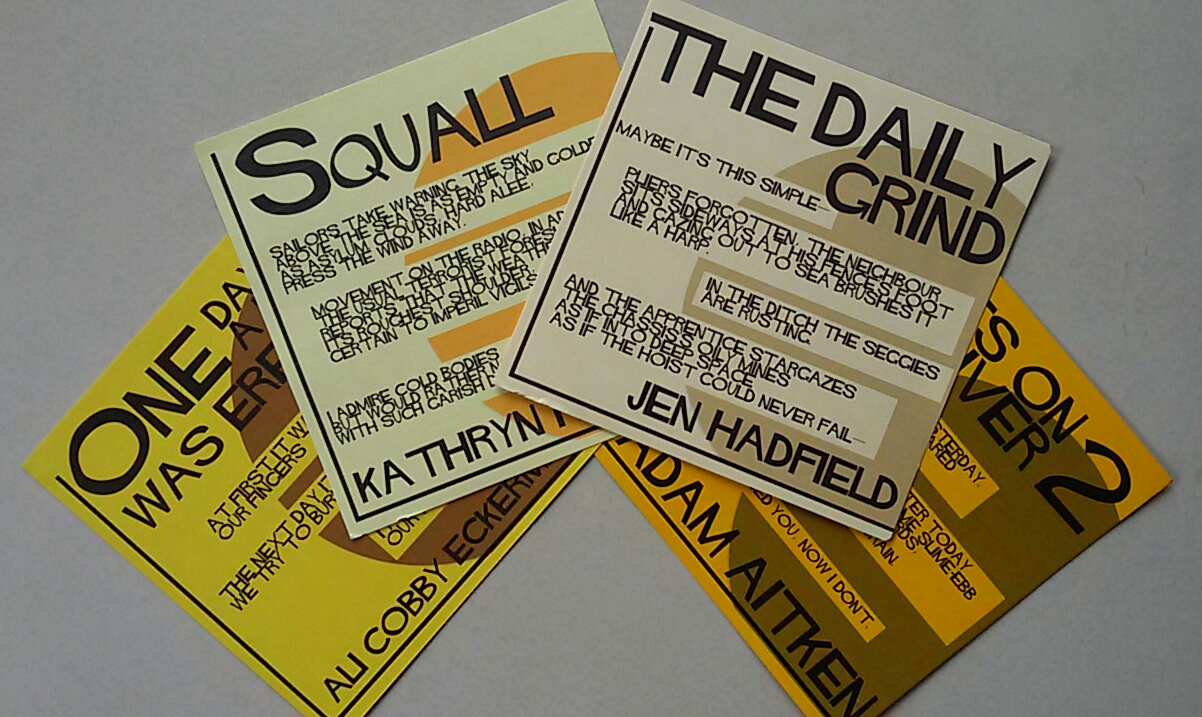
With eye-catching covers and painstaking production, these chapbooks really are a gift, and in this series with the wonderful addition of pull out poems to keep handy when you need a little bliss.
is a must have collection. Published by Puncher and Wattmann and edited by Martin Langford, Judith Beveridge, Judy Johnson and David Musgrave, this 658-page book anthologises Australian poetry for the last 25 years.
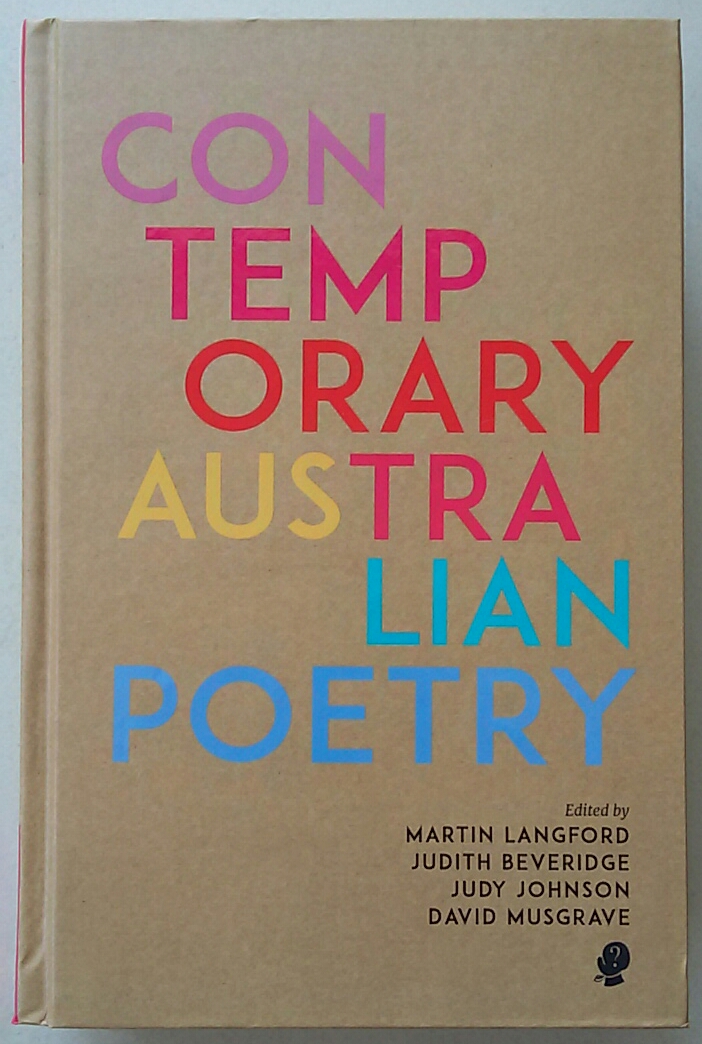
Taking 10 years to compile over 200 poets and 500 poems, it really is a landmark publication, a credit to the Australian poetry scene, and includes some incredible poets – Ken Bolton, Jennifer Compton, Peter Goldsworthy, Jill Jones, John Kinsella, Mike Ladd, David Malouf, David Mortimer, Les Murray, Jan Owen, Dorothy Porter, Mark Tredinnick, Fiona Wright, not to mention the editors themselves.
It’s being launched in Adelaide at the SA Writers Centre next Friday, which unfortunately I can’t make (off exploring Noosa), so I promptly ordered a copy. Flicking through for the first time, because this will need endless reads, two poems caught my eye – ‘Grief’ by Elizabeth Allen and ‘Snowflake’ by Anthony Lawrence.
Elizabeth is a Sydney-based poet and her chapbook Forgetful Hands is on my wish list. Hers is a powerfully poignant piece about her sister, who having lost her ‘Botticelli curls’
‘…has been looking into people like mirrors
but does not know how to make a face
that resembles the pain inside her.’
Anthony I saw at Mildura’s Writers’ Festival the year Sharon Olds headlined, who I was lucky enough to meet. His poem centres around his mother who cultivates a snowflake in the freezer ‘between the peas and the ice cream’, setting sapphires into her teeth:
‘At dinner I would pretend
to be a good son, and her smile
enameled the table
with points of dark blue light.’
This is a remarkable anthology, to be read, smiled, laughed, cried and absorbed between breaths, bit by brilliant bit.
Last night I went to the launch of Little Windows at Booknook & Bean, an exciting new line of chapbooks from poets Jill Jones and Alison Flett. Published in a series of four, poets Andy Jackson and John Glenday helped Jill and Alison fulfill the first quota.

These limited edition handmade chapbooks are exquisite, developed to get South Australian poets on the map and this they will do. Alison introduced the series, thanking all those involved in its production, before handing over to Jennifer Liston to MC the event, with each poet sharing three poems from their chapbooks.

John was first up, joining the event via Skype from Scotland, and began with ‘the apple ghost’, a haunting poem of loss in which an old woman has kept the last apples her husband picked before he died. There are ‘shelf over shelf of apples, weightless with decay’ prompting the dead husband to roam the home at night and attempt to try ‘to hang the fruit back on the tree.’ The ‘undark’ followed, the first poem in the chapbook, continuing the delicate theme of death where ‘those girls’ have ‘come back’, ‘their footprints gleam in the past like alien snow’ and the light they once had has ‘burned through the cotton of their lives’. John’s final poem I didn’t quite catch (too busy manoeuvring a crate to sit down!) but I’m glad to have discovered his work.
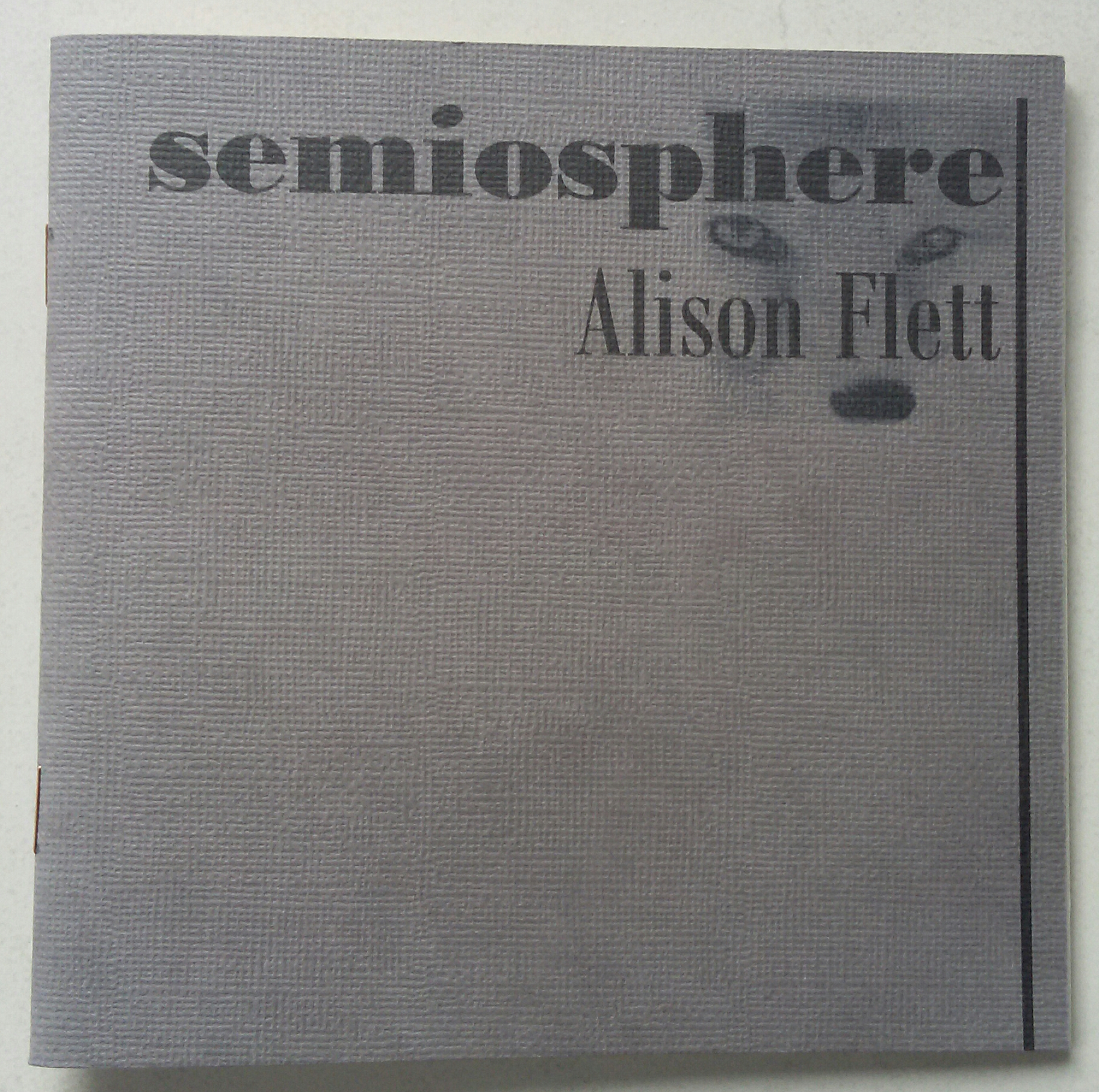
Alison read next, sharing three poems from her fox series, which I adore, beginning with ‘fox 1: umvelt’ where he moves ‘in silence through the city’, ‘the pavements are thick with his thick foxy scent’ and after he’s gone, leaves ‘his shadow smoking and stamping in the air.’ In ‘fox 2: corporeal’ aspects of the fox are presented; ‘his eyes are amber planets’, his tail with its ‘bristling quivering tips’, his ‘feet listening to the nothing’, his heart ‘a dark livid thing.’ The human connection is explored in ‘fox 3: liminoid’ when Alison encounters one crossing the road ahead as she walks with her friends from a nightclub, feeling ‘a pencil line of silence’ running between them as they regard one another in the din, and how this ‘gift from the fox’ returns ‘when theres noise all around’, ‘its taut string singing the silence’.

Andy followed with ‘blue mountains line’, a poignant journey in a train carriage ‘the colour of tendon and bone’, where ‘outside, the mist has lifted and left behind the shudder and billow of mountains’ and ‘that knocking is only an empty wheelchair, wobbling with the motion of the train.’ Andy then read ‘breathing’ posing the question ‘How do I carry this air?’, the scene a cremation described as ‘Theatre in reverse, decomposing you into these vague and pressing sensations in my head and chest’, leaving us with the simple line ‘Breathe out, breathe in -.’ Andy finished with a wonderful poem I’ve heard him read before, ‘what I have under my shirt’, offerings to explain the impact of Marfan Syndrome; ‘a speed hump (your eyes must slow down approaching)’, ‘the shape of my father’, ‘infinite shirts’.

Jill completed the readings beginning with ‘the wall, the door, the rain’, a thought-provoking poem where ‘there’s nothing I can claim of this world someone keeps giving away’ being ‘white with entitlements and modern footwear while blasphemy accumulates in my dreams’. Next came ‘big apples leaf summer’ rich with childhood and ‘the kindness of leaves’, as Jill contemplates ‘I am to be diamonds, pick me-ups, queer riddles you do not know’, crossing the playground her ‘confusion was greater than the hills’. Jill left us with ‘mighty tree’, the final poem in her chapbook, each line a stand-alone statement knitting beautiful images, where at the end she pleads ‘Oh mighty tree fall on me. Make me a legend or a nest. The magpies can pluck my dream. The ghosts can have the rest.’

This is a wonderfully fresh series, small finite collections presenting snapshots of poetry. Finishing touches are being applied to the website to enable others to gaze into these poetic windows of brilliance.
 J V Birch