You are currently browsing the tag archive for the ‘Heather Taylor Johnson’ tag.
Another national Poetry Month is nearing its end that has brought a variety of events to get involved in, from online readings to in-person workshops, many of which were facilitated by Red Room Poetry. Here’s a few that I attended.


First up was a poetry workshop based on the Dangerously Modern art exhibition with Jill Jones. Taking images from the gallery by pioneering Australian women such as those depicted above, we explored objects, interiors and thresholds in response to them through a series of writing exercises, some of which I plan to develop further to see where they take me.

I went along to a panel discussion next, Poetry as Medicine, with the poets above sharing what this means to them and excerpts from their work, that varied from the impact of chronic conditions on the self through to big picture impacts on the world around us. The questions were thought-provoking and produced some interesting answers, with the session culminating in a reading from Anna-Mei Szetu.

The last event was the online workshop Finger Exercises for Poets with American poet Dorianne Laux, who read extracts and exercises from her book by the same name, explaining how its concept was inspired by the finger exercises her mother did on the piano before playing a piece of music. It’s a book that definitely warrants spending time with.


In-between these events I’ve continued with my regular commitments – a monthly online feedback workshop with Cath Drake, meeting with a local poetry group and an online writing session that delved into using the senses with The Orange & Bee. I’ve also been pairing photos taken on my various walks with poetic quotes and sharing them on Facebook and Instagram to help keep the poetry conversation going, but also as a little relief from the daily onslaught of horror that’s called news. Give me a snowdrop thriving through a crack in cement any day.
Workshops, courses and newsletters are brilliant ways to develop your poetry and stay in the loop, so just thought I’d share a few I’ve completed and signed up for.
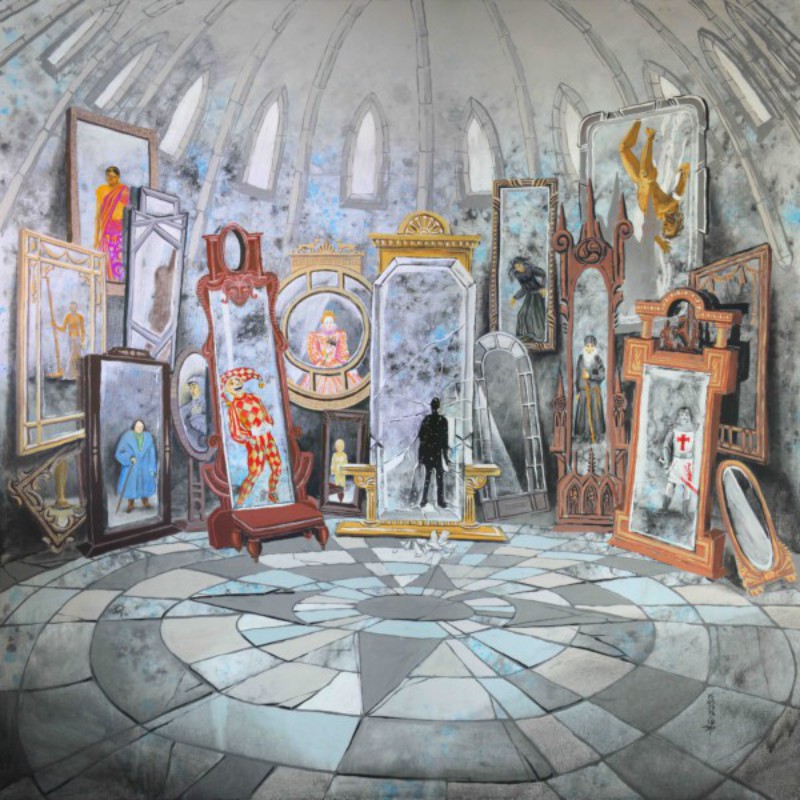
The Poetry School has an amazing program each term and I’m halfway through Myth, Magic and Monsters: Ancient Stories, New Truths with fabulous UK-based writer Catherine Smith. This fits perfectly with the poems I’m working on at the moment for my next book and I love Catherine’s work, her short story collection The Biting Point being one of my favourites.

Earlier this month I attended Sophie Mackintosh‘s Modern Fairy Tale and Speculation workshop facilitated by Red Room Poetry. Held in two parts online and aimed at writers rather than poets, the topic was too timely to pass up and generated many ideas. Another UK-based author, Sophie’s The Water Cure was nominated for the 2018 Man Booker Prize I have yet to read.

As for newsletters, I’ve recently signed up to Fly on the Wall‘s one, an indie press based in Manchester ran by Isabelle Kenyon, which is how I discovered the stunning work of Scottish poet Morag Anderson. These are sharp poems with sharp things to say – “concealed violence, love and everything in between” – leaving their teeth marks long after I’d finished them.

UK-based poets Clare Shaw and Kim Moore have started their own newsletter sharing process, thoughts and prompts to keep the conversation going. Science Write Now is also worth noting with a focus on science-inspired creative writing headed up by Australian-based writers Amanda Niehaus, Jessica White and Taylor Mitchell. Another favourite is Katrina Naomi‘s Short and Sweet that offers hints and tips and recommended reads, with Katrina’s next collection Battery Rocks due out soon.

Other workshops coming up include Pascale Petit‘s Into the Wild via The Poetry Business next week and Rules in the Poetry Game with Kate Potts on Cath Drake’s Verandah in July. I’m also planning a writing retreat at Island View Writers’ House in August offered by the fantastic Heather Taylor Johnson, more on that to follow.
This month’s Dog-Eared Readings took place in the elegant Stirling Hotel up in the Adelaide Hills and featured Corrie Hosking, Molly Murn and Rebekah Clarkson in conversation with Pip Williams, hosted by the brilliant Rachael Mead and equally brilliant Heather Taylor-Johnson.

Corrie was first to read who shared an excerpt from her next work as yet unpublished and being the inaugural winner of the Adelaide Festival Award for an Unpublished Manuscript in 2002. Accompanied by drawings of insects and birds, Corrie took us back to our roots where nature is something to be mindful about.

Next up was Molly, who shared a collection of poems also unpublished that focused on place and the liminal spaces in between. Molly works at the Matilda Bookshop in Stirling, a gorgeous store with beautiful books and I’ve heard Molly read before at a literary festival, so it was good to see and hear her again.

After the break, Rebekah chatted to Pip about her thoughts on various quotes by other writers, her writing practice and the thinking behind her books. I’m always fascinated to hear how other writers work and Pip’s goal setting of one word a day means she never fails! Continuing the theme of unpublished work, Pip shared the same and having read The Dictionary of Lost Words, one of those books I didn’t want to end, I’ll buy her next, The Bookbinder of Jericho, when she reads at Writers Week starting shortly.

Being up in the hills brought a different audience and it was wonderful to celebrate the incredible local writers who generously shared a blend of prose and poetry that we’ll no doubt see in print soon. The next readings include one of my favourite poets, Andy Jackson, so absolutely not one to be missed.
The Little Red Door & Winston Thursday night saw the launch of Alogopoiesis, the fascinating new collection from Amelia Walker published by Gazebo Books.
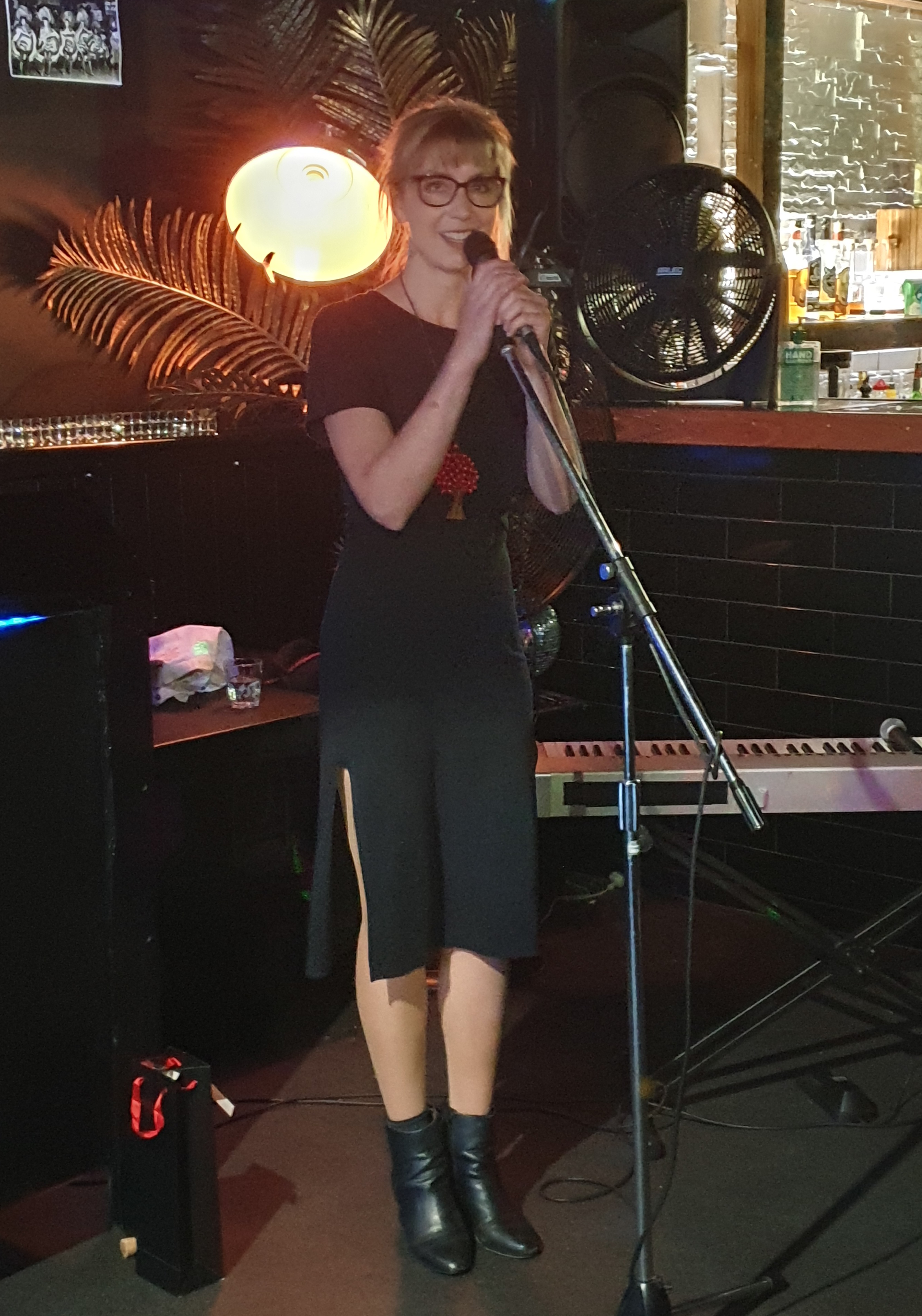
Amelia has been writing and performing poetry since her early teens, had seven books published, including four collections of poems, and teaches creative writing at UniSA. And this launch was a little different, in that other local poets read from Amelia’s book who shared their connection with Amelia, their chosen poem(s) and responded with one of their own.

First up was Mike Ladd who read the first poem in the collection ‘Kite’, in which the speaker studies a tree-trapped one ‘arcing, diving’, considers how it arrived there by ‘romancing cyclones’, juxtaposing this child’s toy with ‘the opposite of violence, shining like a knife.’ Mike then read a poem about his mother who, as a girl, was literally caught up in a dust storm, continuing the theme of turbulence.
Kerryn Tredrea was up next with ‘You’re missing’, where the absence of another creates ‘holes’ to be sewn up, re-filled, as if darning a beloved garment to make it last longer, with the action of missing a way for the speaker to keep the loved one present, near. Kerryn responded with a poem about internet dating, another way of seeking what may often seem an elusive someone.
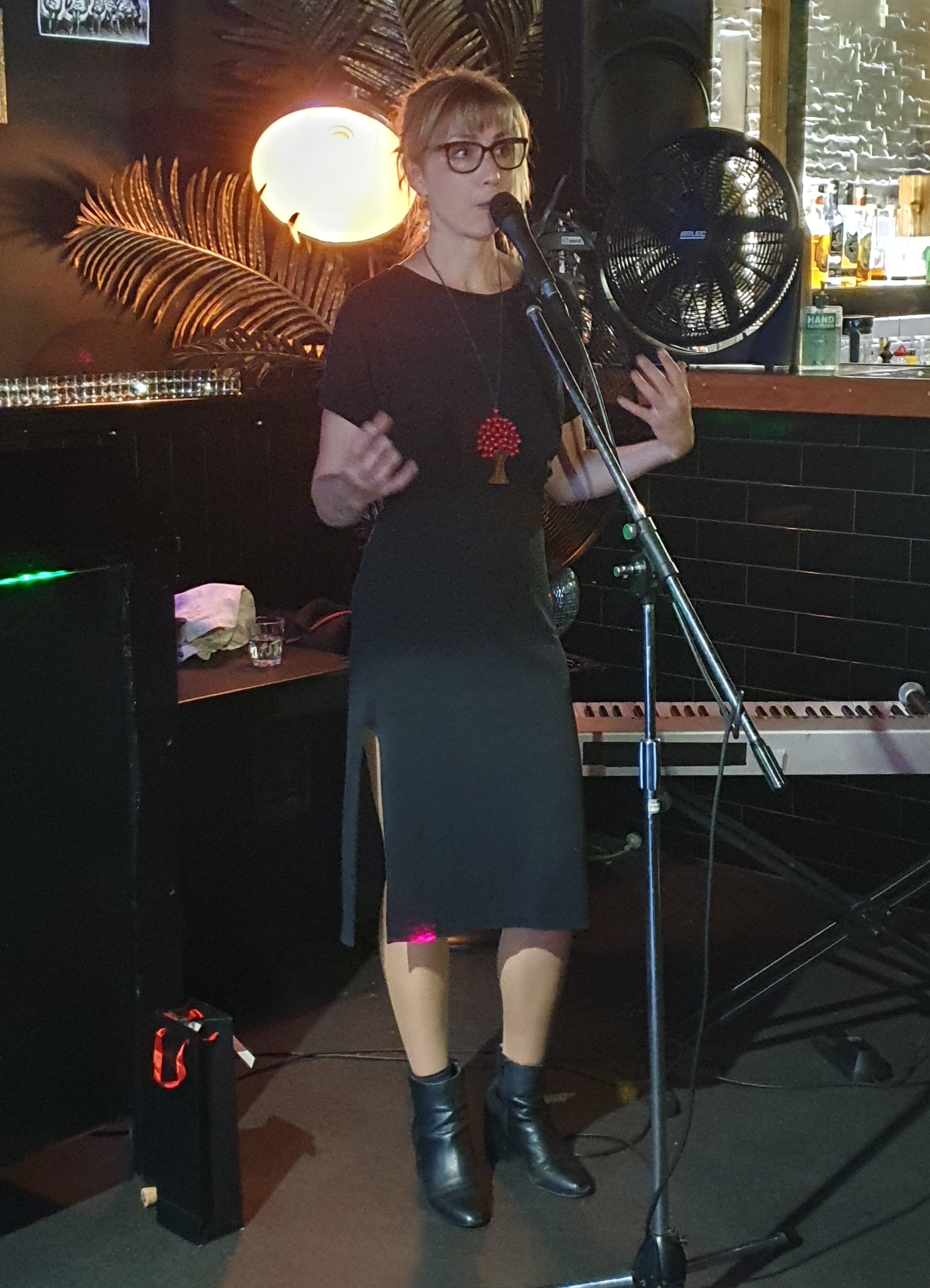
Heather Taylor Johnson followed by reading three versions of ‘Taking time’ that revolves around an ailing father isolating during the pandemic to stay safe, the daughter understanding and yet ‘it stung’, realising the risks associated with contact, ‘But still. But still.’ Heather then shared a three-part poem about menopause, mirroring the refracted self in a multitude of ways.
Sarah Pearce read two different versions of ‘Island’ next, in which a woman is the island upon which ‘sailors wreck themselves’, and how she is ‘cultivated’ and ‘shaped’ by another woman who, after everything, prefers the speaker ‘wild’, her original self. Sarah responded with a poem called ‘Ophelia’, unspooling the tragedy that culminates in the individual being ‘mossed in fear’.

Last up was Bronwyn Lovell who shared two versions of ‘Through the cracks’ where a relationship is examined and left wanting, the ruin of the furnishings surrounding them indicative of where it’s at, as the speaker relates to their ‘chipped’ plates, feeling ‘faded, missing, cracked’. Bronywn finished the readings with a poem about her ex-boyfriend, echoing the previous disconnect.
Gazebo Books offer ‘books for curious minds’ and indeed it is a curious book, with an extraordinary structure throughout and a title that captures the contents perfectly – ‘alogia’ meaning an inability to speak fluently and ‘poiesis’ making – and so these poems speak of absence, the blank space of a page where the challenges of being exist. The interwoven intricacies of several versions of the same poem render it kaleidoscopic, the colours and cadence and circularity so evocative of life, that a reader’s compelled to explore it.
A spectacular line-up graced this month’s Dog-Eared Readings – Lisa Hannett, Jelena Dinić and J.M. Coetzee in conversation with Shannon Burns – at the Howling Owl in Adelaide.

Facilitated by the effervescent Heather Taylor Johnson and Rachael Mead, the crowd was at capacity unsurprisingly, eagerly awaiting an evening of prose, poetry and memoir.
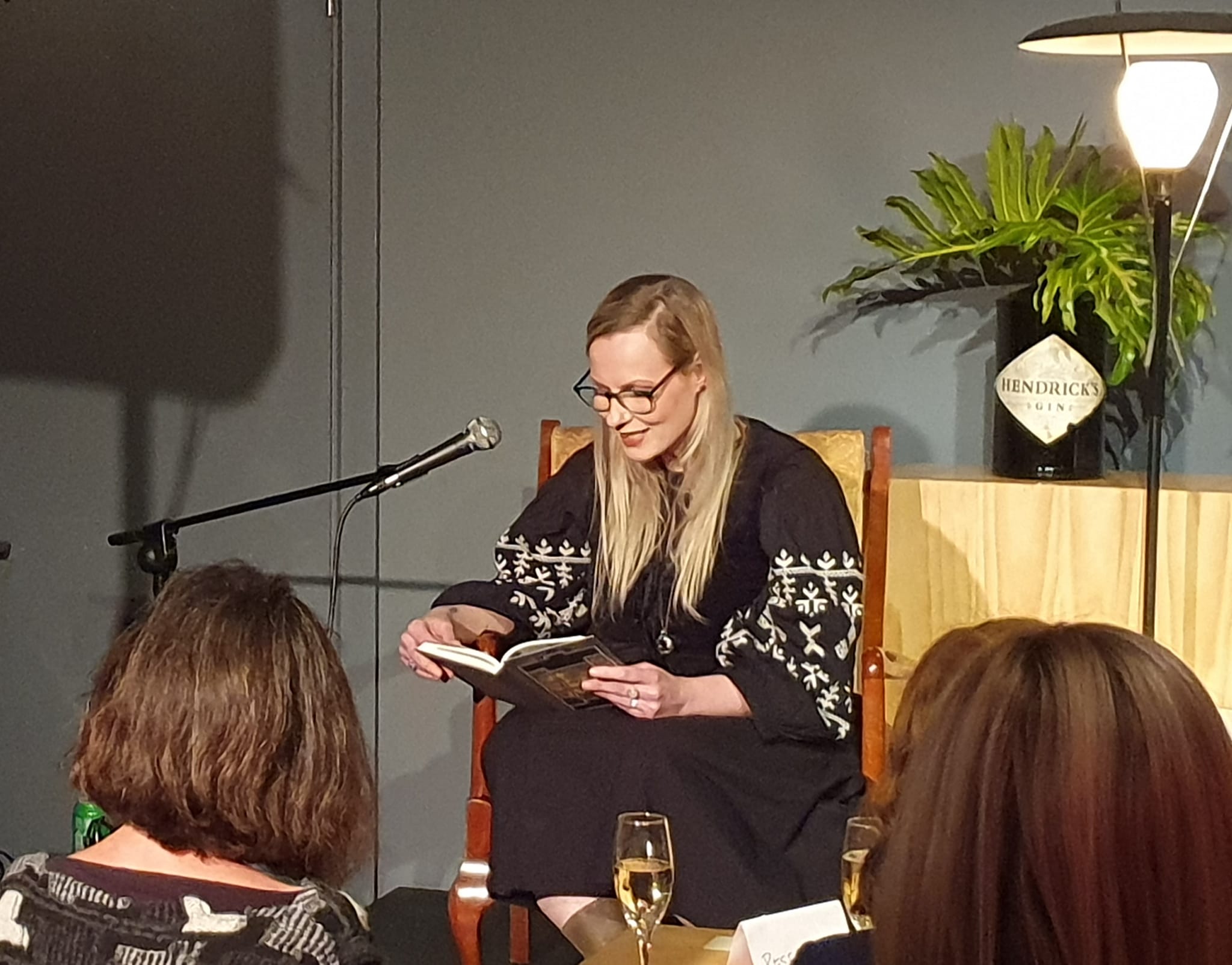
First up was Canadian-born Australian writer Lisa, who shared a visceral short story called ‘The Honey Stomach’ from her new collection The Fortunate Isles just published by Egaeus Press. Lisa writes speculative dark fiction and this prose showcased all the hallmarks of the genre, set in the fantastical world of Barradoon. With myths and folklore the focus, it bristled with tension, not unlike the bees frequenting it, the nectar-collecting an almost sated violence, culminating in the mother showing her children how it’s done.

Next up was Jelena, who began by asking the audience what inclusion means to them, stemming from her work with the CALD community and leading a multidisciplinary team. Jelena read poems from her latest collection, In the Room with the She Wolf from Wakefield Press, that won the Adelaide Festival Unpublished Manuscript Award in 2019. This work speaks of how family, culture and place intertwine but also of fractures, where countries no longer exist and post is ‘snatched from the dangerous man on the motorbike’.
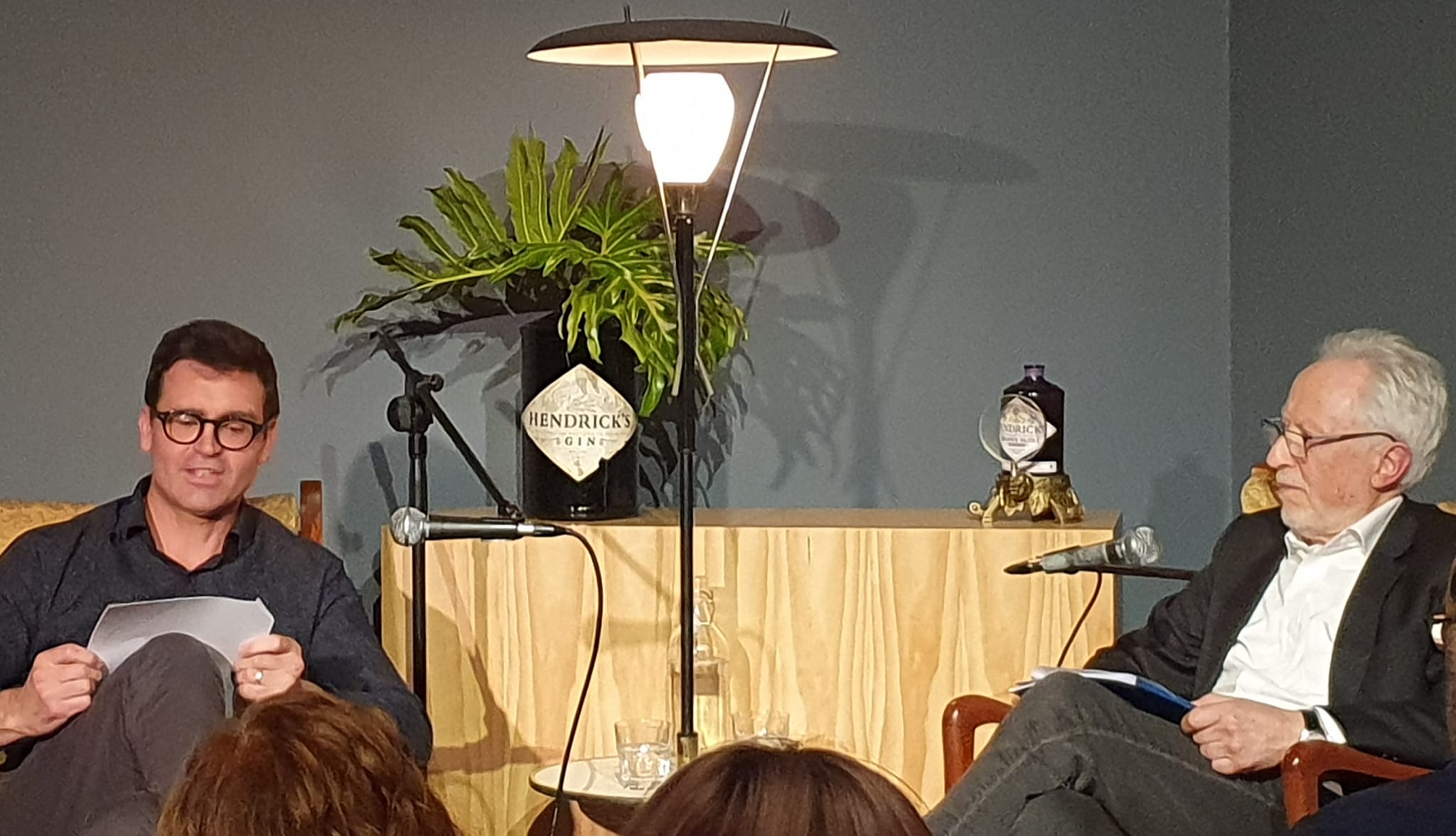
After the break came John chatting to Shannon about his memoir Childhood (Text Publishing), continuing the disconnect where Shannon’s most formative years were spent being passed between his fractured parents – a mother who loved violently and a father not at all. They touched on ethics, discussed truth-telling versus storytelling with Shannon of the firm belief his work is the latter, and what you lose moving from working class to middle, a rather thought-provoking and poignant perspective on that inevitable social divide.

So I’ve read Jelena’s collection, am two-thirds through Shannon’s book, have yet to read John’s Booker Prize winning one and must order Lisa’s, which looks to be a gift in itself with its hardbacked intricate design. While my kindle was good for emigrating here and I am mindful of the trees it takes, give me a physical book any day.
August is Australia’s poetry month, deemed so by Red Room Poetry, a leader in commissioning, creating, promoting and publishing poetry in meaningful ways. And it was busy.

Launched in 2021, Poetry Month aims to increase access, awareness and visibility of poetry, with Red Room Poetry hosting a variety of events, such as readings and workshops, and providing prompts to generate those all-important words. There’s also a poetry showcase in each state and one of the many wonderful aspects of this initiative is the ‘pay what you can’ ethos.
The first event I signed up for was an online book club, with Andy Jackson, Ellen van Neerven and James Jinag, facilitated by the effervescent Felicity Plunkett. Each shared passages and reflections on a favourite book of their choice with some wide-ranging and collaborative selections. Andy’s and Ellen’s fantastic work I’m familiar with, Human Looking and Throat being their latest collections respectively, but James I wasn’t, so it was great to hear his thoughts on the texts shared and learn about him.

Next up was an online workshop with Andy Jackson through Writers SA called Un-alone Poetry, where we delved into self-portrait poems with Andy sharing some from his latest collection that brings together the voice of the disabled. I’ve participated in Andy’s courses before and this was of the same brilliant ilk, perfectly balancing time to read and reflect with the opportunity to write and share. We even indulged in some collaborative poetry by being paired and swapping lines via the chat function in Zoom, that delivered some surprising results.
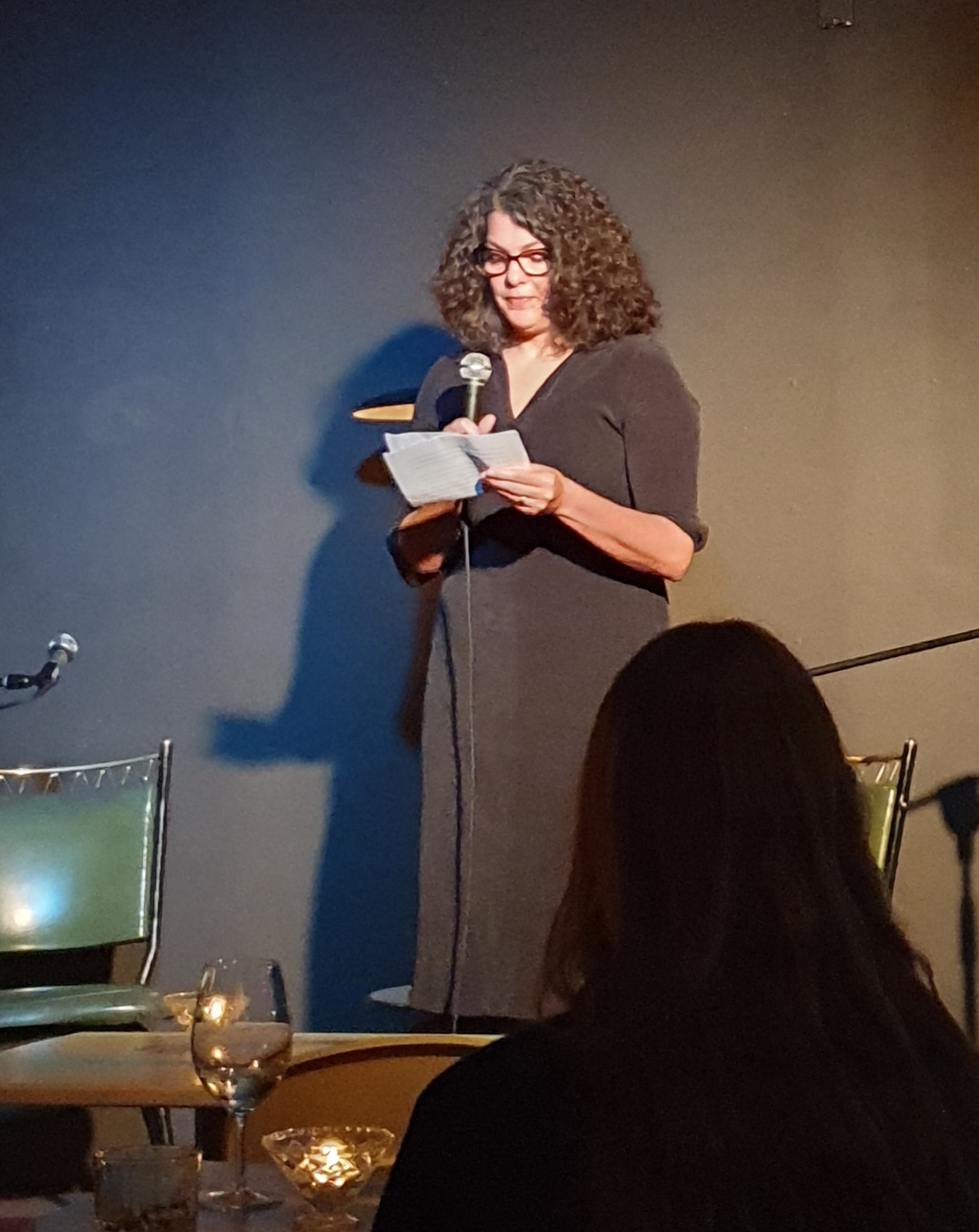


The Dog-Eared Readings are brainchild of two beloved poets, Heather Taylor-Johnson and Rachael Mead, with the inaugural one taking place mid-week at The Howling Owl. Backed by a grant from Arts SA and with free drinks very kindly provided by Red Room Poetry, these readings aim to fill the gap left by Ken Bolton’s Lee Marvin series and offer the same imitable blend of poetry and prose. First up was Stephen Orr reading from his novel Sincerely, Ethel Malley, followed by the krumping (a new performance style I discovered!) Matcho Intrumz Cassidy and finished with Dominic Guerrera in conversation with Natalie Harkin who shared poems from her latest collection Archival-Poetics, a gift of poems (literally) that reckon with the State’s colonial archive.

Another online workshop, The Speculative Poet, with Sally Wen Mao completed the month for me, in which we explored blurring the boundaries between fact and magic, research and conjecture, with poetry the perfect form with which to do so. Sally shared slides and some insights from the infamous Toni Morrison on speculation, as well as a few of her own poems, with ‘Nucleation‘ a particular standout for me. Sally’s award-winning collection, Oculus and forthcoming, The Kingdom of Surfaces, both from Graywolf Press, are the latest additions to my ever-growing wish list.
What I love about projects and events like these, apart from showcasing the fine work that’s out there, is their ability to inspire and connect, and for me generated several ideas for the next full-length collection I’m working on, as well as introducing me to new poets and forms. So next year, I must remember to clear my calendar for August again, give the poetry room to breathe.
I went to the launch of Shaping the Fractured Self: Poetry of Chronic Illness and Pain on Wednesday, a stunning collection edited by Heather Taylor Johnson, and the first of its kind in Australia from UWA Publishing.

Launched by Peter Goldsworthy, this is an exquisite book; to be absorbed, examined, shared and treasured. In his foreword, Peter explores poetry as a cathartic process, the ‘cleansing of emotional wounds’, with ‘much hard-earned wisdom and hard-wrung poetry in the pages that follow.’
A plethora of diseases and conditions are represented – cancer, mental health, disability, postnatal depression, ageing and dementia. Heather herself suffers from Ménière’s disease, an imbalance of the inner ear, and one she writes about here. But what makes this anthology so special is its structure; three poems from each poet preceded by a narrative describing their illness and the impact it has.
And Heather has gathered together some fine Australian poets – the likes of Fiona Wright, Andy Jackson and Stuart Barnes alongside those who read at the Adelaide launch – Gareth Roi Jones, Ian Gibbins, Rachael Mead, Rob Walker and Steve Evans.
Gareth suffers from migraines, a debilitating condition painfully conveyed in his poem ‘aching’:
hours when simply standing up
is a pickaxe
when the growling dog
won’t let you through the gate.
Ian is a neuroscientist so knows about the body, how it works and how it doesn’t, demonstrated by his brilliant performance of ‘Cataplexy’, a poem which explores this rare condition where extremes of emotion trigger a switch from consciousness into a waking dream-like state.
Rachael was diagnosed with anxiety and depression, states eloquently expressed in ‘What lies beneath my skin’, which opens with:
The ringing telephone ratchets me into tension.
providing an insight into her daily management, when walking the dog offers some relief:
I put myself in the path of wildness
let it fill my long and hollow bones.
Rob’s condition is chronic osteoarthritis, a degenerative bone disease, where in his poem ‘radiology’ (composed with Magdalena Ball), ‘holding our future in nervous hands, we come with X-rays’, likening this process to ‘reading the stars within’, an ‘internal astrology’, a captivating image.
Steve suffers with temporal epilepsy, experiencing Alice-in-Wonderland-type moments of surreal forgetfulness. In the ‘Body Electric’, he shares what it feels like:
My body is short-circuiting.
a tumultuous journey culminating in the final stunning lines:
And my words are brittle copies
Of what I used to do. My fingers fail.
I just can’t make a fist of this.
These snapshots are enough to tempt anyone living with chronic illness and pain to seek the bigger picture captured in this collection. And they need not be a fan of poetry to be able to appreciate the unequivocal raw beauty of the afflicted self.
I went to the launch by Carol Lefevre of Jean Harley was here last night at Dymocks bookshop.

This is Heather Taylor Johnson’s second novel, Pursuing Love and Death her first published in 2013 by Harper Collins, a domestically rich story with the protagonist suffering from Meniere’s disease, a debilitating condition of the inner ear causing vertigo and tinnitus, which Heather herself battles with. So Heather’s second novel has been hotly anticipated.
Published by the University of Queensland Press, it explores love, relationships and the impact of absence. Jean Harley – wife, mother, lover, dancer – is sunshine in the lives of those around her, but when tragedy strikes they are forced to continue without her. Despite a little unravelling and a few storms, Jean leaves a powerful legacy to abate them. I’ve heard it’s a tear-jerker
Heather is first and foremost a poet, with a number of sole and collaborative collections to her name, and her lyricism is reflected in her exquisite prose. I recall Heather sharing an extract from the draft of this book last year at a reading with other poets, which has stayed with me, and Heather’s knack for scene-setting is like an intimacy shared, demonstrated by the excerpt she read yesterday from the chapter “Emotional Fishing”. Here’s a snapshot:
Charley sat as far back as he could, feeling out of place, though that was nothing new. His bald head shone under the fluoro lights and the back of his neck itched – an eczema problem that flared up when he was nervous. He kept smoothing his long beard to a point – another nervous tic. One might think he was made of tougher stuff because if this was an eye-for-eye world, here was a man who’d seen things that should’ve blinded him, a man who’d done the sort of things people don’t talk about at the dinner table but read about in newspapers over breakfast…”
Quoted as being “a book to savour” by Hannah Kent, it’s clear this will be another stunning read from an extraordinarily talented writer. A visceral narrative with complex, relatable characters, Heather offers us a world to get lost in, absorb, making us ponder our place in our own.
Last night I went to the launch of Heather Taylor Johnson’s new collection of poems, Meanwhile, the Oak, at The Mockingbird Lounge. This is Heather’s fourth book of poetry, this time published by Five Islands Press, with the cover photo by Rachael Mead.

The collection was launched by Alison Flett, another brilliant local poet, who spoke about some of the themes in these poems; family, pets and most noticeably the belly, a symbol of health and fertility.
Heather stepped up to share just two poems – ‘They said’ and ‘This old house’ – the first for her three children who did an excellent job of bookselling and the other for her husband, whose home brew proved very popular.
‘They said’ is an expertly crafted braided poem, weaving Heather’s thoughts with those of her children to give us a snapshot of their lives:
‘Crawling beside me, a tiny question mark
in uncertain darkness says
There was someone in a box
It was raining
It was in my dream’
And then later, to reinforce the parent/child dynamic:
‘Because I hold fear in my teeth like old fillings, I listen when they say
It’s scary at night, so dark.
I wish the moon would sleep with me’
‘This old house’ is essentially a love poem, but the kind that has thorns as well as the flower to really make you feel. It’s bursting with passion, movement and heat:
‘In the living room / let’s rub together like carpet and shag.
Let’s read each other in the study.
On the woodpile / let’s aim for splinters.’
And the final lines are simply stunning:
‘On the veranda / let’s be stars and go oooo and ahhh as we shoot off in
every direction.’
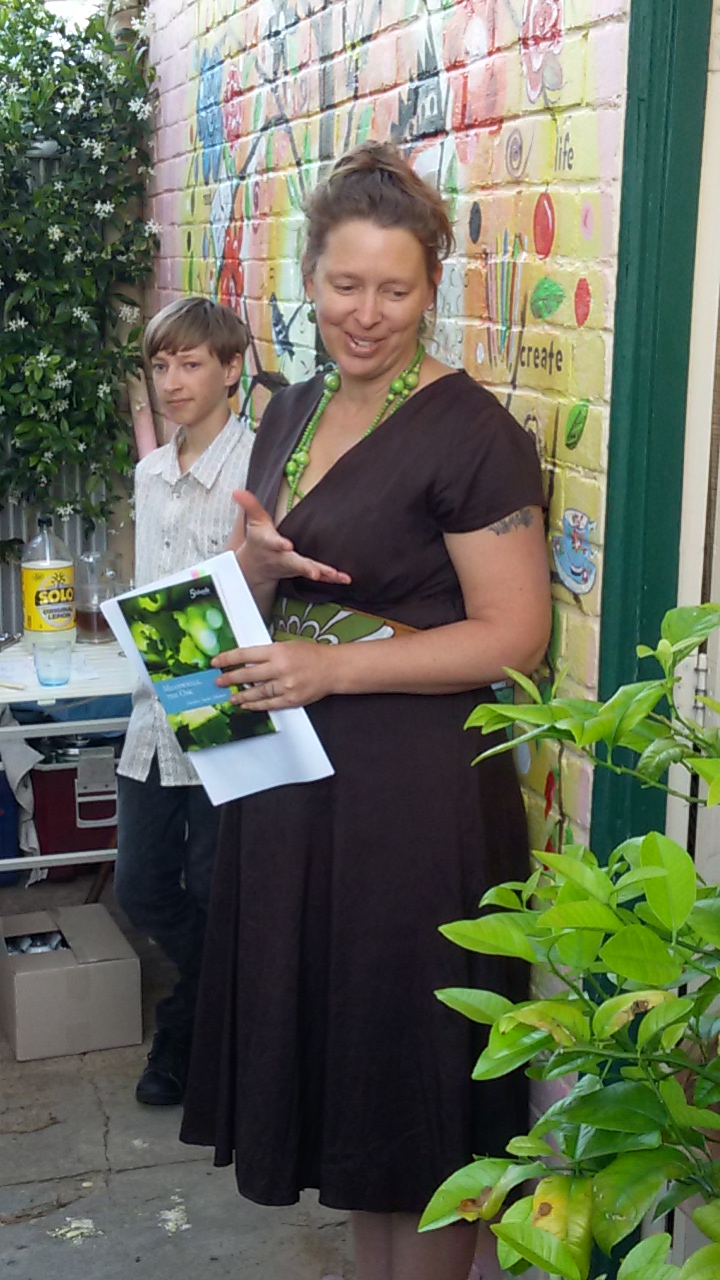
Heather’s work always draws a big crowd because it’s visceral, gritty, absorbing. Imagine gorging on a piece of fruit, the juices running down your chin, the tang in your mouth, the colours in your head. For me, this is Heather’s poetry; in the moment, unabashed, full of life, sharing the very essence of herself and what it means to be human.
with a bang! And having missed last week’s readings, I was determined to make this week’s, the line-up simply too good to miss – Matt Hooton, Rebekah Clarkson, Heather Taylor Johnson and Andy Jackson.

Hosted as ever by the highly entertaining Ken Bolton at the Dark Horsey Bookshop, Matt was first up with a series of questions for the audience – did Anne of Green Gables make it over here? Is Evel Knievel considered an icon here? And were we familiar with the concept of party lines? Setting the scene for an interesting read of his latest short story ‘Is this our inheritance our Lord and is that your voice we hear on the party line?’ We were presented with a scene in which two young boys are watching Evel Knievel perform his stunts on TV during his Korean tour, where ‘there is too much rocket, not enough bike’. What I particularly loved about this was the repetition of a raven image throughout the description of a seemingly ordinary suburban scene – ‘a prescription of ravens’ when the single mother knocks back a few painkillers in the bathroom; ‘an abandonment of ravens’ when Evel Knievel lands in North Korean airspace; culminating in the line ‘the inheritance of ravens goes quiet’. A thought-provoking piece.
Next to take the stage was Rebekah and it was her first time reading here. I knew of Rebekah, but was not familiar with her work. She read a piece of personal non-fiction called ‘Learning to swim’, which had been commissioned by an American journal. It pulled you in from the start, opening with ‘I don’t want to talk about the storm’ where after we learn her daughter was out at sea during it with the story also alluding to a meta-physical storm. And so we hear how Rebekah ‘fake swims’, which is considered an art form, a ‘careful construction of circumstance’, breathing out on the right side only. A memory is shared of her father trying to teach her to swim by literally throwing her in the deep, a somewhat traumatic experience, which ends in an apology from her father, the only time she ever hears one. To progress her ‘fake swimming’ Rebekah joins a swim class ‘full of pissed off women having done everything for everyone’ where she learns bilateral breathing and soon starts to ‘crave the silent underwater world’. Rebekah read well, thoroughly engaging her audience.
And then it was Heather, to whom I could listen for hours! Heather read a chapter from her forthcoming book from University of Queensland Press now in its final stages of editing. Here we find Orion, son of Jean who is in a coma in hospital having been diagnosed with cancer. In his bedroom ‘sunlight splashed the walls’ as he plays with a toy plane, which ‘has to follow the bottom racing stripe otherwise the world will blow up’. Death pervades this chapter, as we learn that Orion’s Nan also had cancer and often talks of dying, so he seeks out ‘Very Viv’, the ‘most fun of all the grown-ups’. When visiting his Mum in hospital, his friend, Juniper, tells Orion that his Mum is going to die (Juniper then gets scolded by her own for saying this). So Orion seeks release in the hospital playground, playing monsters with Juniper and a boy they befriend with an eye patch. Later, driving home with his Dad, Orion imagines they are ‘the only car in Adelaide on a conveyor belt’, pictures the danger and feels he has ‘died many times in his mind’. Big concepts for a little boy, can’t wait to get my hands on a copy.
Andy closed the set reading the only poetry of the night. He shared a few from his collection the thin bridge, back in print again from Whitmore Press, and began with ‘Double helix’, which I remember from Heather’s poetry night, a poem about passing on genes with cleverly repetitive lines – ‘genetic screening is not an anagram for suicide’, ‘a disorder of connective tissue sewn into my own’, ‘you can be so lonely you don’t want to be touched’. Next came the poem ‘The platform’ about a young bird being placed out of harm’s way followed by ‘On being sculpted’ by his partner, in which he asks ‘will I ever be finished?’ and ‘who threw that yellow square across the floor; the moon, the streetlight or us?’ Andy then read from his next collection Immune systems, available from Transit Lounge, based on his visit to India, the first a string of statements connected by their strangeness. A ‘schoolgirl yawns’ with ‘henna snaking around her hands’ and ‘In the courtyard’ there is medical tourism as Andy is diagnosed by a man who ‘holds my wrist like a flute’. The last poem shared was about returning to Australia, to ‘wilting leaves and cobwebbed pegs’ and ‘a neighbour hammering a nail into a mortgage’, such vivid images.
It was a wonderful evening rich in literary ‘wowness’, which I know is not a word but I don’t care, it was fab.
 J V Birch