This was the title of an article by Pascale Petit in the current edition of Mslexia, and it was an interesting read.

Mslexia

Pascale has a long list of poetic achievements and some fantastic collections, including The Zoo Father and The Huntress, both published by Seren. The latter focuses on her mother, as does this feature, in which Pascale explains the emotional journey she took when attempting to write about her mother and the impact of the abusive relationship she had with her. Those familiar with Pascale’s work know that animals and the Amazon are strong influences, and to be able to write freely about her mother Pascale identified these with her, in particular a golden jaguar quickly followed by a snow leopard, wolverine, giraffe, etc.  By doing this Pascale managed to literally exorcise herself of her mother’s ghost, eventually being able to think of her and love together in the same space, thanks to Pascale’s love for the creatures representing her mother in her work.

And this is what I love about poetry – catharsis is one of its many facets, giving us the opportunity to transfer difficult people and experiences onto those things so much more familiar to us and that feel far less uncomfortable. There is much to be said about this painful and then pain-free process.

Pascale Petit

I met Pascale by attending one of her courses at The Poetry School a few years ago back when I was living in London. The session was called ‘Life Class for Poets’, and focused on generating poetry from image, be they still pictures or a moving life model, encouraging us to free write whatever they inspired within us.  I remember I produced some pretty weird and wonderful pieces, which I really should make the time to revisit and develop further.

I’m currently using Pascale’s Towards a Collection course booklet I brought and downloaded from The Poetry School website (I tried to enroll for the face-to-face course but by popular demand it was over-subscribed, so I was thrilled to find I could still access the materials).  For anyone looking to do this it’s an invaluable tool, and I particularly like the simple exercise of surrounding yourself with all the poems you’re thinking of including to look for themes, patterns, and a general sense of how they look next to one another. You quickly see what works and what doesn’t, those that belong and those that belong somewhere else.


And both made an impact!  Poems that is, in the Sentinel Annual Poetry Competition 2014.  I’m a little bit pleased to say the least!

SPM logo

The Sentinel Poetry Movement (SPM) was founded in 2002 by Nnorom Azuonye, a poet amongst other trades, with a purpose to create a diverse community of writers and artists encouraging limitless interaction.  The movement also branched into publishing, producing online magazines such as Sentinel Literary Quarterly, Sentinel Poetry Quarterly and Sentinel Champions, however sadly the latter publication will no longer be after the current issue.  So in effect it runs competitions for short stories and poetry every three months and every 12.

Roger Elkin, poet, tutor, editor and literary advisor, has adjudicated this particular competition for five years.  SPM recently interviewed Roger to find out what makes him tick and the work he’s currently involved in – it’s an interesting read.  And funnily enough Roger also selected one of my poems, The cut, reproduced here on my site, for Sentinel Champions #9 published in 2012.  So I must be doing something he likes!  Thank you Roger

smiley face

Adelaide Writer’s Week that is, and I went along to my first session yesterday to hear Julia Gillard talk about her new book.

Julia Gillard 2

In the 35 degree heat albeit with partial shade, Julia’s session was literally bursting at the seams with the crowd of people there to hear her, many standing due to a lack of available seats, a sure sign of this ex-prime minister’s continuing popularity. Julia is an amazing public speaker, one question being posed at the end asking her if she knew of any courses, programs, free downloads where one can learn this skill, to which she replied that being part of a high school debating team considerably helped.

The interview was interesting, the host Laura Kroetsch probing Julia about her time in office, how she got there, memorable moments and the impact they had on her family. And in turn Julia provided very informative and heartfelt responses, which at times were highly entertaining, perhaps endearing her only further to her hometown of Adelaide. And the queue of fans afterwards to get their copies of My Story signed snaked around the garden!

So other sessions I plan to attend next week are the Poetry Readings tomorrow where Barry Hill, Anne Kennedy, Omar Musa, Samuel Wagan Watson and Ian Wedde will read a selection of their work, and then Shorts on Thursday with Cate Kennedy and Angela Meyer talking about the art of the short story. Oh, and of course there will be the obligatory visit to the book tent, must remember to take a sturdy bag…

This was the name of an Adelaide Fringe show we saw last night. And quite possibly the best one we’ve seen.

It is, in essence, the love story of Bryony Kimmings and Tim Grayburn, with the central protagonist depression, a mental illness suffered by Tim, which unbelievably can still be taboo today.

Bryony and Tim

It begins with how they met, moved in together and then Bryony’s discovery of Tim’s medication hidden in a rucksack. And then everything unravels – the story, the set and the couple – as they act out the effect Tim’s illness has on them both. Throughout the performance we hear snippets of recording as Tim explains his seemingly benign childhood, when and how his behaviour changed and the impact it had, culminating in a breakdown at the dinner table one night and his mother sending him off to the doctors. Tim is quickly prescribed anti-depressants with little information, let alone anything about the side effects they will have, and remains on these for six years, covertly, before meeting Bryony.

It was a powerful performance, punctuated with humour, dance, song, interesting head wear and the kind of raw emotion rarely seen these days because it was real, it was happening and it is there. And this rawness connected the audience, an almost tangible sense of acceptance and understanding because let’s face it, depression is not something most people can, like or will talk about – it’s best kept in a box. Open it we say.

you wait and wait, and then there’s more than one!

Buses

Ink, Sweat & Tears (IS&T) is a UK-based webzine run by Helen Ivory, an amazing poet with a path of wonderful work, my favourite collection being her most recent, Waiting for Bluebeard published by Bloodaxe Books.  I’ve also participated in an online course hosted by Helen a few years ago through the Poetry SchoolTransformation and Magic I believe it was called – that encouraged students to think about the more fantastical side of poetry, letting the imagination go forth and then some.

Anyway, IS&T is a coveted place to be, so I was thrilled when I found out Helen wanted to publish some of my work on her site, which went live on Friday.  This is actually one of my favourite poems (us poets all have them) so I’m really pleased it’s out there being shined on.  Happy days  🙂

I’ve been experimenting with Haiku recently, a fascinating art form originally created by Japanese poets.

haikus

Essentially Haiku are short poems (fitting with my poetic style perfectly!) that use sensory language to capture a feeling or image.  Often inspired by nature, beauty or a poignant experience, traditional Haiku employs a five-seven-five syllable line count separated by a ‘cut’.  This creates two parts in the poem, with the final line bearing some comment or reference to the statement made by the first two.  And it’s amazing just how much you can pack into such a small space!  I love this technique, developing snapshots of time, place and feeling.   The challenge for me has not been the succinctness but the objectivity – describing without interpretation or analysis, in other words ‘you’ stay away, something often alien to a poet…

However, it has clearly paid off (literally!) as I was delighted to wake up this morning (being 10 and a half hours ahead of the UK) to the news of winning the Little ms February Haiku competition!

little ms

Little ms is Mslexia‘s monthly e-newsletter packed full of inspiration, snippets, quotes, forthcoming calls and comps, and general literary entertainment that I look forward to receiving in my inbox.  February’s topic was hypnotise, and my Haiku was inspired by a large brown snake we saw at the side of the road on our drive to the Flinders Ranges, that was actually reared up and hissing at the traffic, as if it was angry it couldn’t cross!  So thank you Mslexia, for the boost to continue with my Haiku!

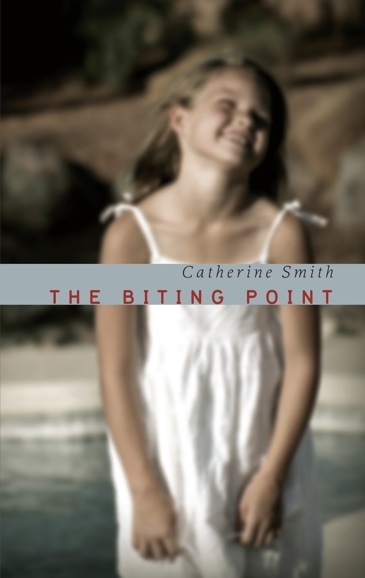
I have just started my online feedback course through the Poetry School based in London hosted by Catherine Smith. Catherine’s work is just delicious, her collection of small stories, The Biting Point, evoke such powerful imagery in a hauntingly beautiful way.

biting_point_front_cover

The course runs over 10 weeks with members of the group uploading poems for feedback from each other on a fortnightly basis. Poets can upload as many versions of the same poem during this time, for Catherine to then feedback on the final version at the end of each two week slot. The idea is to dig out those ‘problem pieces’ that just don’t feel right – and I have plenty of these believe me, where I like a particular line or concept but something is just not working.

I’m finding it to be an incredibly useful experience, and have created a feedback document for each of my own pieces in which I’m saving all the comments I receive to later review the work with these to hand. And I’m meeting some wonderful like-minded poets along the way, who I hope to remain in contact with after the course has finished.

January has been a busy month. Other things keeping me buzzing are submissions – five achieved so far to a mixture of magazines and competitions – keeping up to date with the latest publications which yes, does involve purchasing some collections and books, and working out which sessions to attend during Adelaide Writers’ Week starting later this month. So having my wonderful Writer’s Diary has been an absolute saviour! It has really got me organised with submission deadlines, when to work on them in advance as I have, in the past, missed some due to a lack of allocated time, so every Friday now is just chock-a-block of what to achieve. The old paid job gets in the way 😉

A very interesting little press with a big outlook…

Abegail's avatarAbegail Morley

Emma-Press-logo-text-largeWhen was the Emma Press set up? Can you tell me a bit about its beginnings?

I set up the Emma Press in 2012, a few months after quitting my job at Orion Publishing Group. I had quite a specialised role in Orion, managing the production of ebooks, but I became increasingly interested in how the other departments and the publishing industry as a whole worked.

When I resigned, out of frustration with the limitations of my role, I had a vague idea about using my new ebook production and book design skills, but I wasn’t planning to set up a publishing house. I thought I’d just create one book, a collaboration with my old schoolfriend Rachel Piercey to show off her poems and my illustrations. This was The Flower and the Plough, the first Emma Press book, and I enjoyed the process of putting it together so much that…

View original post 676 more words

A very timely post, and some really good advice.

Jo Bell's avatarThe Bell Jar

Capture

I’ve spent some time lately with poetry journal editors – and also with the poor poetic beggars who, like me, send off work to them. It’s struck me anew that many people, especially those at the beginning of their poetry career, don’t have much idea of how submission works and what time span is realistic for an editor to consider a poem. Also, they’re wondering how to keep tabs on the seventeen different poems that they’ve sent out, in order to avoid the no-no of simultaneous submission.

What follows is the Jo Bell Method; the method of an immensely, award-winningly disorganised poet who nonetheless has managed to win awards. My vast and lofty experience teaches me that the key part of winning any prize or getting into a journal is this:

SEND THE BUGGERS OFF.

This is the only area of my life where such a streamlined system exists, but…

View original post 1,370 more words

We all write differently, not just in what we do but how we do it.  And I’m always really interested to hear how other people write – what tools they use, do they have a favourite place or dedicated space, what conditions they favour, etc.  I’m actually part of an online group in the London Poetry School called A Room of One’s Own, which is all about this very topic, and where we can post pics of our places.  This is mine…


20140530_111320


Living down under I basically follow the sun, which starts in the front room of our house and then gradually moves round to the back.  So first thing in the morning, this is just perfect.  I tend to draft my poems initially in pencil in one of  many patterned notebooks, sometimes leaving it for a while, could be hours, days, weeks depending on how it ‘feels’ before typing it up on my laptop.  I always carry a smaller notebook (the above are A5 size) and pen wherever I go in case inspiration hits me, or I hear, see, smell something that evokes a feeling or memory.

Over the new year, I also took the time to organise my filing system so now have different coloured folders for my published work and correspondence, pending submissions, both to do and hear back from, and the draft of my first collection I’m working on (this was the perfect excuse to wander around many a stationery store, something I love to do, leaving the husband at home of course!)  I used to be religious in recording my submissions, i.e. what has been sent to whom and when, etc., but then got lazy, which often happens with me I’m afraid.  Now with my new Mslexia Writer’s Diary there is no excuse as it contains space for such records, and I’ve even got into the habit of noting what I need to do every Friday, my dedicated writing day and one of the reasons I went part time at work.

So there you have it.  My ideal place to write would be in a small but bright room filled with all things poetry and an interesting view, be it ocean, countryside or mountains (mine is currently our driveway).  Working on this too!

Archives

Blog Stats

  • 26,103 hits
Rust & Moth

Singing in the shallows

Shaw and Moore

Singing in the shallows

The Orange & Bee

Singing in the shallows

The Amphibian Literary and Art Journal

for the culturally amphibious

Poetry in Process

Understanding poetic process from inspiration to final edit

Wakefield Press

Wakefield Press blog

Andy Jackson

Poetry from a body shaped like a question mark.

mistakenforarealpoet

odd posts from an occasional poet (or vice versa)

Cath Drake writing & communications

This site has been archived. Please head over to: https://cathdrake.com/