You are currently browsing the tag archive for the ‘Ellen van Neerven’ tag.
I managed to get to a few sessions at this year’s Writers’ Week in between work and the heat to hear Charlotte Wood, Madison Godfrey, Pip Williams and a stellar poetry line-up.

I’ve read a few of Charlotte’s books and heard good things about her latest, Stone Yard Devotional, that she describes as one of her deepest and most personal ones she’s written to date. Diagnosed with breast cancer in 2022, along with two of her sisters in a bizarre twist of fate, Charlotte explores the psychological collapse of the protagonist that was somewhat synonymous with her own and without giving too much away, introduced the mouse plague after hearing about a friend who heard their piano playing one night during an infestation. Charlotte stressed the importance of readers to writers like her and explained how she learnt to write by looking at other writers.
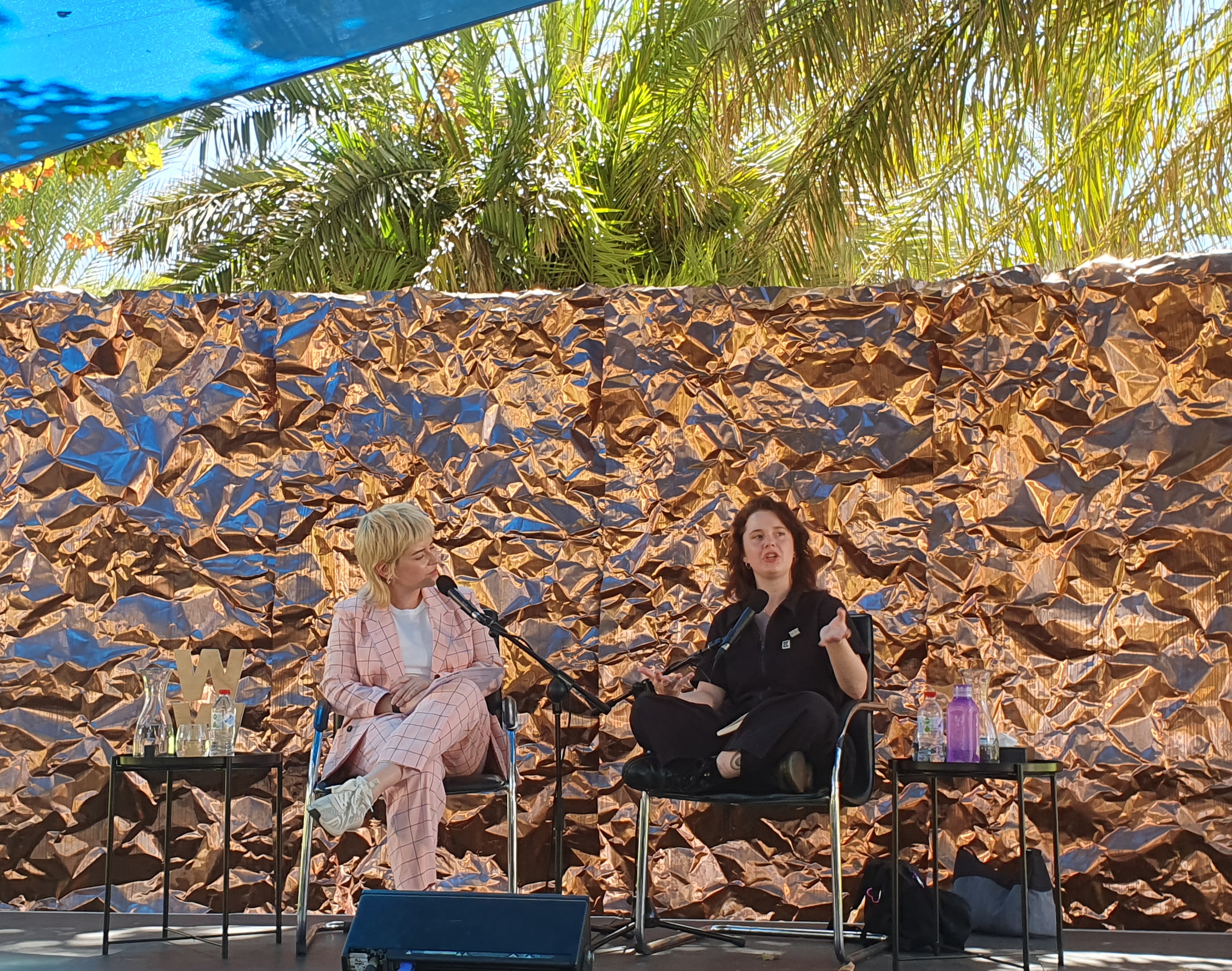
I brought Madison’s latest collection, Dress Rehearsals, from the book tent before I went along to hear her speak about it as I recalled reading some of her poems in an issue of Jacaranda Journal and loving their vividness. This stunning collection is split into three parts that explore love, desire and gender, with Madison explaining how her poetry was born in the mosh pit, the merch girl a prominent figure throughout, and how she grew into queerness through a constant negotiation of self. Madison teaches at Curtain University in Perth and likes to disrupt classical poetry for her students, always having a poem of her own on the stove in the back of her head.

After falling in love with her first book, The Dictionary of Lost Words, I felt compelled to hear Pip talk about her second, The Bookbinder of Jericho, and was not disappointed. These companion books explore the women’s perspective of the publishing industry when it was dominated by men, with the second evolving while she researched the first after seeing a 20-minute film of which ten seconds showed a woman gathering papers that made Pip imagine her boss saying, ‘your job is to bind the books, not read them.’ Pip spoke of books being artefacts, but that she’d never considered how they’re made and actually learnt this skill at the State Library to bind seven of her own.

A Revolution in Poetic Language was the final session I went to, a panel discussion with amazing poets Evelyn Araluen, Madison (again), Ellen Van Neerven and Jill Jones, facilitated by Jessica Alice, former head of Writers SA. Challenging the role that words can play in a climate of change and conflict, each poet shared a reading, some new work, others from existing, but all with a sense of place, belonging and the continuous struggle to.

I also managed to squeeze in a workshop, Writing Place in Poetry, with another fantastic poet Sara M Saleh that explored where we come from, losing, finding, beginning again, combined with some great prompts and time to free-write that I really must do more of because it produces some interesting results. Unfortunately, Sara’s collection, The Flirtation of Girls, was sold out at the book tent so naturally I consoled myself with others.
August is Australia’s poetry month, deemed so by Red Room Poetry, a leader in commissioning, creating, promoting and publishing poetry in meaningful ways. And it was busy.

Launched in 2021, Poetry Month aims to increase access, awareness and visibility of poetry, with Red Room Poetry hosting a variety of events, such as readings and workshops, and providing prompts to generate those all-important words. There’s also a poetry showcase in each state and one of the many wonderful aspects of this initiative is the ‘pay what you can’ ethos.
The first event I signed up for was an online book club, with Andy Jackson, Ellen van Neerven and James Jinag, facilitated by the effervescent Felicity Plunkett. Each shared passages and reflections on a favourite book of their choice with some wide-ranging and collaborative selections. Andy’s and Ellen’s fantastic work I’m familiar with, Human Looking and Throat being their latest collections respectively, but James I wasn’t, so it was great to hear his thoughts on the texts shared and learn about him.

Next up was an online workshop with Andy Jackson through Writers SA called Un-alone Poetry, where we delved into self-portrait poems with Andy sharing some from his latest collection that brings together the voice of the disabled. I’ve participated in Andy’s courses before and this was of the same brilliant ilk, perfectly balancing time to read and reflect with the opportunity to write and share. We even indulged in some collaborative poetry by being paired and swapping lines via the chat function in Zoom, that delivered some surprising results.
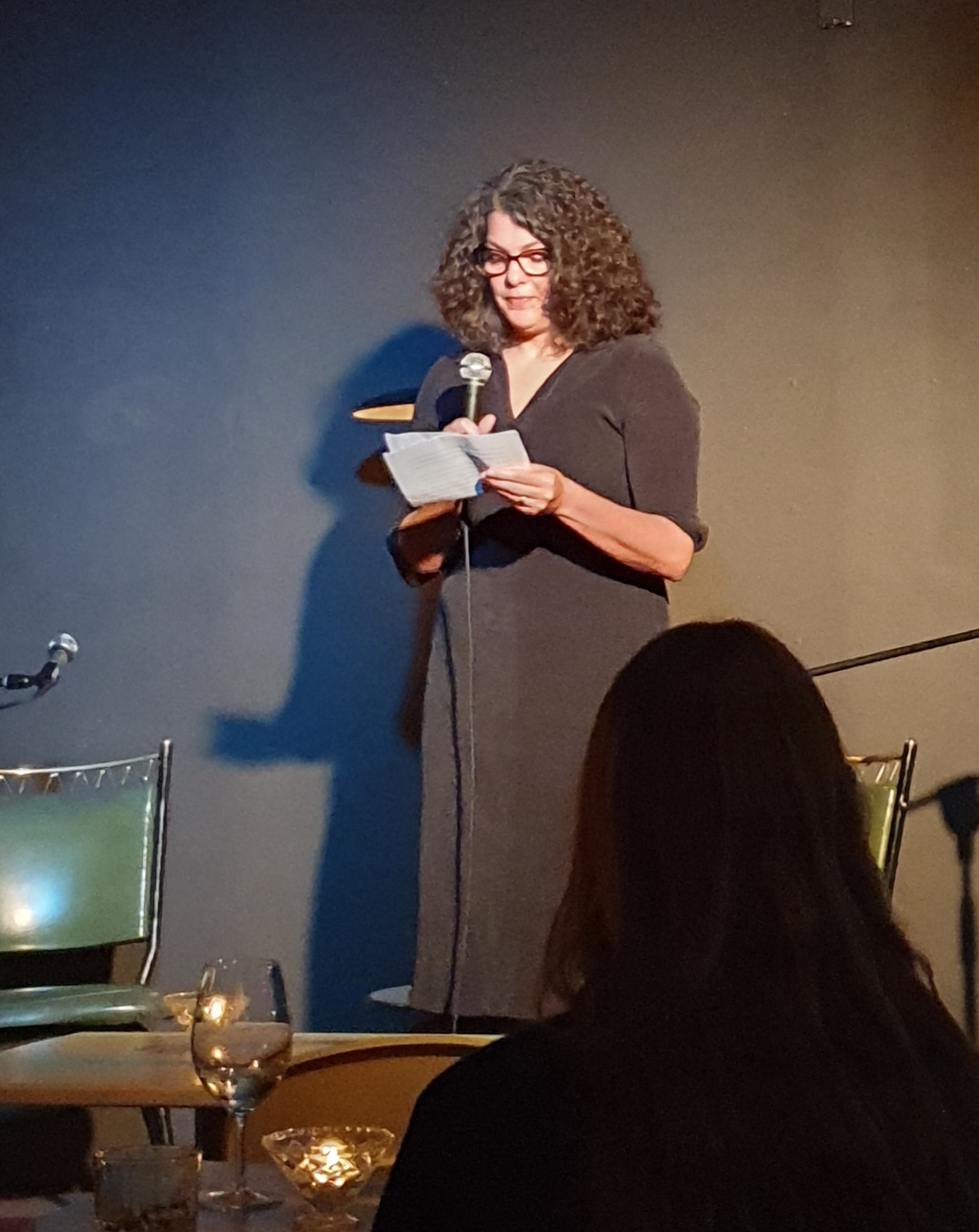


The Dog-Eared Readings are brainchild of two beloved poets, Heather Taylor-Johnson and Rachael Mead, with the inaugural one taking place mid-week at The Howling Owl. Backed by a grant from Arts SA and with free drinks very kindly provided by Red Room Poetry, these readings aim to fill the gap left by Ken Bolton’s Lee Marvin series and offer the same imitable blend of poetry and prose. First up was Stephen Orr reading from his novel Sincerely, Ethel Malley, followed by the krumping (a new performance style I discovered!) Matcho Intrumz Cassidy and finished with Dominic Guerrera in conversation with Natalie Harkin who shared poems from her latest collection Archival-Poetics, a gift of poems (literally) that reckon with the State’s colonial archive.

Another online workshop, The Speculative Poet, with Sally Wen Mao completed the month for me, in which we explored blurring the boundaries between fact and magic, research and conjecture, with poetry the perfect form with which to do so. Sally shared slides and some insights from the infamous Toni Morrison on speculation, as well as a few of her own poems, with ‘Nucleation‘ a particular standout for me. Sally’s award-winning collection, Oculus and forthcoming, The Kingdom of Surfaces, both from Graywolf Press, are the latest additions to my ever-growing wish list.
What I love about projects and events like these, apart from showcasing the fine work that’s out there, is their ability to inspire and connect, and for me generated several ideas for the next full-length collection I’m working on, as well as introducing me to new poets and forms. So next year, I must remember to clear my calendar for August again, give the poetry room to breathe.
So Adelaide’s Writers’ Week has been and gone but not without plenty of book-buying, meeting poets and attending the odd session here and there. The first was ‘Searching for Sylvia Plath’ facilitated by the fabulous Felicity Plunkett.

With around 10 biographies about Plath already, why do we need another? Well at a 1,000 pages, this appears to be the definitive one. Written by Heather Clarke over 12 years, Red Comet covers every aspect of Plath’s life, from when she began writing her first poems at 5, through repeated medical trauma and self-medication to her somewhat fraught relationship with Ted Hughes, its a culmination of endless hours in the Plath archives trawling through her journals, letters and photographs. It’s only since her untimely death that Plath has been recognised for the trailblazer she was, a professional writer with a strong work ethic who immersed herself in a world of words, including these rather profound ones when feeding back on the work of her mother’s friend:
Let the wind blow in more roughly.
The next session I went to was ‘Poetry in the Age of Absolutely Everything’ with UK Poet Laureate Simon Armitage, again in conversation with Felicity.
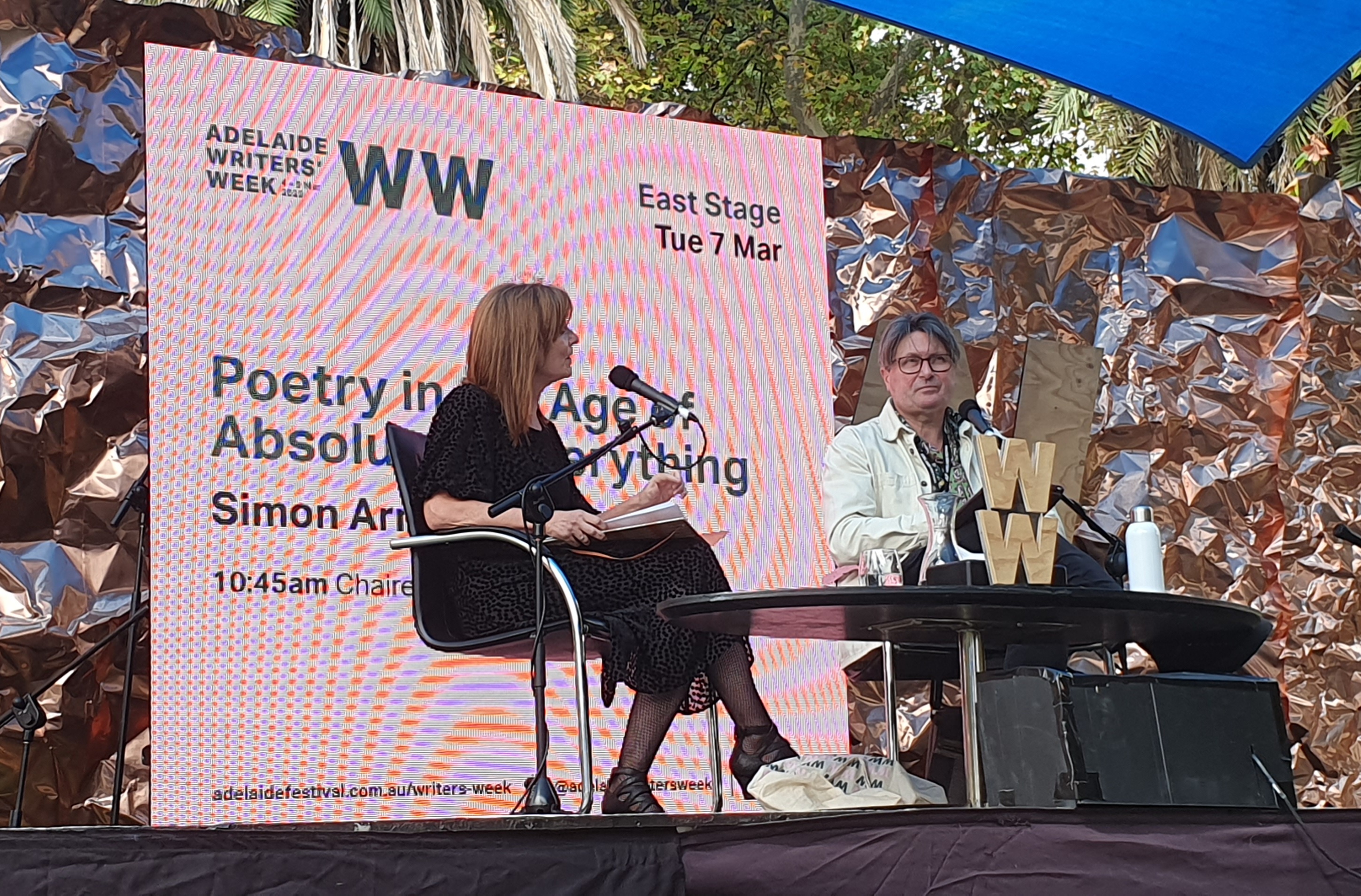
Appointed in May 2019, Simon talked about how the role of Poet Laureate changed after the death of Ted Hughes to more of a working role spanning 10 years rather than a lifetime, establishing the Laurel Prize for eco and nature writing during his. Simon shared entertaining stories from his 256 mile Walking Home project in 2010, which involved walking the Pennines the wrong way giving readings and surviving on whatever was given by his audience, as well as some of the poems he wrote, often with rhyme and rhythm synonymous with a purposeful trek. Simon also held the Oxford Professor of Poetry for four years, publishing a collection of essays during his time to explore how this form takes new directions down old roads, with some debating:
poetry’s constant anxiety about its own existence.
In between these sessions, I joined award-winning author Ellen van Neerven‘s ‘Desire in Poetry’ Masterclass, which examined the different ways this can be expressed through example poems, insightful discussion and a series of writing prompts. And of course, Writers’ Week isn’t complete without a visit to the book tent where I bought a few somethings to keep me going.

 J V Birch