
You are currently browsing the tag archive for the ‘Cath Drake’ tag.
Another national Poetry Month is nearing its end that has brought a variety of events to get involved in, from online readings to in-person workshops, many of which were facilitated by Red Room Poetry. Here’s a few that I attended.


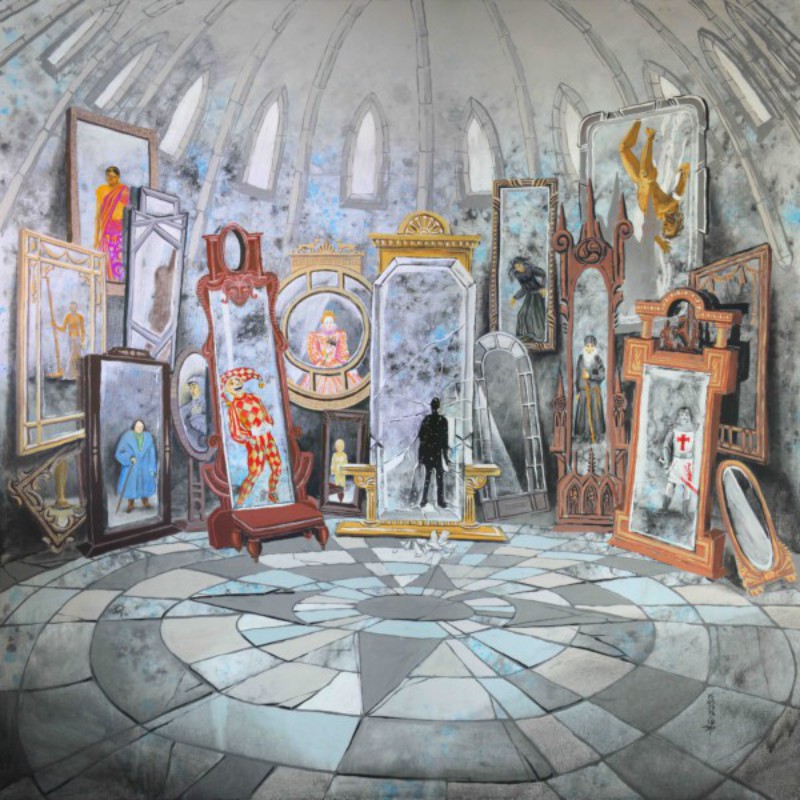
First up was a poetry workshop based on the Dangerously Modern art exhibition with Jill Jones. Taking images from the gallery by pioneering Australian women such as those depicted above, we explored objects, interiors and thresholds in response to them through a series of writing exercises, some of which I plan to develop further to see where they take me.

I went along to a panel discussion next, Poetry as Medicine, with the poets above sharing what this means to them and excerpts from their work, that varied from the impact of chronic conditions on the self through to big picture impacts on the world around us. The questions were thought-provoking and produced some interesting answers, with the session culminating in a reading from Anna-Mei Szetu.

The last event was the online workshop Finger Exercises for Poets with American poet Dorianne Laux, who read extracts and exercises from her book by the same name, explaining how its concept was inspired by the finger exercises her mother did on the piano before playing a piece of music. It’s a book that definitely warrants spending time with.


In-between these events I’ve continued with my regular commitments – a monthly online feedback workshop with Cath Drake, meeting with a local poetry group and an online writing session that delved into using the senses with The Orange & Bee. I’ve also been pairing photos taken on my various walks with poetic quotes and sharing them on Facebook and Instagram to help keep the poetry conversation going, but also as a little relief from the daily onslaught of horror that’s called news. Give me a snowdrop thriving through a crack in cement any day.
Workshops, courses and newsletters are brilliant ways to develop your poetry and stay in the loop, so just thought I’d share a few I’ve completed and signed up for.
The Poetry School has an amazing program each term and I’m halfway through Myth, Magic and Monsters: Ancient Stories, New Truths with fabulous UK-based writer Catherine Smith. This fits perfectly with the poems I’m working on at the moment for my next book and I love Catherine’s work, her short story collection The Biting Point being one of my favourites.

Earlier this month I attended Sophie Mackintosh‘s Modern Fairy Tale and Speculation workshop facilitated by Red Room Poetry. Held in two parts online and aimed at writers rather than poets, the topic was too timely to pass up and generated many ideas. Another UK-based author, Sophie’s The Water Cure was nominated for the 2018 Man Booker Prize I have yet to read.

As for newsletters, I’ve recently signed up to Fly on the Wall‘s one, an indie press based in Manchester ran by Isabelle Kenyon, which is how I discovered the stunning work of Scottish poet Morag Anderson. These are sharp poems with sharp things to say – “concealed violence, love and everything in between” – leaving their teeth marks long after I’d finished them.

UK-based poets Clare Shaw and Kim Moore have started their own newsletter sharing process, thoughts and prompts to keep the conversation going. Science Write Now is also worth noting with a focus on science-inspired creative writing headed up by Australian-based writers Amanda Niehaus, Jessica White and Taylor Mitchell. Another favourite is Katrina Naomi‘s Short and Sweet that offers hints and tips and recommended reads, with Katrina’s next collection Battery Rocks due out soon.

Other workshops coming up include Pascale Petit‘s Into the Wild via The Poetry Business next week and Rules in the Poetry Game with Kate Potts on Cath Drake’s Verandah in July. I’m also planning a writing retreat at Island View Writers’ House in August offered by the fantastic Heather Taylor Johnson, more on that to follow.
Last Sunday I had two readings – one in the US in the morning, the other in the UK in the evening – oh the beauty of Zoom and time zones!
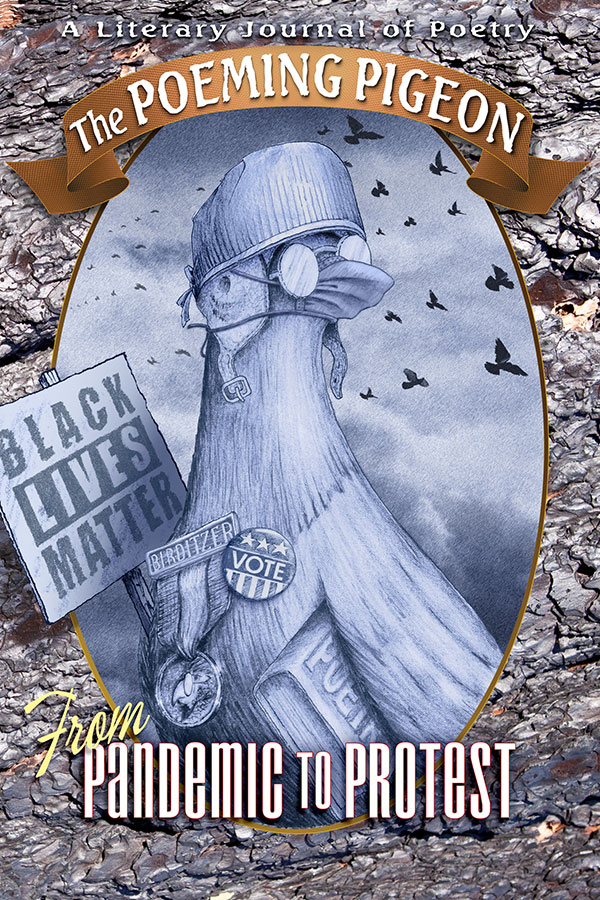
The Poetry Box is based in Portland, Oregon publishing books and literary journals, and hosting launches and poetry readings. Headed by Shawn Aveningo Sanders and her partner Robert, they also publish The Poeming Pigeon twice a year, an internal literary journal of poetry with and without themes. One of my poems was selected for the current issue, From Pandemic to Protest, launched online with over 30 poets reading their work on these topics and everything in between, including politics, the climate crisis and wildfires. My poem was a found one about the Australian bush fires sourced from an article that appeared in The Guardian last year, my first found poem to be published.

Cath Drake is an Australian poet based in London and hosts The Verandah focusing on poetry, mindfulness and creative projects, the current being Who are We Now? UK and Australian poets exploring courageous connections with land and people in the 2020s. Having just finished one of Cath’s six-monthly poetry feedback groups, the writing prompts encouraged us to explore these connections, so my piece was inspired by the succulents in our garden, which took me back to my nan’s. There were eleven readers all up, with Sarah Holland-Batt as the featured one, who has just published Fishing for Lightening: The Spark of Poetry and has another collection forthcoming.
Both readings were recorded, so I hope to share them when available. It was wonderful to connect with so many poets all over the world and hear their work. The voice of poetry is a powerful one.
So the other writing course I’m now halfway through is a monthly Advanced Poetry Feedback Workshop facilitated by Cath Drake via Zoom.

Originally from Australia, Cath is based in London and has been widely published. Sleeping with Rivers won the 2013 Mslexia Poetry Pamphlet Prize and The Shaking City from Seren Books was commended by the Forward Prizes for Poetry in 2020. Both are brilliant reads.
Cath runs two of these workshops over 6 months and it’s an intimate group of six poets; three from Australia and three from the UK. We submit a poem for feedback and Cath shares a contemporary one for discussion, as well as a prompt for next time. And the format is effective – someone volunteers to read the poem, we hear it from the poet who then mutes themselves while we discuss what works and what doesn’t, returning to the poet for their thoughts at the end.
Let’s make a good poem better!
This is Cath’s motto and her comments are perceptive and intuitive, encouraging us to review form, line breaks, syntax and meaning. The three poems I’ve submitted so far have been improved going through this process, two of which will be included in my next collection about my breast cancer experience. Cath is also organising readings later this year as part of the Where are we now? series, exploring connections to people and place, when we’ll get to read what we’ve written alongside some big names. This I’m looking forward to.
A good prose poem is something quite unique and who better to teach its essentials than two of its finest poets – Cassandra Atherton and Paul Hetherington.

Hosted by brilliant Australian UK-based poet Cath Drake as part of her poetry masterclass series, Cassandra and Paul shared the main features of a prose poem, what sets it apart from flash fiction and poetic prose, as well as some examples. The class also had chance to draft their own prose poems, which I struggled with as I can’t always write on demand, however it did give me ideas.
I met Cassandra and Paul at a Poetry On The Move Festival in Canberra a few years ago. Their work in this area is extensive and they’ve recently edited The Anthology of Australian Prose Poetry published by Melbourne University Press, which I was fortunate enough to be shortlisted for, but my work sadly didn’t make the final cut.
Their energy and enthusiasm for prose poetry is contagious and has spurred me to explore the form further, because I’m intrigued with its dichotomy of being fragmentary and a stand-alone narrative, like a snapshot of some larger work. So my aim is to practice with Cassandra’s advice in mind – a good prose poem should leave you barking like a dog at the moon.
 J V Birch