This year’s line-up at Adelaide Writers’ Week were all from South Australia – Aidan Coleman, Jelena Dinic, Jill Jones, Kate Llewellyn and Thom Sullivan – who shared poems from their own collections as well as from a poet who has influenced them.

2016-03-02 10.54.54

Peter Goldsworthy compered the event, telling us about the new state-by-state anthologies from Australian Book Review (ABR), in which these poets feature, before moving on to introduce each of them.

Aidan opened the session with two poems from Asymmetry published by Brandl & Schlesinger Poetry, a collection that focuses on his painstaking recovery following a stroke. ‘To play’ is a parody of putting himself back together, asking us to ‘catch a face before it slides from the plate’ and in ‘New York’, the last poem in the collection, they were ‘leaving an afternoon of coloured glass and temples’. Next Aidan read his ‘Secondary’ series about these colours, where in ‘Green’ ‘lungs are scoured by brillo air’, ‘the heart is a wound or badge’ in ‘Purple’ and how ‘Orange’ ‘is the light of a cupped match.’ From his new chapbook, Cartoon Snow available from Garron Publishing, Aidan read the title poem asking us to ‘go where a blue night is snowing to itself’ followed by ‘Barbarian studies’, where ‘kids jostle, shove and swing like wrecking balls’. Aidan’s influence was John Forbes, an Australian poet, and he finished with a poem of his own about motivational posters, where ‘scent falls upward like helium.’

2016-03-02 10.59.16 

Next up was Jelena whose work I just adore, influenced by Vasko Popa, a Serbian poet. Jelena started with ‘Dawn chorus’, a sinister poem about her ancestors from her chapbook, Buttons on my Dress also by Garron Publishing, where ‘under their tall hats time waits’ followed by ‘Visiting’, describing a time Jelena returned to her hometown culminating in the fantastic lines ‘Lamp-lit photographs are mute. I pretend to know the answer’. Next up was ‘Wedding’ where she asks the obligatory question ‘stepping on his foot just in case’ and then one of my favourites ‘Portrait of Olympia the Prostitute’ which is just that, ‘her black-cat eyes mastering the craft of the second hand love.’ ‘Ballad retold’ was a longer piece from the chapbook, as well as its final one, in which she walks ‘fine lines where beauty hurts’. Jelena finished with a poem by Popa called ‘Before the game’, which she read in English and then Serbian, in particular for her parents in the audience.

2015-10-23 10.25.27

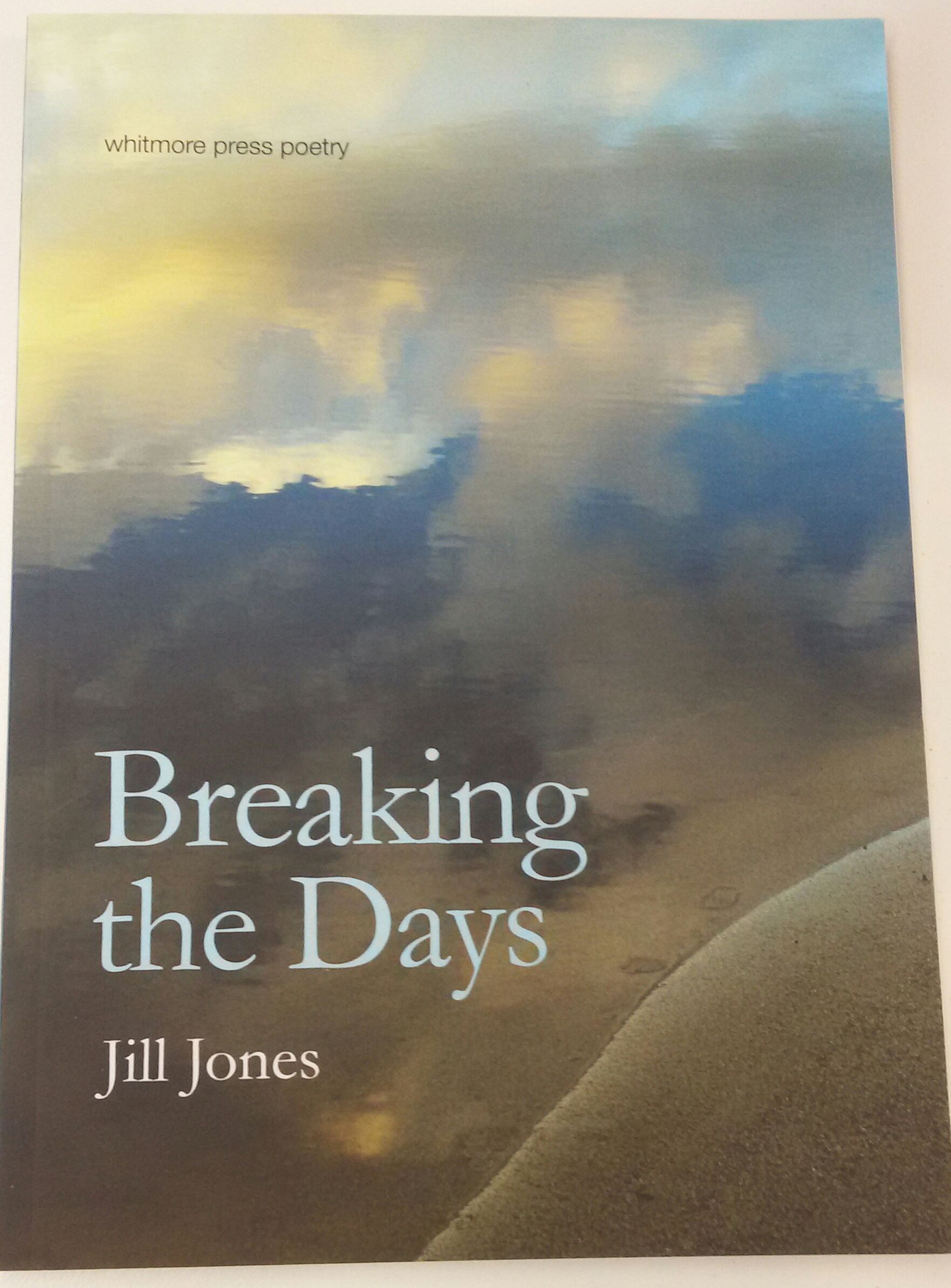
Jill’s work is exquisite, her poems have been described as ‘tapestries of the present’, and she didn’t fail to impress. She began however, with her influence Peter Gizzi an American poet producing layered poems both intimate and global. Jill then read ‘Bent’, her poem in ABR’s state anthology, where ‘I make sense then drop it, it gets dirty, it breaks, the ants carry it’, a very poignant piece and with the poems that followed, Jill went on to paint equally vivid images – ‘maps of rain and passage of stars’ and ‘the sky is as opaque as reality’. Jill shared a few poems from her new collection Breaking the Days published by Whitmore Press Poetry, starting with ‘Happy families where ‘your own genius spooks, it runs to the cupboard and breaks all the plates’, followed by a sense of separation in ‘Fractions’ where ‘you could be tempted to fold’ and in ‘Not all choices’, she is out ‘to relieve the dog of its chasing thought and the business in the head’.
2016-03-02 10.58.27

Now I must admit Kate is new to me, I’ve not heard her read before, but she was introduced as SA’s most popular writer, known to her friends for her legendary letters. Kate started with ‘Harbour’ about both sailing into Sydney and growing old, where ‘the little casual things I see grow into a roar.’ Kate’s next poem ‘Dirt’ was very amusing, with which she falls in love through gardening, comparing it to Mr Right with a subtle rhyme throughout. In ‘Oxytocin’, included in the new ABR anthology, the line ‘last night I strode among the stars’ is repeated at intervals creating a profound effect and in ‘Seeds’ we hear the story of Demeter and Persephone, where the latter is a ‘creature of light, the sun and beaches’. Kate then read ‘Older men’, a poem she wrote years ago before, in her own words, she got old, where he is ‘courteous with your mother whom he could have married’, another humorous poem ending with the line ‘consider this a shopping list’. To compliment this, Kate finished with a poem by David Campbell, her influence, called ‘Younger women’ with their ‘blue stare of cool surprise’.

Thom I’ve heard before at Lee Marvin, and again was moved by the pieces he shared. After Peter spoke of Thom’s good use of colons to separate snatches of thought or dreams, he opened with a poem called ‘Homosuburbius’ and its repetitive line of ‘you’re dreaming still’, with ‘post boxes gagging junk mail’ and where ‘late night programming is flickering under their eyelids’. Thom’s next three poems were pastoral ones about his hometown in the hills presenting us with different aspects of it. In ‘Threshold’ there is ‘a fine grain of stars’ and in ‘Freehold’ there are ‘a pair of eagles riding the thermals’. The poet A R Ammons was one of Thom’s influences so he read one of his poems called ‘The city limits’ followed by a two-part one of his own called ‘Carte blanche’, where there is ‘death with a moon in her pocket’ to prove a poem can be serious without being solemn. Thom finished with his poem ‘Nothing doing’ from Australian Love Poems 2013 published by Inkerman & Blunt, where we find that ‘a bowerbird is hoarding memories’.

It was an amazing session (both the first and only one I will unfortunately have time to attend at this year’s Writers’ Week) with some damn fine poems, plenty to absorb and ponder.

At the beginning of the year, I reviewed my subscriptions to journals and magazines to make sure I’m getting as broad a spectrum of contemporary poetry as possible. A new addition is Tincture Journal.

Tincture banner

The journal is edited by Daniel Young, also the founder, and is published quarterly as an e-book showcasing work of both established and new voices in fiction, poetry and creative non-fiction. Stuart Barnes is the poetry editor, who I was thrilled to hear from after he selected my poem ‘Bordertown’ to appear in the current issue.

It’s true what they say – read a copy of the publication you’re submitting to – and having purchased an issue and finding brilliant work from the likes of Kathryn Hummel and Heather Taylor Johnson, I wanted to join them. And have  🙂

I would recommend a subscription to Tincture. It offers a unique cost-effective way to read the journal, which delivers a wide range of thought-provoking work, a finger on the literary pulse of now.

Sunday evening was a divine mixture of fine food and company, as we devoured a three-course meal and the words of five Adelaide-based poets and novelists who shared a series of water-themed readings.

2016-02-24 19.26.47

Held in Sarah’s Sustainable Café in Semaphore as part of Adelaide’s Fringe-frenzy month, the line-up was impressive – Ray Tyndale, Mag Merrilees, Rachael Mead, Heather Taylor Johnson and Alison Flett – and Stuart Gifford, and his partner and co-chef Marian Prosser, did an amazing job of hosting and feeding!

20160221_180654

Ray was first up, a local poet living by the sea in Semaphore who writes a poem a day (impressive). Ray opened her set with a poem called ‘Dolphins’ written last July, describing how a mother and baby were ‘turning and surging in the shallows’, an image you could so clearly see.  Next up was a poem called ‘Menace’ where the sea ‘claims at least one to itself each year’ followed by ‘The kite-surfer’ where it ‘erupted into white horses’.  In ‘Winter on Semaphore beach’, there is ‘half a rainbow, a brilliant half’ and in ‘Blue seaweed’ ‘magic happened’.  Ray read well, was both warm and engaging, her work painting a picture of everyday events we could all relate to, as well as making reference to the highly variable temperatures in our state when ‘thunder rumbled like an upset stomach’.

Just before the main course was served, Mag started by explaining how she is primarily a novelist who dips into poetry. Mag began with an old poem, ‘The whales’, written 25 years ago about the time when these glorious mammals came back into Encounter Bay, watching as they were ‘rocked weightless by the waves’.  Next up was a poem about Kangaroo Island where she was ‘drawn homeward by moonlight’ followed by another short piece, ‘Flotsam’, which she later learnt was a Haibu (Haiku embedded in prose).  Mag’s last share was ‘Sea ground stones’, a much longer piece, both interesting and entertaining, which opened with the line ‘letters from my sister start mid-thought’ and then went onto explain Mag’s ‘digestion song’, and how she plans ‘to meet every pebble on the beach’ referring to them as ‘crumbs of mountain’.

Rachael was up next who confessed she had to trawl through the archives living in the hills, so began with a poem about a beach walk she took to calm down after a rather irritating visitor had left, where she ‘was the only one with untamed hair and sneakers’ and ‘the idea of day makes the hills blush’. Rachael then read a series of sonnets about her encounter with a great white shark while cage diving in Port Lincoln (on our to do list!) from her new chapbook, The Quiet Blue World and Other Poems, published by Garron Publishing and having heard them before, they were just as stunning.  ‘In the kayak’ followed, a very atmospheric piece likening the paddles to cutlery which ‘feast on platelets of silence’ and in ‘After crossing the bridge the first time’ to Hindmarsh Island, ‘an ant crawls across the page like punctuation gone wild’.  Rachael finished with a poem called ‘Lost on the coast road’ ‘in a car like a metaphor gone wrong’ through ‘a tangle of stars and streetlights’.

2015-10-23 10.26.15

As we were tucking into a delicious dessert, Heather began reading an excerpt from her new novel due out next year from University of Queensland Press, which focuses on a character called Jean Harley who is either dead or in a coma (Heather’s own words!). The passage was from a chapter called ‘The house of noise’ from the viewpoint of the mother-in-law Marion, who describes her daughter-in-law as ‘a sunken body in white sheets’ and tells of her own secret battle with cancer where ‘she lived on a lake, but today it sounded like an ocean’.  On a trip to West Beach with her son Stan and grandson Orion, Marion has a rare moment of contact with the former when ‘she cherished the linger, felt safe she could melt’ and then of Orion, ‘his smile as vast as the shoreline’.  The next passage was from the chapter ‘Very Viv’, where Viv is beach walking during that time of the month when ‘her uterus is emptying itself’ as she contemplates her affair with a professor who had had a fling with Jean before she married Stan.  What Heather shared was enough to make me want to buy the book and read more!  Heather finished with the poem ‘Gearing up’ about Adelaide’s Fringe season from her collection Thirsting for Lemonade published by Interactive Press, just perfect.

2016-02-24 19.28.01

Alison rounded off the readings who, having been in Australia now for five years from Scotland and a former resident poet in Adelaide’s Botanic Gardens, began with a poem called ‘First creek’ in the shape of a creek on a scroll of paper. With ‘surfaces reflecting scraps of sky’, water that ‘petered into pools and puddles’ and the ‘sun repeatedly paddle-beating my skull’, we were there with Alison on her journey.  The creek is compared with her sweat and the water at lunch, as she notes how ‘magpies look the same but make the strangest of noises’ and what is brilliantly referred to as the ‘disappointment of crows’ (so true!).  Alison then read ‘Pittance’, a poem that talks of the primeval presence trailing them, the animal they once were, followed by ‘Five ways to hear the ocean’ which was just that.  Alison finished with a poem I’ve heard her read before and just love, ‘The map of belonging’, which will form part of the new collection she’s working on funded by an Arts SA grant, ‘where home is a paper folded and torn’ and ‘you find yourself landless’, beautiful.

And there endeth a wonderful evening! A fantastic experience I was thrilled to be a part of.  And if you’re ever in Semaphore check out the cafe, it’s well worth a visit.

Being a public holiday here last weekend we went to Robe, a pretty coastal town in our state that we’d visited before but only briefly, hence the return trip to explore further.

IMG_7140

We weren’t sure what the weather had in store for us, having left in one of the worst storms on record for Adelaide, flooding roads and washing out traffic lights, so we wanted to be prepared for any rainy days when we could be room-bound.

So after much thought, I opted to take a notebook (a Paperblanks, one of my favourite kinds) and a pencil over a tablet and book. Risky?! But it paid off, big time. I managed to write seven, yes seven, new poems, albeit not publishable at present but getting there, and it felt good scribbling raw, something I hadn’t done for a while. So here’s my advice – go back to basics when travelling, the old-fashioned way, but then with vistas like these…

IMG_7075IMG_7100IMG_7017IMG_7115

what poet wouldn’t be inspired!

Now it’s not often I write reviews about books without poems, but felt I had to share the one I’ve just finished – The Bees by Laline Paull.

2016-01-15 16.45.04

Originally published by Fourth Estate in 2014, it explores the intricate workings of a society of bees, their queen, the hive and the laws to obey dependent on where you are in the hive’s hierarchy. The protagonist is Flora 717, a sanitation worker, the lowest of the low and to make matters worse, she presents to us as ‘obscenely ugly’ and ‘excessively large’, an abnormality of her kin-sisters. But due to her strength, endurance and ability to forage the most sought after nectar, she is respected and given special dispensation until, that is, she breaks the most sacred of laws. And that’s where I’ll stop in case you want to find out.

I particularly enjoyed learning about what happens in a hive; how bees operate and are deeply affected by seasons; their interactions with wasps referred to as the ‘lesser cousins’ (although this also sums up how the wasps view the bees!); the descriptions of flowers and the anatomy of a bee; the way foraging is ‘danced’ to enable others to follow their flight path; the power of the hive and the queen’s love; it is all simply riveting and pulls you in.

I highly recommend this book; it’s a fascinating sociological read, makes me value the honeybee all the more.

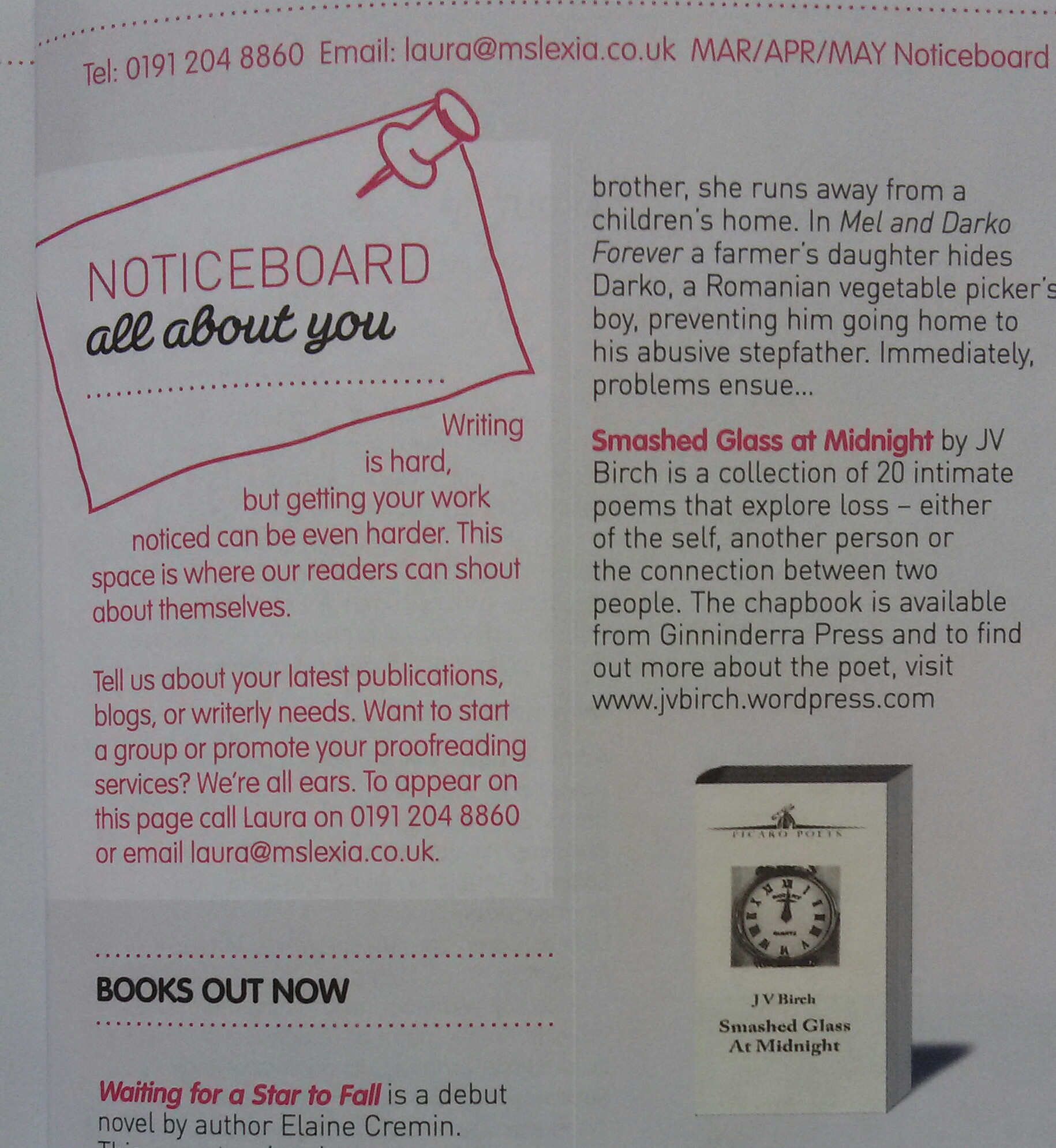
I had completely forgotten about this, so it was a nice surprise in all the madness when the latest issue of Mslexia arrived in our postbox…

2016-01-08 11.30.43

Don’t think I will ever tire of seeing this little chapbook in print.  And hope no one else does either  🙂

Well I saw the new year in with some of my favourite people…poets! And what better way to celebrate than with a chilled glass of wine (or three) and yummy food under a canopy of vine leaves in a beautiful home in the Adelaide Hills. Perfect.

And sticking with tradition, we were each asked to share achievements from the old year and aspirations for the new, which got me thinking…

2015

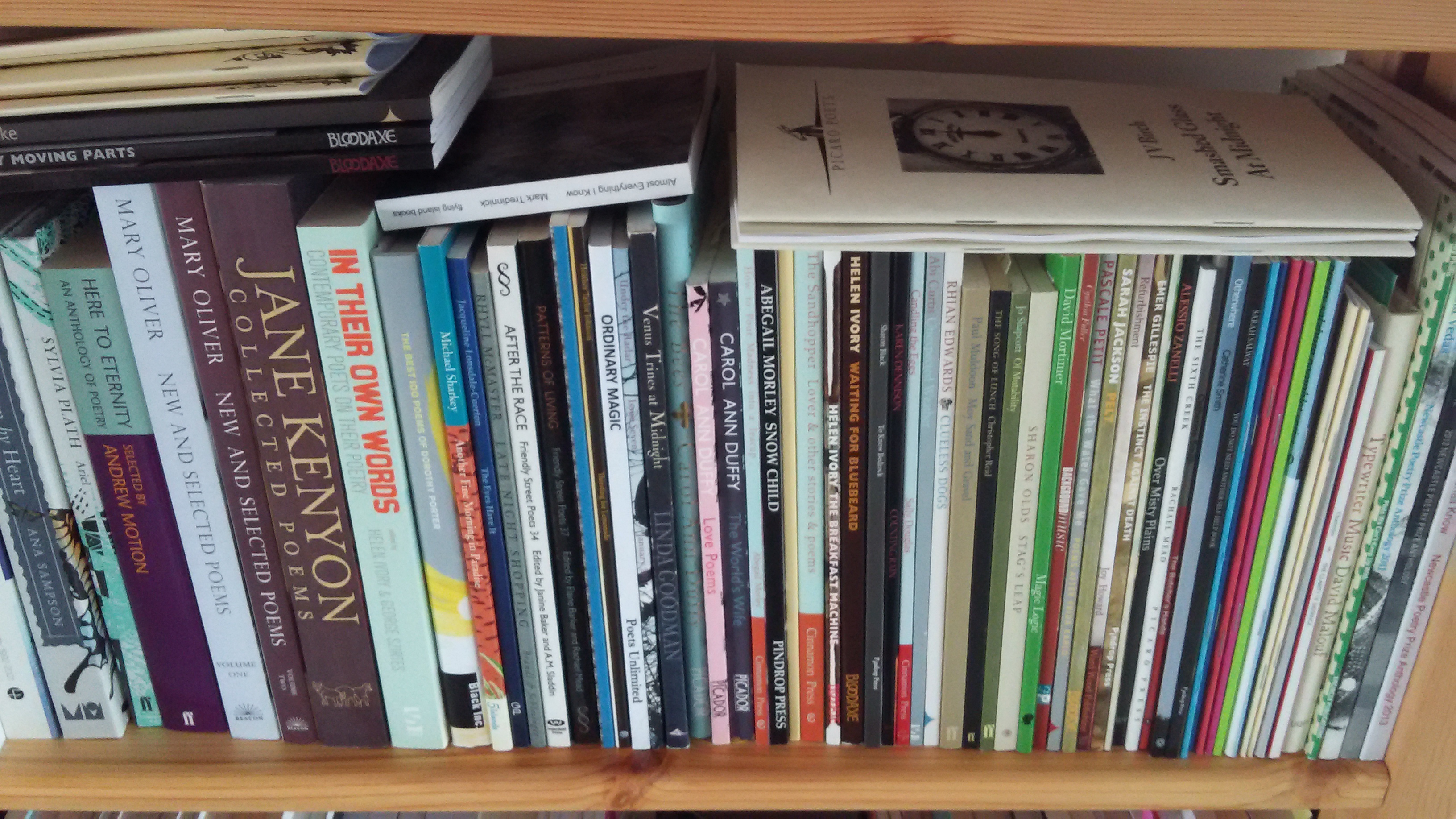
So looking back at the last 12 months, one major success stands out – the publication of my first collection – yay me! I must admit I’m rather proud of it and love catching a glimpse of it in our bookcase.

20160101_164813

Being guest poet at Hills Poets is another memorable experience, aswell as reading at Lee Marvin alongside the greats (fingers crossed I get invited back!).

This blog has also proved it’s worth, with views from here, the UK and US – all 2,300 of them (is that any good?) – with the most popular post being my launch in pictures peaking at 95 views.

So going back to publishing, with acceptances inevitably come rejections, and looking at the stats I think I’ve had more than my fair share:

  • 23 rejections across journals, magazines and anthologies
  • 7 acceptances predominantly in journals and magazines both in print and online

There’s a ratio in there somewhere – and I don’t think it would look too good!

2016

So looking forwards, what’s on my agenda for this year?

I have a couple of ideas for further collections – one full length and the other possibly another chapbook, we’ll see.

And among the rejections are a few poetry journals and magazines I really want to appear in, namely RABBIT, Cordite and Mslexia, so plan to keep on improving and just keep on trying.

A longer term ambition is to get a room of my own for writing. Having stayed last night at a fellow poet’s house complete with study and writer’s cottage, it would be absolutely wonderful to have a space just for poetry – with books lining the walls, my writing journals piled on the desk, a view, inspirational photos, snippets, notes, etc…alas still a dream for the time being. One day 🙂


Amelia Walker and Mike Ladd were this month’s featured poets hosted by Friendly Street at the Halifax Café, two fantastic local poets who I thought complimented each other very well.

2015-11-26 11.03.56

Introduced by the lovely Jelena Dinic, Amelia was first up, but not before distributing a piece of paper to each table with a request to write down five things (in our case, five abstract nouns). Amelia actually started with a poem by someone else, something she often does apparently, and it just happened to be one of Kathryn Hummel’s who has recently returned from India where she published her second collection, The Bangalore Set. The poem focused on winded birds whose ‘feathered tips articulate their shock’, a vivid image.

Amelia had her first collection published at the tender age of 19, Fat Streets and Lots of Squares, essentially about Adelaide which has proved very popular with teachers in schools. Amelia shared ‘Him’ from the collection about a well-known local character who walked up and down Rundle Mall in white gum boots, referring to him as ‘an isolated hiccup’ and she ‘had heard from a friend of a friend of a friend of a friend, he does it for a laugh’. Amelia then read an updated version written now at the age of 32 called ‘For Johnny’, where he is ‘real like fairies’ with a ‘body dressed in loud undress’, a far more introspective piece that asked questions, culminating in the memorable line of ‘a made in China koala always monkeying your back’. This was followed by another new poem about an old poem inspired by the war memorial on North Terrace, which spoke of looking after soldiers in a nursing home, ‘with brushed teeth and perfect parts’ these were ‘old men unhinged from time’.

Amelia then collected the paper from the tables, put them in order and created a poem before our eyes. Beginning with our abstract nouns, for example ‘homesickness’, she connected each with a colour, an animal, a place and a time, producing some very thought-provoking lines. This was clever stuff and further enhanced the fact Amelia is an amazing performance poet who captivates her audience.

Mike read old work, from his second, third and fourth collections, which is what these readings are about, the antithesis to the Lee Marvin ones. Mike started with a poem called ‘Vasectomy’ where the doctor ‘chattered golf, his slice and splice, tapping the balls in’ which his, after, swelled to resemble ‘a witch’s fruit’ culminating in the poignant image of ‘me on the cliff top with empty arms’. Mike’s next piece was a ‘Poem for two brickies’ who threw bricks to the other with movement reminiscent of some kind of dance as they ‘placed to weight on an invisible shelf of air’. ‘Waiting room’ was just that, where the walls were ‘duck-egg blue’ and a girl was ‘scratching her name with a 20 cent bit’. Mike then shared four poems in one about water, which ‘has no voice tonight’, where ‘water cats’ loitered and resembled Siamese from whom you could ‘drink their eyes’.

Mike had written some semi-surrealist poems about objects inspired by a surrealist artist whose name I didn’t quite catch, one being ‘Dreams of a pillow’ in which the pillow imagines being ‘hard and sharp’, and another simply called ‘Spare chair’ which plays ‘wooden horse in secret’. Mike moved onto more naturalistic pieces – ‘Murray bend’ where ‘sand fire colours warm the eye’ in a ‘big fish dreaming place’, and ‘Parable of a farmer’ written in long lines to symbolise those made by cattle traversing a field so that ‘shambling cows turned hills into verse’. ‘Spinal unit’ Mike wrote after his partner fractured her spine, where ‘beds are altars for flowers’ and ‘patients brace for their separate nights’.

Mike finished with some beautiful snippets about vegetables in ‘A vegetative life’ – beetroot, asparagus, potato and parsnip, the ‘pale digits of the damned’, and red onion that he told ‘you contain infinity and make me weep’. Mike was just as engaging as Amelia, no doubt honed from his years hosting ABC’s radio program Poetica. This was a brilliant line up.

I haven’t had much time recently to focus on writing but seeing the Lee Marvin line up for Tuesday at the Dark Horsey BookshopMike Ladd, Alison Flett, Jelena Dinic and Peter Goldsworthy – my priorities quickly changed.

Lee Marvin 2

Mike read more from his Dream Tetra series, developed using phrases he remembers from his dreams, which he then inputs into Google to see what it generates. Mike began with ‘Dream Tetra No.4’ centered around the line ‘the crack in the crib’ and featured a priest as ‘a black-cloaked grandfather’. He then followed with ‘Dream Tetra No.8’ preceded with an apology to any German speakers in the audience and then described his mum who is ‘alive today in her aloneness’, a beautifully poignant statement. ‘Dream Tetra No.10’ explored the concept of emoticons and how it would be wonderful if we could plug our heads into a machine to show our current emoticon, an interesting idea.

Alison was up next to share what she described an experimental set, which is exactly what these readings are about. Alison has recently been awarded a writers grants from Arts SA and is using this to develop a collection about home and belonging, and the connection to land. Her poem ‘The map of belonging’ explored the sense of being lost, ‘finding yourself landless’ and asked thought-provoking questions like ‘where do your belongings come from?’ ending with ‘the hulls of boats will always be filled with bodies’, a haunting image. Alison’s next poem, ‘Colour difference’ compared the Australian yellow to the British yellow an interesting comparison culminating in a buttercup. ‘Five ways to dream a country’ was a five part series with ‘bare feet ticking on bare floorboards’, followed by ‘Songs of the outback’ featuring road kill and distance, making even the horrendous sound stunning.

Jelena began by explaining how, being from Serbia, English is her second language, and that she wanted to be a doctor but no, her parents insisted she be a poet! Jelena’s first poem was simply called ‘Back’ and indeed was about going back home, what she saw and felt, quickly followed by ‘Hotel room nightmare’ featuring ‘illusions of faces in places’. ‘Gypsy travels’ opened with the line ‘her golden feet lost in direction’ and continued the vivid imagery with ‘a caravan of wishes’. In Jelena’s next poem, ‘Skin-kissed’, she shared her experience of dealing with psoriasis, a debilitating skin condition causing her to spend time ‘scrubbing and scrubbing her mermaid body’. ‘Duck’ Jelena read first in Serbian and then provided a translation, where the duck ‘carries the restlessness of water’.

Peter book-ended the session by reading excerpts from a novel he’s been writing for 3-4 years and which, he confessed, he has been annoying his partner with. Before however, Peter read from part of a series which posed that age-old question is there a god and described how ‘church bells sing in the far blue itching’, evoking an almost traditional country scene. Turning to his draft novel, Peter shared a section about a blind cop returning home from hospital following an “accidental” overdose, but not before collecting his dog from the dog’s home. With lines like ‘soft eggs of the eyes’, ‘half a packet past nine’, ‘the nib whispered across the pad’ and how an underlying growing anger causes ‘a volley of barks’, this was atmospheric gritty stuff, which I look forward to being published.


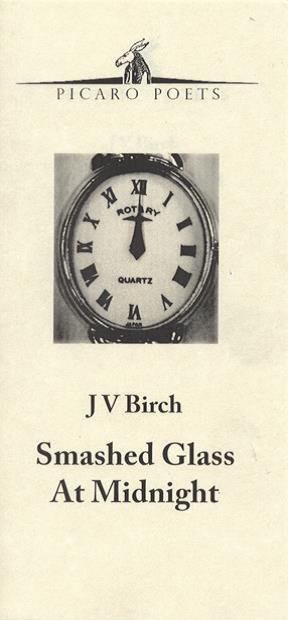
from Karen Dennison of Smashed glass at midnight on Abegail Morley’s The Poetry Shed.

Cover image of Smashed glass at midnight

A beautifully written piece, insightful and thought-provoking, you may need to get yourself a copy  😉

Archives

Blog Stats

  • 26,101 hits
Rust & Moth

Singing in the shallows

Shaw and Moore

Singing in the shallows

The Orange & Bee

Singing in the shallows

The Amphibian Literary and Art Journal

for the culturally amphibious

Poetry in Process

Understanding poetic process from inspiration to final edit

Wakefield Press

Wakefield Press blog

Andy Jackson

Poetry from a body shaped like a question mark.

mistakenforarealpoet

odd posts from an occasional poet (or vice versa)

Cath Drake writing & communications

This site has been archived. Please head over to: https://cathdrake.com/