You are currently browsing the category archive for the ‘Events’ category.
I was thrilled to find out a couple of months ago that two of my poems were selected for inclusion in Driftfish.

This is a Zoomorphic anthology of poetry, prose and pictures about marine life – to celebrate it in all its fantastical forms and to commiserate it in its dwindling numbers. Hundreds of submissions were received from around the world and I was lucky enough to be one of its international contributors, thanks to poetry editor Susan Richardson.
Driftfish is Zoomorphic’s first print anthology in which they aim to convey the magazine’s core principle: “to defend non-human species, we must reconnect our imaginations to them.”
The launch was yesterday at ONCA in Brighton, UK as part of its current exhibition Do you speak seagull? and I was one of four to Skype in to read. This was a first for me and unfortunately, no doubt due to our temperamental connection, I wasn’t able to hear them and had to go by visual prompts to begin reading! The main thing however, was that they could hear me perfectly, and I was shown around the room to claps and waves afterwards thanks to Ellie, ONCA’s tech guru.
A copy of the anthology is swimming its way to me as we speak, so if you’re interested in the stunning life the oceans hold, grab a copy and dive in!
Last night was the launch of the Southern-Land Spring series from Garron Publishing at the Halifax Café. And the place was bursting at the seams, with people flocking to hear the latest work from some fantastic poets – Mike Hopkins, Alison Flett, Steve Brock, Judy Dally and Louise McKenna.

MC’d by Gary MacRae from Garron Publishing with Sharon Kernot on book sales, which incidentally went like hot cakes, Mike Ladd introduced the line-up, another outstanding local poet.
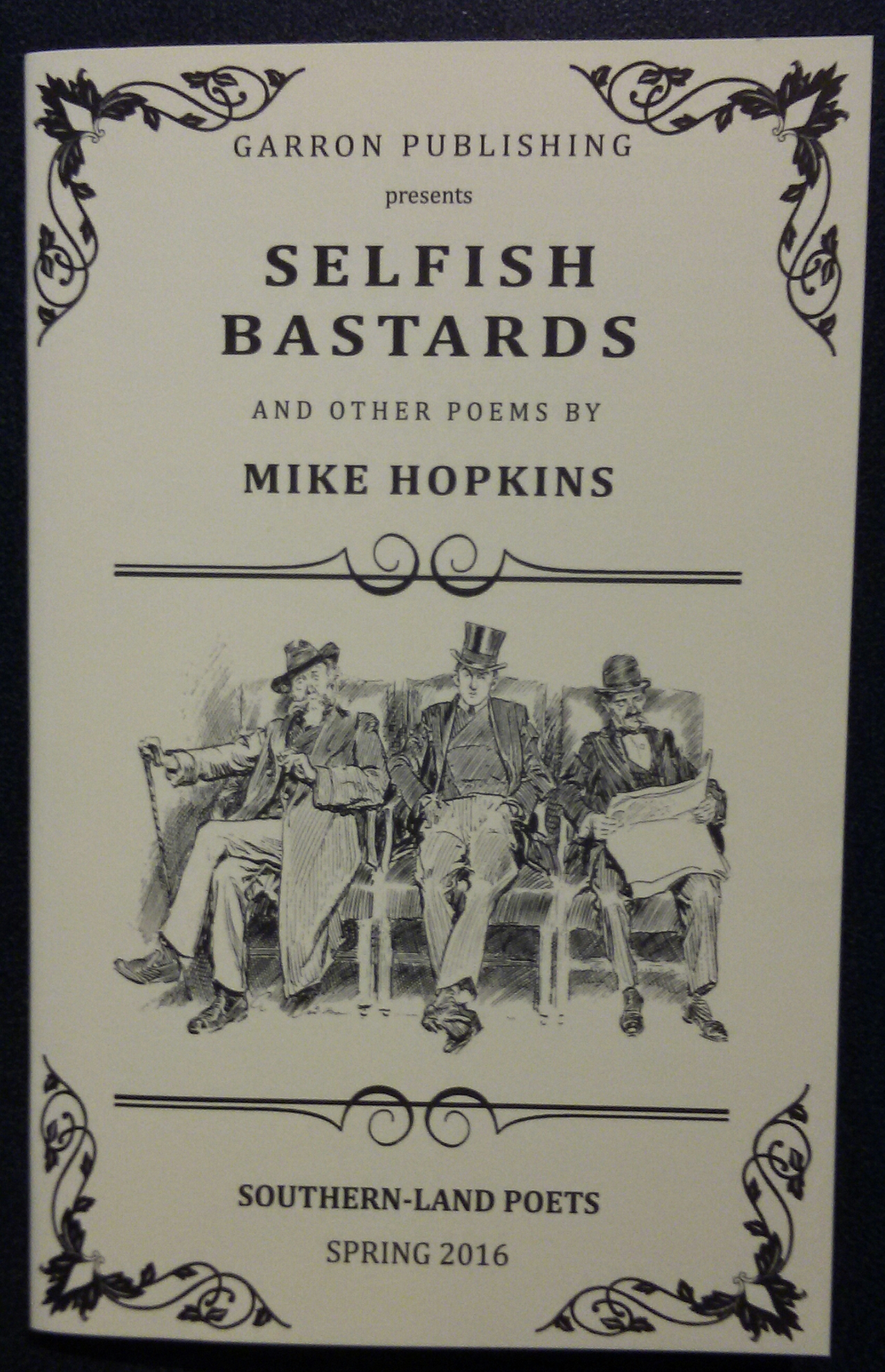
First to read was Mike from his ingeniously titled Selfish Bastards and other poems, a collection described as a ‘parody of parodies’ and so naturally Mike read the title poem, which required audience participation. My favourite line has to be ‘Poets at poetry readings who go over time with their boring bloody confessional poems about their boring bloody tragic lives – Selfish Bastards!’ (shouted by the audience). Mike’s work is clever, witty and engaging, and there’s a very poignant poem in the collection called ‘My Father’s Blood’, which won a first prize at this year’s Salisbury Writers’ Festival.
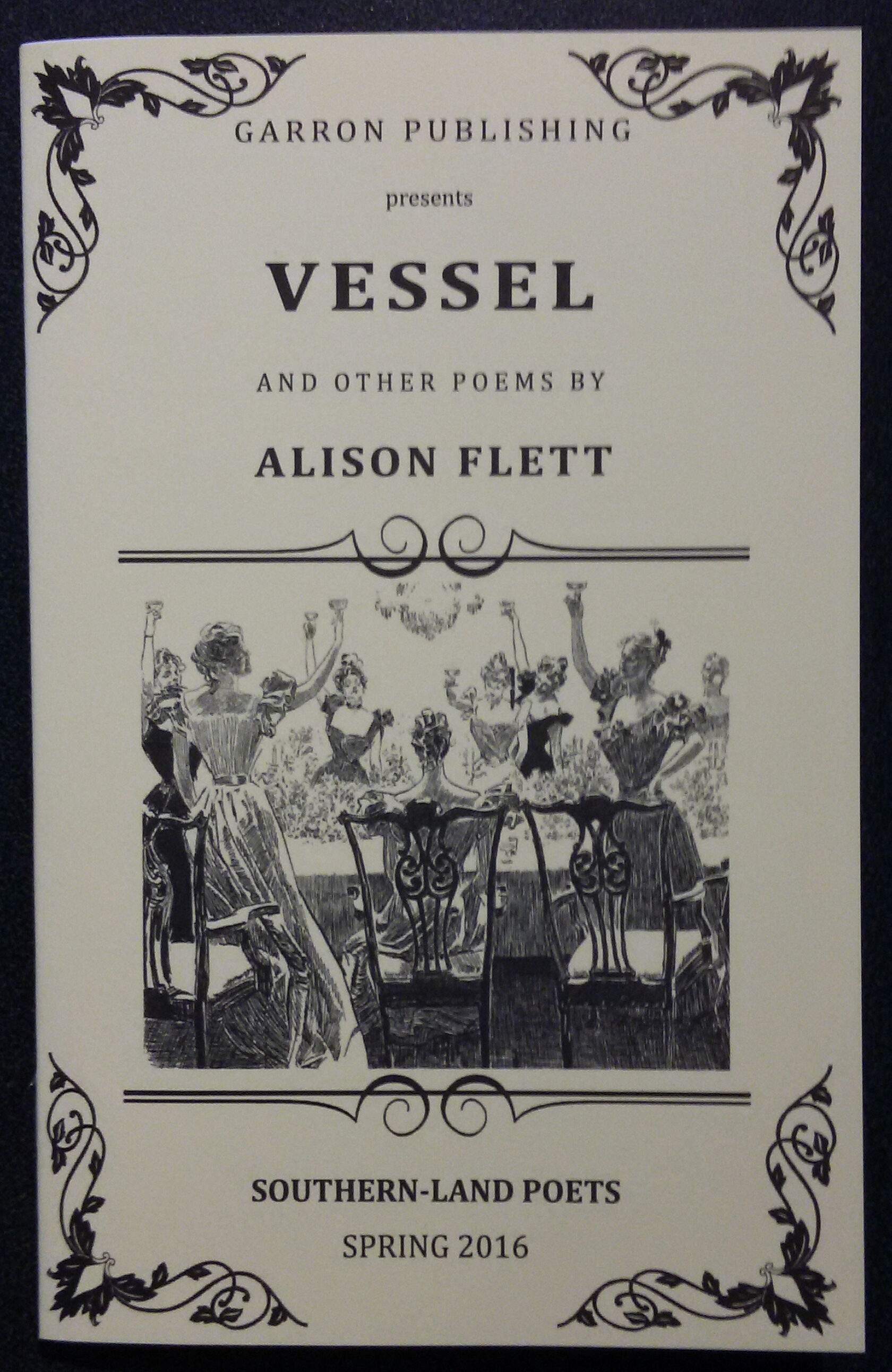
Next up to the mic was Alison reading from Vessel and other poems, and again like Mike Alison read the title poem, two of its three stanzas, which I’ve heard Alison read before and just love. The poem is about a girl, with each stanza marking a different chapter in her life, beginning with ‘She is small. The sky does not yet come down around her. It is still contained in a blue strip at the top of the page’, epitomising childhood. Alison reads like a dream, fashions poems brimming with feeling and soul, which both haunt and enrapt with their quiet beauty.

After a short break, Judy shared some poems from Lost Property and other poems, a collection about her late father, her relationship with him and the impact it has on their family dynamics. Judy started with ‘My father on a January morning’, where we see him ‘hunched on the sea wall’, hiding, ignoring, clearly not wanting to be there, ending with ‘refused an ice cream, cast a shadow’. Judy’s poems belay the quite often heartbreak of parental relationships, lives spent, moments lost, asks the question, how did we come to this?

Steve read next from Jardin du Luxembourg and other poems, a collection about travel and his time spent in Europe. In Steve’s poem ‘Still Life’, he compares writing poetry to ‘a bowl of lemons’ where ‘you need the optimism of the lemon’ and ‘the ability to lend yourself like the humble lemon to season other parts of your life’. A clever thought-provoking piece, leaving us poets with a literally tantalizing image – that ‘one day you have enough lemons to live off alone.’

To finish the set Louise read from The Martyrdom of Bees and other poems, which draws on her nursing career. Louise also started with the title poem and like Alison read two of its three stanzas, where a bee ‘alights upon his arm, testing for sweetness on the inside of it, as if it is the pale throat of a flower before the white hot pain’ and then later, they become ‘airborne tigresses, poised to kill.’ I particularly liked ‘A Nurse’s Meditations in the Sluice Room’, where ‘ your contempt is like a needle waved in my face’ to the final stunning lines – ‘I have carried my anger in your bedpan – now I open the tap, rinse it away.’
These chapbooks are exquisitely rendered pieces of art, both inside and out, and once again provide perfect poetic snapshots, a credit to the South Australian poetry scene.
Another fantastic series from a fine publisher


The launch of my chapbook “Selfish Bastards and Other Poems” will take place at the Halifax Cafe in Adelaide on Thursday, October 6th, 2016. I am in the illustrious company of Alison Flett, Judy Dally, Louise McKenna and Steve Brock, the other poets in the 2016 Garron chapbook series. It could be a big night.
If you can’t make the launch, you can order copies of “Selfish Bastards and Other Poems” here, and I will post to you as soon as they arrive from the publisher.
It’s the 20th birthday of Ginninderra Press (GP), and to celebrate the milestone of this prestigious publishing house run by Stephen Matthews and his wife Brenda, a weekend of literary events, in which it was a pleasure to participate.

Saturday saw a full day at Tea Tree Gully Library, MC’d by Peter Bucklow co-owner of East Avenue Books with Joan Fenney, beginning with Stephen chatting to Joan and for someone who rarely enjoys the spotlight, Stephen was captivating.
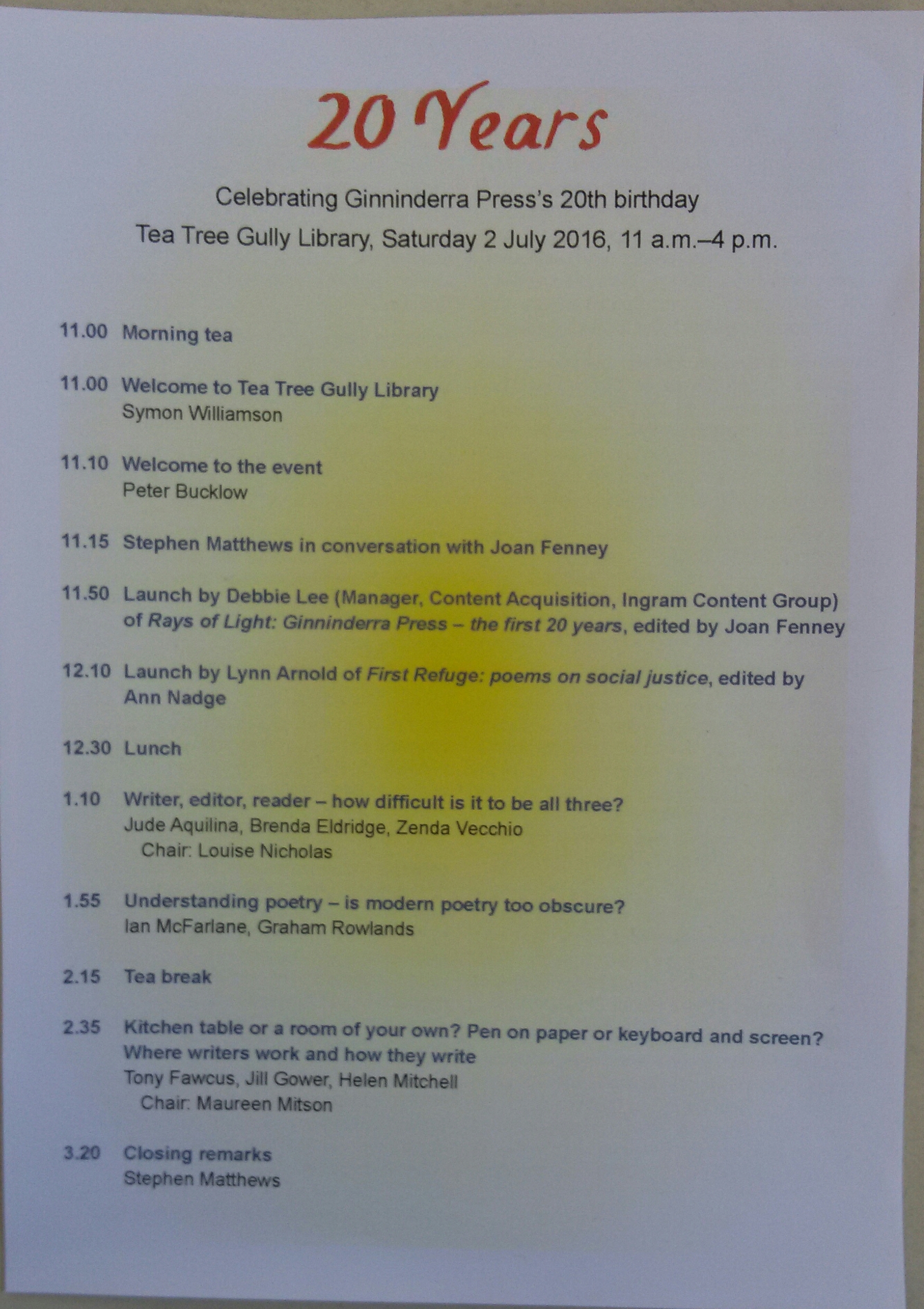
Having graduated from Cambridge with a ‘fascination for books’, Stephen shared his journey into publishing, a path deterred by his career guidance counsellor who suggested teaching instead. So after taking his advice, and from there into bookselling and eventually into editing, Stephen pursued his desire to ‘give manuscripts a place in our culture’. He explained how getting published has literally changed peoples’ lives (I can vouch for that) and how print on demand has helped to secure the future of books, and indeed his workload.
Next up was the launch by Debbie Lee of Rays of Light: Ginninderra Press – the first 20 years compiled by Joan Fenney.
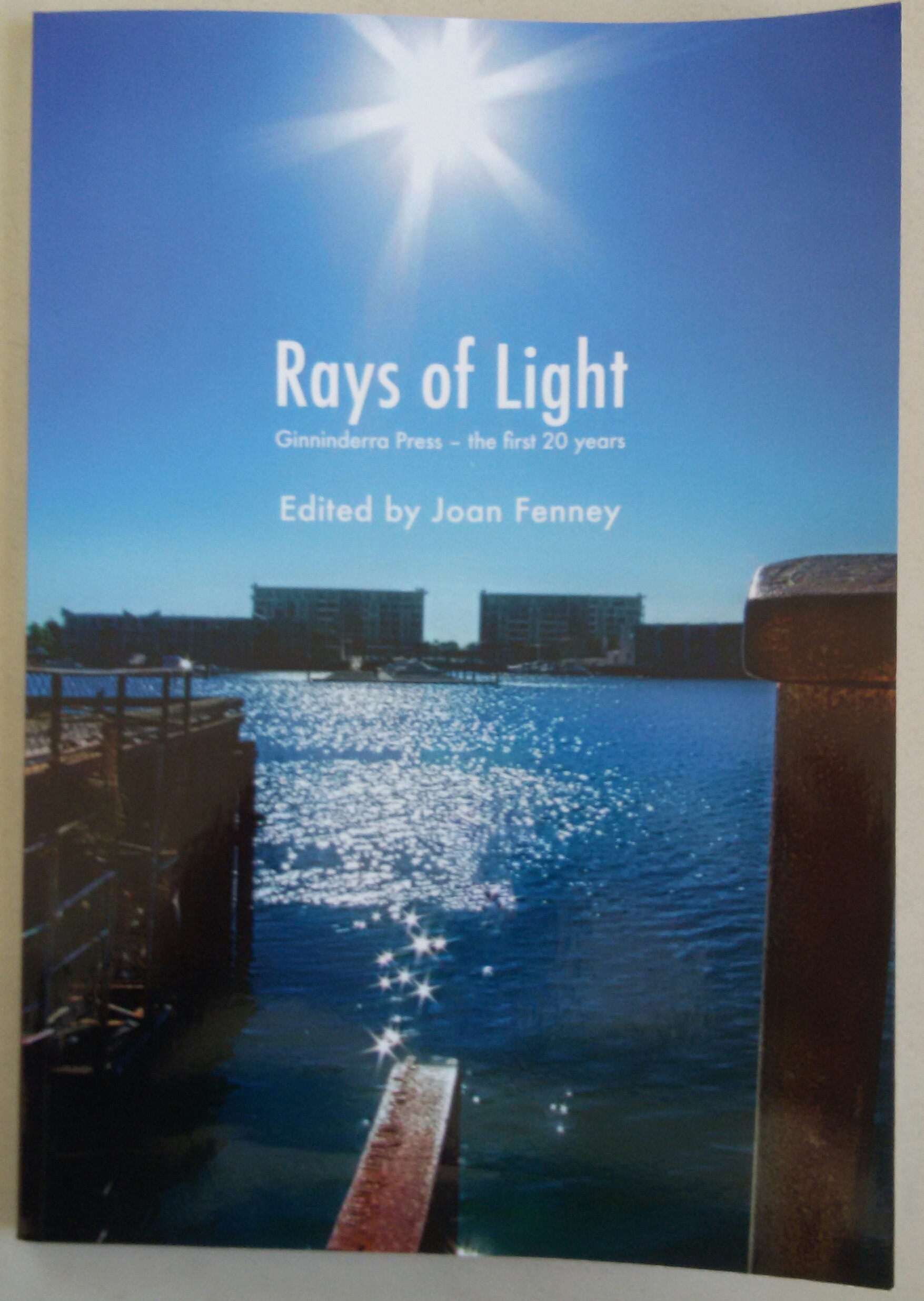
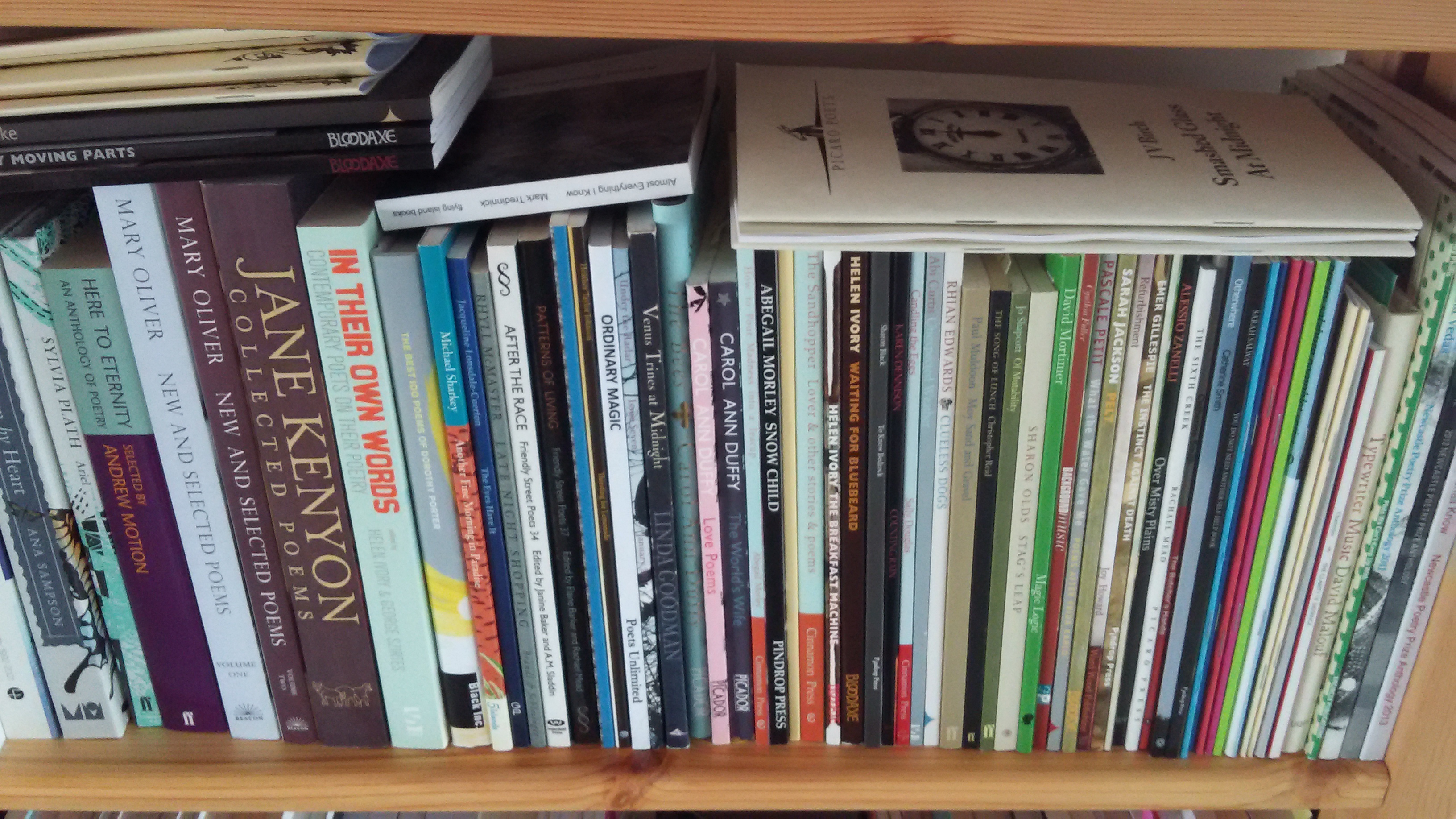
This is an enchanting read, learning how Stephen’s brainchild has established itself firmly in contemporary Australian literature spanning all genres – non-fiction, poetry, fiction, short stories – by publishing ‘little pieces of art’. Since the inception of their chapbooks in 2014 – the Picaro Poets and the Pocket Poets series – GP has sold 6,000 copies in two years, now that’s impressive. This book is an invaluable record created by Joan after 15 hours of interview, with eight chapters written by GP authors, as well as a compilation of quotes from members of the GP family.
And then it was time to launch First Refuge: Poems on Social Justice edited by Ann Nadge, in which I’m thrilled to have a poem.
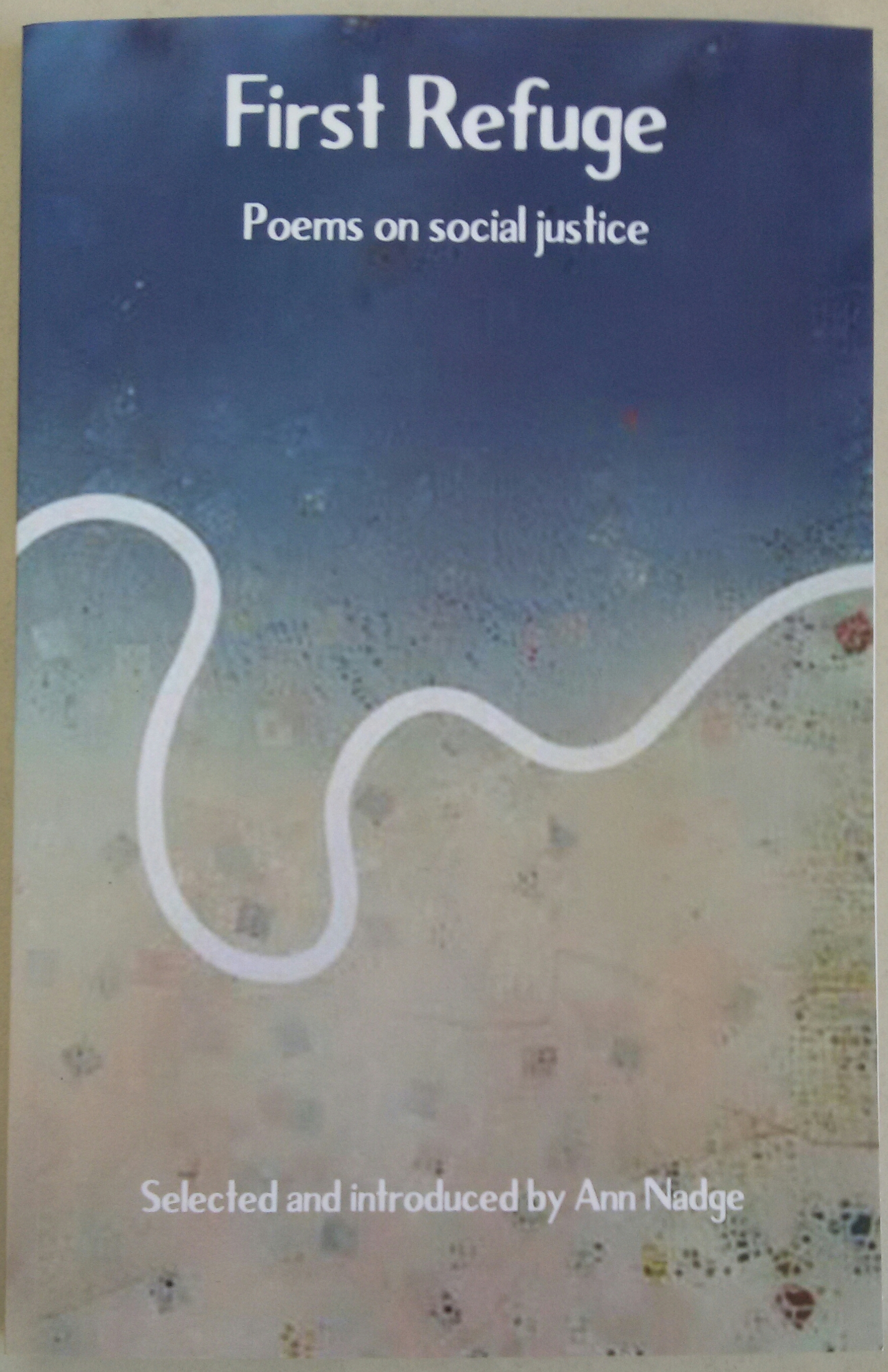
Former SA Premier and now ordained minister Lynn Arnold had this privilege and did so eloquently. These poems from 88 GP authors explore social justice reaching into uncomfortable spaces – war, domestic violence, refugees, isolation – leaving nothing unearthed, resulting in a somewhat emotional journey when reading it from cover to cover. To quote Ann, this is ‘a small book with big teeth, where language has power’.
After lunch there was a session about being a writer, editor, reader, a panel discussion with Jude Aquilina, Zenda Vecchio and Brenda Eldridge (aka Brenda Matthews) facilitated by Louise Nicholas. Jude used to be a telegram writer and then pursued her passion for poetry by giving workshops, readings, judging competitions and editing manuscripts. Zenda only became a writer recently, enjoys telling stories and believes ‘reading and writing to be two strands of the same rope’. Brenda does what she loves every day, is flexible with her time and energy, and knows when her head isn’t in the creative space, deadheading roses makes more sense. When asked what their definition of a professional writer is, their answer was when you make a living from it, with reading an essential component.
The next session looked at the impact of modern poetry – accessible or too obscure? Graham Rowlands shared some useful insights and read a poem by Michael Farrell, a poet regularly published in national broadsheets and whose work can often be difficult to decipher due to its ambiguous nature. Ian McFarlane shared some of his own work, explaining how it has helped him personally and how he prefers to connect with an audience rather than confuse it.
The last session of the day was about how and where writers, specifically Tony Fawcus, Jill Gower and Helen Mitchell write, facilitated by Maureen Miston.

Tony is a self-confessed poetry addict who writes continuously, reaching blindly for his notebook and pen in the dark so as not to wake his beloved. Jill likes to write sitting at the table of a café using beautiful notebooks to encourage her to do so, sharing how the likes of D H Lawrence, Ernest Hemmingway, Philip Roth and Jodi Picoult prefer to write. Helen writes in her study but finds inspiration outside, carrying a Sony recorder with her and using eavesdropping as a skill.
This was a jam-packed day covering a variety of thought-provoking topics, one I left happy to prep for the following day’s readings from the social justice anthology at East Avenue Books.

As usual the bookshop was packed yesterday afternoon, with Peter once again hosting proceedings, introducing Ann to explain how the anthology came about. Several poets read their poems, including me, and I felt honoured to see my poem quoted from in the introduction. The anthology is a riveting read, one for anyone interested in social justice issues and the varied perspectives evoked.
And this concluded the celebrations. There was also a dinner cruise in Port Adelaide, home of GP, on Saturday evening which I unfortunately couldn’t make but heard it was wonderful, made more so by the appearance of the local dolphins.
Last night I went to the launch of Little Windows at Booknook & Bean, an exciting new line of chapbooks from poets Jill Jones and Alison Flett. Published in a series of four, poets Andy Jackson and John Glenday helped Jill and Alison fulfill the first quota.

These limited edition handmade chapbooks are exquisite, developed to get South Australian poets on the map and this they will do. Alison introduced the series, thanking all those involved in its production, before handing over to Jennifer Liston to MC the event, with each poet sharing three poems from their chapbooks.

John was first up, joining the event via Skype from Scotland, and began with ‘the apple ghost’, a haunting poem of loss in which an old woman has kept the last apples her husband picked before he died. There are ‘shelf over shelf of apples, weightless with decay’ prompting the dead husband to roam the home at night and attempt to try ‘to hang the fruit back on the tree.’ The ‘undark’ followed, the first poem in the chapbook, continuing the delicate theme of death where ‘those girls’ have ‘come back’, ‘their footprints gleam in the past like alien snow’ and the light they once had has ‘burned through the cotton of their lives’. John’s final poem I didn’t quite catch (too busy manoeuvring a crate to sit down!) but I’m glad to have discovered his work.
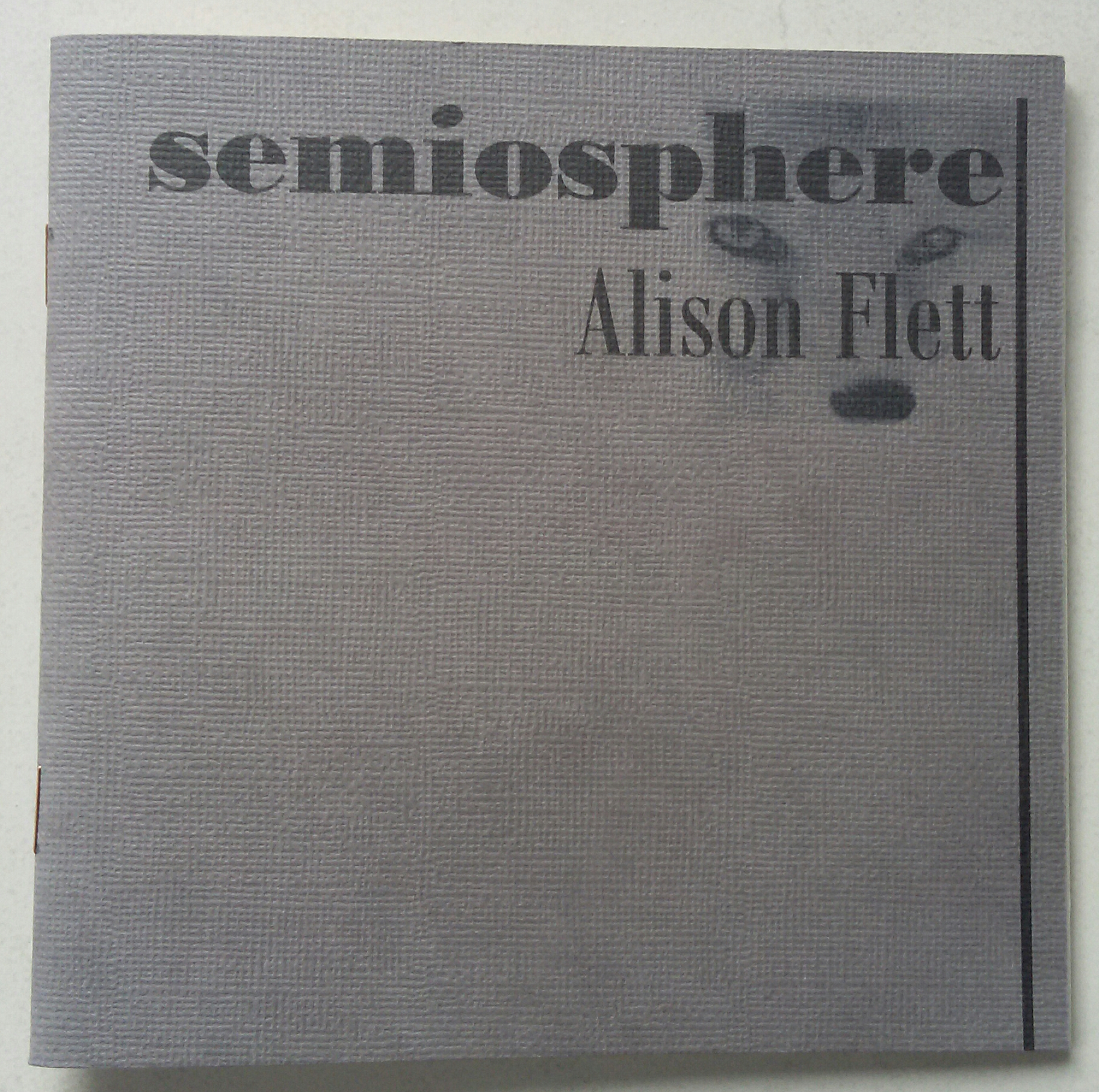
Alison read next, sharing three poems from her fox series, which I adore, beginning with ‘fox 1: umvelt’ where he moves ‘in silence through the city’, ‘the pavements are thick with his thick foxy scent’ and after he’s gone, leaves ‘his shadow smoking and stamping in the air.’ In ‘fox 2: corporeal’ aspects of the fox are presented; ‘his eyes are amber planets’, his tail with its ‘bristling quivering tips’, his ‘feet listening to the nothing’, his heart ‘a dark livid thing.’ The human connection is explored in ‘fox 3: liminoid’ when Alison encounters one crossing the road ahead as she walks with her friends from a nightclub, feeling ‘a pencil line of silence’ running between them as they regard one another in the din, and how this ‘gift from the fox’ returns ‘when theres noise all around’, ‘its taut string singing the silence’.

Andy followed with ‘blue mountains line’, a poignant journey in a train carriage ‘the colour of tendon and bone’, where ‘outside, the mist has lifted and left behind the shudder and billow of mountains’ and ‘that knocking is only an empty wheelchair, wobbling with the motion of the train.’ Andy then read ‘breathing’ posing the question ‘How do I carry this air?’, the scene a cremation described as ‘Theatre in reverse, decomposing you into these vague and pressing sensations in my head and chest’, leaving us with the simple line ‘Breathe out, breathe in -.’ Andy finished with a wonderful poem I’ve heard him read before, ‘what I have under my shirt’, offerings to explain the impact of Marfan Syndrome; ‘a speed hump (your eyes must slow down approaching)’, ‘the shape of my father’, ‘infinite shirts’.

Jill completed the readings beginning with ‘the wall, the door, the rain’, a thought-provoking poem where ‘there’s nothing I can claim of this world someone keeps giving away’ being ‘white with entitlements and modern footwear while blasphemy accumulates in my dreams’. Next came ‘big apples leaf summer’ rich with childhood and ‘the kindness of leaves’, as Jill contemplates ‘I am to be diamonds, pick me-ups, queer riddles you do not know’, crossing the playground her ‘confusion was greater than the hills’. Jill left us with ‘mighty tree’, the final poem in her chapbook, each line a stand-alone statement knitting beautiful images, where at the end she pleads ‘Oh mighty tree fall on me. Make me a legend or a nest. The magpies can pluck my dream. The ghosts can have the rest.’

This is a wonderfully fresh series, small finite collections presenting snapshots of poetry. Finishing touches are being applied to the website to enable others to gaze into these poetic windows of brilliance.
Friday evening I went to the launch of Louise Nicholas’s first full length solo collection, The List of Last Remaining, published by 5 Islands Press.

The event was MC’d by Jude Aquilina in the stunning home of some of Louise’s friends, with the book officially launched by Jan Owen. Jude and Jan, like Louise, are local poets, stalwarts of the SA poetry scene both having been published widely. Jude began by acknowledging the huge crowd there, and it really was, before introducing Jan.
Jan described Louise’s work as fresh and spontaneous with outrageous originality, combining humour and poignancy culminating in strong endings. There are poems about Louise’s father, mother and children, and Jan cited a few of her favourites – ‘Think of a violet’, ‘Whom the gods love’ and ‘Death by Wikipedia’ before reading ‘How to scale a fish’, a beautiful piece in which Louise links this to thoughts of her mother:
‘Notice the scales – how perfectly shaped,
translucent, like a baby’s fingernails.’
And then comparing the delicate skin of the fish to her mother’s:
‘Like her skin, buried
these past five years
beneath bed-ridden blankets,
her knees, when the blanket fell away,
gleaming
as if unearthed in moonlight.’
Louise then took the mic to read four poems after a long list of thank you’s, sharing that this launch was particularly special due to it being on what would have been her mother’s 99th birthday.
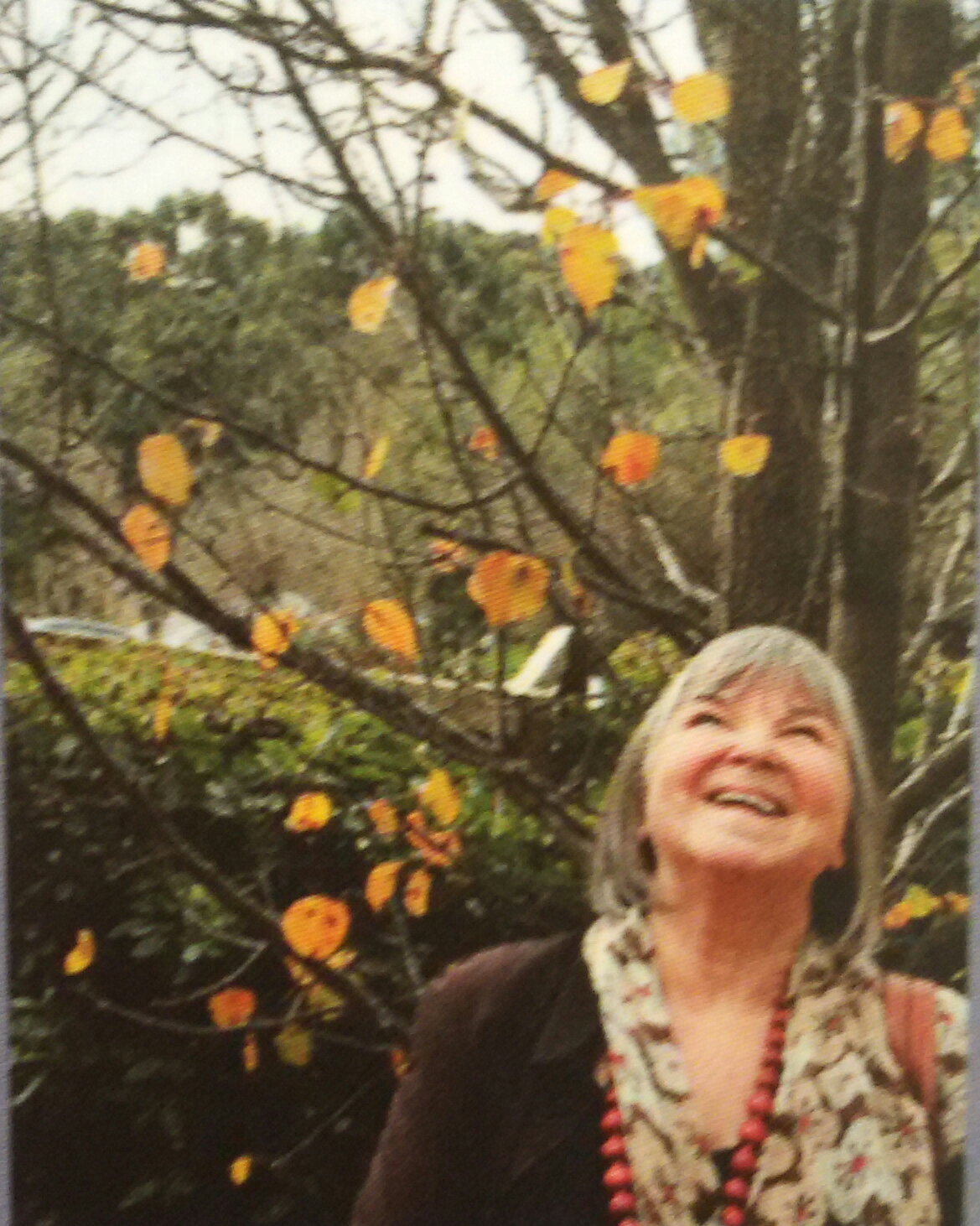
Louise started with ‘Coffin Bay’, the first poem in the collection, describing ‘the day our parents went out in the boat and didn’t come back’, how in their throats ‘hard lumps of fear had risen like gelatin / in home-made ice cream’ and when their parents were finally sighted, how her mother was ‘sitting in the stern as still and serene as the figurehead / from a long-forgotten ship.’
Louise then read ‘Tunnelling into the light’, quite possibly my favourite in the collection (although there are many to choose from!) about the birth of her daughter, where ‘Every five minutes as I prepared our tea that night, / I felt you leaning on the lock of your release’, gorgeously expressed as is this:
‘When we sat down to eat, you too sat down
and waited until I had cleared the table to try again,
then rested once more in the snug stairwell of my rib cage…’
For balance, Louise then read a poem about her son called ‘The black one’, describing ‘a Sunday afternoon’ when she is ‘mark spelling tests’ while he is ‘hung-over, sprawled in front of the television’, a warm homely scene.
Louise finished with ‘Love Laughter’, a wonderful poem where laughter ‘is lightness itself’ advising that for ‘sombre occasions like funerals and other people’s / book launches, best leave Laughter at home / and take her conciliatory sister, Smile, instead.’
The cover image of the collection was taken by Robert Rath, an amazing photographer, and remains a mystery (we don’t need to know everything always). Louise is a fine poet, which is reflected in this collection, where poems have many facets, catching the light as a diamond would, dazzling in their brilliance.
I was invited to the launch by Rachael Mead of Mike Ladd’s new book from Wakefield Press, Invisible Mending. It was held at the publishers down a pretty street in Mile End in what’s known fondly as ‘The Laneway’. I’d never been there so was eager to look around, buy some books and of course, learn about Mike’s new work.
Michael Bollen, who runs the local press, MC’d the event inviting Rachael up who did, as always, an exquisite introduction of Mike’s new book. Rachael referred to Mike as ‘loved and lauded’, stating this was his 9th book with his first collection being published at the tender age of 25 called The crack in the crib part of the Friendly Street Poets series. Rachael explained how this new collection draws many of Mike’s past threads together in a series of non-fiction pieces, a combination of poetry, prose and photos, saying ‘it’s not easy, this being human’. What I love about Rachael is her ability to really connect with the material she’s launching (having experienced this firsthand!) and to share new insights into the poet’s work.

Mike only read three pieces, beginning with a request, ‘Learn to Speak the Language’, which he recited from memory. This was a humorous piece, an answer to a question posed by a young man Mike encountered on a bus who, on overhearing ‘two women chatting in Punjabi’, states ‘If you come to this country / you should learn to speak the language.’ And so off goes Mike starting with ‘Yeah. You’re right…So how’s your Kaurna?’ (the native language of the Adelaide Plains and one of 150 Indigenous languages still spoken today) before reeling off a number of other Indigenous languages the young guy should try. This was a striking way to highlight ignorance, for Australia, its heritage and culture, and quite rightly received a round of applause.
Mike then shared a poem called ‘Adelaide’, a wonderful finite description of the city, a promotion of sorts – ‘We always have to talk you up, / get your festival clothes on’, ‘I like you best in November / when you spill buckets of jacaranda’ and when it rains after our infamous heat there are ‘chuckles in the gutter / and applause from the rooftops’. My favourite part is where Mike describes the city view from Windy Point (which I discovered only for the first time recently for my birthday dinner) where ‘It’s better up here than Los Angeles, / that hot glitter, all the way to the Gulf’, just gorgeous.
Mike finished with prose, ‘A Country Wedding’, the last piece in the book and one that contains the title. Here we find Mike in Queensland for his nephew’s wedding ‘Now a two-hour flight, it was once a three-day journey, when the children were small.’ The mobile phone plays a significant part, where Mike tries to justify his absence of one – ‘I am not the only one on the planet without a mobile phone’. What stands out for me here is Mike’s sense of place when describing the creek where ‘An hour before, the groom was getting his hair cut…holding a smoke and a cup of tea, like a last man’s wish.’ This is the image I was left with – ‘The she-oaks still look ravaged, as if attacked by blunt axes. But the firetail finches have returned, and the rainbow bee-eaters. There is invisible mending here all around me.’
This is an outstanding book, rich in every way, from it’s sometimes poignant subject matter, in particular Mike’s pieces on his father, to the mediums they’re expressed in. And the cover image was also there in the flesh, literally, a painstaking embroidery of a thumbprint by his multidisciplinary artist partner, Cathy Brooks, which I believe went up for sale after. So I will end by saying this – hats off to you Mike for another stunning collection, every page holds treasure.
East Avenue Books was the venue Thursday night for the launch of three new additions to the Picaro Poets series published by Ginninderra Press, namely Cary Hamlyn, Russ Talbot and Shelda Rathmann.

Joan Fenney, partner of Peter with whom she owns the bookstore, opened the launch by saying these particular poets are great friends of hers and how delighted she was to host the event.
Unfortunately Stephen and Brenda Matthews from Ginninderra Press were not able to be there so Louise Nicholas shared a note with the crowd passing on their appreciation to the newest members of the GP family.
So Cary was first up with her chapbook Scraping the Night introduced by Sharon Kernot who helps Gary MacRae run Garron Publishing. Sharon mentored Cary for a time and explained how her collection contains a variety of styles and themes – psychological, humour, loss, love – so a little something for everyone.
Cary began with the title poem ‘Scraping the Night’. There is so much to love in this gorgeous poem, which is essentially about a couple getting familiar – ‘moonlight leers through the car window etching the valley of your cheek’ while ‘outside the stars open and shut like clams’. Cary then shared ‘The Neighbourhood is Ajar’ where we find her waiting ‘for the evening to end’ and where ‘time has flattened itself between memory and expectation / it hides behind the clock / like a thief / ready to steal my last good hours’, a wonderful image. ‘Descending into Psychosis’ was next based on a true story of Cary’s schizophrenic flatmate when living in Sydney and is the longest poem in the collection. Here we find Suzanne who ‘in her room at the top of the stairs…wasped between shadows / like a hornet in a web’ part of her descent ‘into her Jungian hell’ which ends with ‘she slammed the door shut / on her sanity’, a brilliant stanza. Cary finished with ‘A Social Worker’s Lament’ inspired by the film Wolf of Wall Street, where she is ‘a glut of compassion…with a terrible need to nurture’ longing to be ‘full of loud-mouthed, shiny charisma’.
Russ was up next with his chapbook Things that make your heart beat, his first published collection, from which poems were read by Jennifer Liston due to Russ’s acquired brain injury from a tumour. This was tear-jerking stuff, to quote Joan ‘poems that hit you in the heart’, and boy they did. Jen began with ‘Ache’, a very clever and poignant piece comparing the physical ache in the arms from holding a baby to the one from remembering – ‘This isn’t the life I chose / it’s the life that chose me. / It’s a good life / it really is. / Just sometimes I’m reminded of the other one’. A stunning poem called ‘Rope’ was next speaking of a relationship ending where the other person is watched as they ‘drift away, your mooring / rope unravelling into the / moonlit water, / not quite holding you’. The next poem ‘Spyder’ was a William Blake satire, with an apology to said poet as a sub-title, before leading us through a lovely little ditty of running into a spider’s web and having to ‘do the spider-panic dance’. Russ’s last poem shared was ‘Your face’, describing how it is more than just the sum of its parts, the final stanza fantastic – ‘Your face is the watch / that tells me / I’m wrong, there’s time’.
Shelda was last to read from her chapbook Fleeting Fragments. Shelda teaches creative writing, is somewhat of an entertainer and on the best selling poetry list, and began with a poem called ‘Birkenhead Bungalow’ about her grandma who is ‘a constant traveller of the night’ haunting its rooms. It’s a poem of sadness and longing – ‘like a lost spirit, her mind wandered, a confused nomad who / repeated the same stories and pined for the past’. ‘Ode to the FruChoc’ was read next and was literally that, ‘fruit centres / of apricot and peach / melt in my mouth / like summer showers’ (there’s also a poem on the opposite page about the Haigh’s chocolate frog, my favourite nibble!). ‘Battle of the Bulge’ followed, a humourous rhyming poem about trying to control the ‘spare tyre’ where ‘at night I indulge in leafy green feasts / in order to fight this untamed beast’. With Shelda’s last poem, ‘Accordion’, props were required – a music stand displaying a photo of an eight year old Shelda with her first accordion and then the instrument itself today. Both the poem and music were very entertaining.
And there endeth the readings. East Avenue Books is a beautiful little bookstore with a wide range of reading material. Started in 2009, one of its many aims is to make poetry accessible to all, one such way is by posting a ‘Poet of the month’ in the window, one of which was Russ’s whose poem drew people into the shop to find out more about him and his work. If you haven’t already visited, I recommend you do, and indulge in some superb little chapbooks.
I was invited to an exclusive gathering at Heather Taylor Johnson’s house last night to listen to the poetry of Andy Jackson, here from Victoria to complete his PhD at Adelaide University. I hadn’t read any of Andy’s work before the invite and once I did, was looking forward to hearing more.
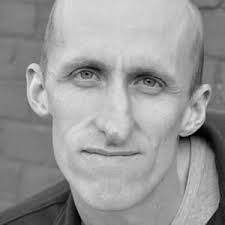
Andy has performed widely, received awards for his work and been extensively published; his first full length collection, Among the regulars, was shortlisted for the NSW Premier’s Prize for Poetry in 2010 and in 2013, his collection, the thin bridge, won the Whitmore Press Manuscript Prize. Andy has Marfan Syndrome, a genetic disorder of connective tissue, and the impact of this on his life is explored in much of his work.

Heather introduced Andy, who started with a new poem, ‘What I have under my shirt’, which he told us had been rejected by a few journals and after hearing it I thought, more fool them. The poem offered several ways to explain his ‘body shaped like a question mark’ to use Andy’s words, comparing it to ‘a speed hump your eyes slow down over on approach’, followed by other explanations such as a ‘backpack’, ‘nothing’ or ‘infinite shirts’. It was a thought-provoking piece, really quite profound.
Next came a poem about parenthood called ‘Double helix’ in which Andy used line repetition; ‘what looks like a pattern is composed of chaos’, ‘I didn’t think of having children until I met you’ and ‘you can be so lonely you don’t want to be touched’. Powerful stuff.
Andy then shared what he described as a kind of love poem for his partner Rachael, a poignant description of them taking a bath, with the beautiful line of ‘I slipped, bumped my thinking on your actual body’ as he is almost dumbfounded by what’s happening.
‘The elephant’ was a poem about the proverbial one in the room, literally, where ‘there isn’t much room for us’ and so they are forced to ‘inch along the wall’, culminating in the wonderful last line of ‘He reverently lifts my arm, as if it were a tusk, lifeless’.
Andy closed his first set with a poem about the decomposition of a bike in Coburg called ‘The bike itself’, telling us how pieces were taken away over time so he finds ‘beauty in absence’, leaving ‘memories not even lavender-patterned wallpaper can hold onto’.
Unfortunately I didn’t stay for the second half (more fool me!), but it was a delight meeting Andy albeit fleetingly and to hear him read. It was a gorgeous event, filled with candles, soft lights and bright stars, both above and of the SA poetry scene, with Jill Jones, Rachael Mead, Alison Flett, Kathryn Hummel, David Mortimer, Mike Hopkins, Pam Maitland, Aidan Coleman and Amelia Walker, who were also invited to share a poem or two.
But lets return to Andy. His work is achingly beautiful, haunting, conjuring images you just want to put your arms around or slip into your pocket to take home to keep. If you’re not familiar with Andy’s poetry, I would strongly encourage you to get familiar; his collections have already been ordered.
Sunday evening was a divine mixture of fine food and company, as we devoured a three-course meal and the words of five Adelaide-based poets and novelists who shared a series of water-themed readings.

Held in Sarah’s Sustainable Café in Semaphore as part of Adelaide’s Fringe-frenzy month, the line-up was impressive – Ray Tyndale, Mag Merrilees, Rachael Mead, Heather Taylor Johnson and Alison Flett – and Stuart Gifford, and his partner and co-chef Marian Prosser, did an amazing job of hosting and feeding!

Ray was first up, a local poet living by the sea in Semaphore who writes a poem a day (impressive). Ray opened her set with a poem called ‘Dolphins’ written last July, describing how a mother and baby were ‘turning and surging in the shallows’, an image you could so clearly see. Next up was a poem called ‘Menace’ where the sea ‘claims at least one to itself each year’ followed by ‘The kite-surfer’ where it ‘erupted into white horses’. In ‘Winter on Semaphore beach’, there is ‘half a rainbow, a brilliant half’ and in ‘Blue seaweed’ ‘magic happened’. Ray read well, was both warm and engaging, her work painting a picture of everyday events we could all relate to, as well as making reference to the highly variable temperatures in our state when ‘thunder rumbled like an upset stomach’.
Just before the main course was served, Mag started by explaining how she is primarily a novelist who dips into poetry. Mag began with an old poem, ‘The whales’, written 25 years ago about the time when these glorious mammals came back into Encounter Bay, watching as they were ‘rocked weightless by the waves’. Next up was a poem about Kangaroo Island where she was ‘drawn homeward by moonlight’ followed by another short piece, ‘Flotsam’, which she later learnt was a Haibu (Haiku embedded in prose). Mag’s last share was ‘Sea ground stones’, a much longer piece, both interesting and entertaining, which opened with the line ‘letters from my sister start mid-thought’ and then went onto explain Mag’s ‘digestion song’, and how she plans ‘to meet every pebble on the beach’ referring to them as ‘crumbs of mountain’.
Rachael was up next who confessed she had to trawl through the archives living in the hills, so began with a poem about a beach walk she took to calm down after a rather irritating visitor had left, where she ‘was the only one with untamed hair and sneakers’ and ‘the idea of day makes the hills blush’. Rachael then read a series of sonnets about her encounter with a great white shark while cage diving in Port Lincoln (on our to do list!) from her new chapbook, The Quiet Blue World and Other Poems, published by Garron Publishing and having heard them before, they were just as stunning. ‘In the kayak’ followed, a very atmospheric piece likening the paddles to cutlery which ‘feast on platelets of silence’ and in ‘After crossing the bridge the first time’ to Hindmarsh Island, ‘an ant crawls across the page like punctuation gone wild’. Rachael finished with a poem called ‘Lost on the coast road’ ‘in a car like a metaphor gone wrong’ through ‘a tangle of stars and streetlights’.

As we were tucking into a delicious dessert, Heather began reading an excerpt from her new novel due out next year from University of Queensland Press, which focuses on a character called Jean Harley who is either dead or in a coma (Heather’s own words!). The passage was from a chapter called ‘The house of noise’ from the viewpoint of the mother-in-law Marion, who describes her daughter-in-law as ‘a sunken body in white sheets’ and tells of her own secret battle with cancer where ‘she lived on a lake, but today it sounded like an ocean’. On a trip to West Beach with her son Stan and grandson Orion, Marion has a rare moment of contact with the former when ‘she cherished the linger, felt safe she could melt’ and then of Orion, ‘his smile as vast as the shoreline’. The next passage was from the chapter ‘Very Viv’, where Viv is beach walking during that time of the month when ‘her uterus is emptying itself’ as she contemplates her affair with a professor who had had a fling with Jean before she married Stan. What Heather shared was enough to make me want to buy the book and read more! Heather finished with the poem ‘Gearing up’ about Adelaide’s Fringe season from her collection Thirsting for Lemonade published by Interactive Press, just perfect.

Alison rounded off the readings who, having been in Australia now for five years from Scotland and a former resident poet in Adelaide’s Botanic Gardens, began with a poem called ‘First creek’ in the shape of a creek on a scroll of paper. With ‘surfaces reflecting scraps of sky’, water that ‘petered into pools and puddles’ and the ‘sun repeatedly paddle-beating my skull’, we were there with Alison on her journey. The creek is compared with her sweat and the water at lunch, as she notes how ‘magpies look the same but make the strangest of noises’ and what is brilliantly referred to as the ‘disappointment of crows’ (so true!). Alison then read ‘Pittance’, a poem that talks of the primeval presence trailing them, the animal they once were, followed by ‘Five ways to hear the ocean’ which was just that. Alison finished with a poem I’ve heard her read before and just love, ‘The map of belonging’, which will form part of the new collection she’s working on funded by an Arts SA grant, ‘where home is a paper folded and torn’ and ‘you find yourself landless’, beautiful.
And there endeth a wonderful evening! A fantastic experience I was thrilled to be a part of. And if you’re ever in Semaphore check out the cafe, it’s well worth a visit.
 J V Birch